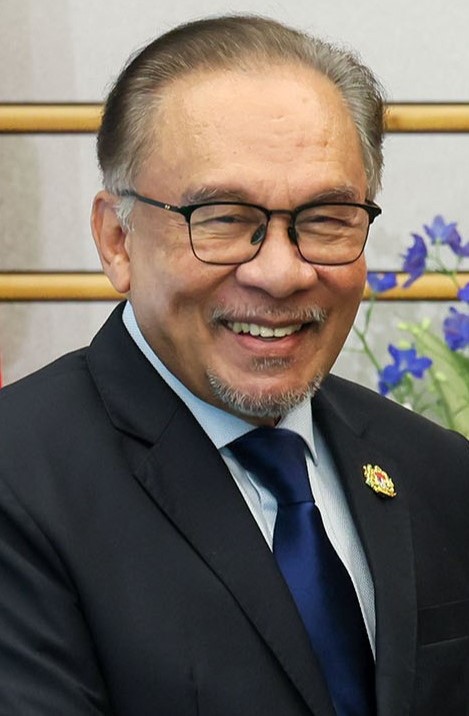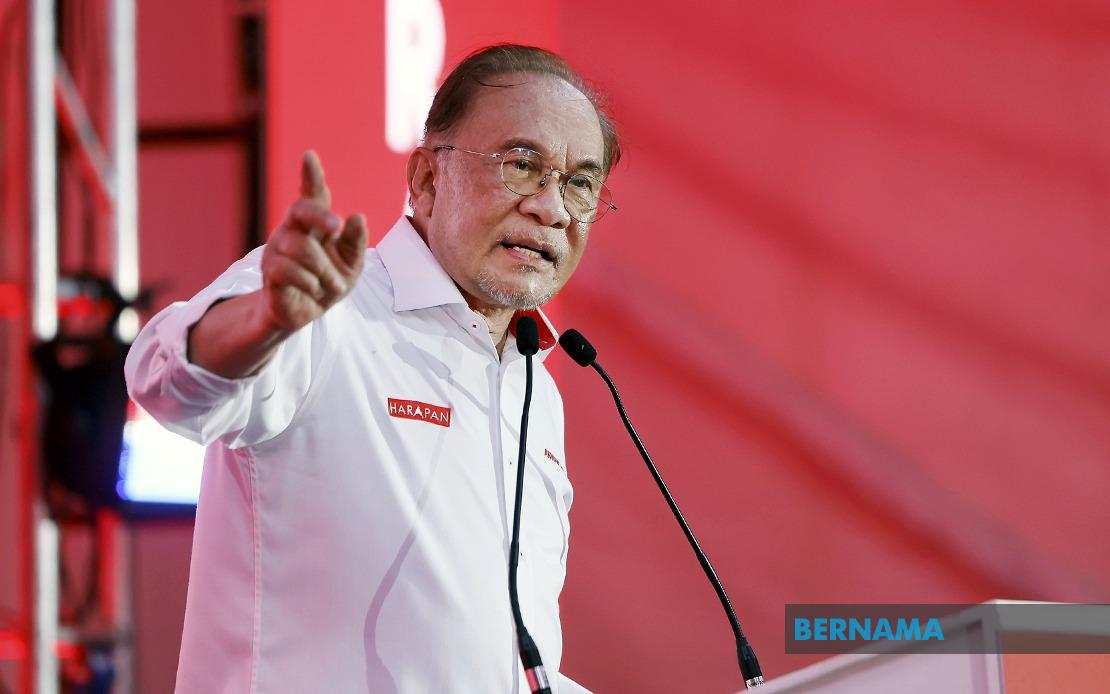
Prime Minister Datuk Seri Anwar Ibrahim has drawn attention to what he describes as the Federal government's demonstrated financial commitment to Johor, presenting figures that show the state receives substantially more in federal allocations than it contributes to national revenue. Speaking at a Pakatan Harapan candidate announcement ceremony in Tangkak on June 22, the prime minister highlighted a significant disparity between Johor's contributions and its returns, framing the numbers as evidence of the administration's development priorities for the state.
According to records compiled by the Finance Ministry, Johor contributed approximately RM14 billion in revenue to federal coffers during the three-year period spanning 2023 to 2025. This figure represents the state's tax collection and other federally directed income streams across this timeframe. However, Anwar noted that the Federal government has simultaneously channelled RM16 billion back to Johor through an array of mechanisms including direct development projects, operating allocations, and targeted assistance programmes. The RM2 billion differential underscores what the government describes as its commitment to ensuring equitable resource distribution across the nation.
Anwar, who holds the dual portfolio of Prime Minister and Finance Minister, emphasised the importance of communicating this financial relationship to the public. He argued that transparent disclosure of these figures provides essential context for understanding federal-state dynamics and government spending priorities. By presenting concrete numbers rather than abstract commitments, the administration aims to demonstrate tangible support for Johor's growth and welfare programmes. This approach reflects an attempt to shape public perception ahead of state elections and reinforce the MADANI Government's development narrative in a crucial electoral battleground.
The prime minister drew explicit comparisons between funding levels under the previous administration and the current government's tenure. Under the prior regime, Johor received between RM6 billion and RM7 billion annually in operating expenditure allocations. This annual baseline has expanded significantly under the MADANI Government, which Anwar noted has increased annual operating expenditure to RM8.7 billion for Johor. The escalation of approximately RM1.7 billion to RM2.7 billion annually represents a substantial increase in government spending directed toward the state's administrative and service delivery functions.
Beyond operating expenditure, development expenditure allocations tell an equally striking story of enhanced investment. Johor's development expenditure allocation has climbed from RM2.3 billion in 2022 to RM4.8 billion projected for 2026, representing more than a doubling of capital investment over a four-year span. This trajectory reflects the government's stated intention to accelerate infrastructure projects, social amenities, and economic development initiatives across the state. The expansion of development budgets typically funds construction of roads, schools, hospitals, water infrastructure, and other long-term assets that shape regional economic competitiveness.
In the context of Malaysia's broader fiscal landscape, Johor's position as the third-largest recipient of combined operating and development expenditure allocations for 2026, trailing only the East Malaysian states of Sabah and Sarawak, underscores the state's significance within national planning frameworks. This ranking reflects both Johor's large population base and the strategic importance attached to maintaining political stability and economic momentum in the peninsula's southernmost state. The concentration of resources in these three states suggests deliberate prioritisation of regional development strategies aligned with wider economic objectives.
The government has also targeted Johor as a beneficiary of welfare assistance programmes introduced under the MADANI framework. Johor ranks as the second-largest recipient of combined benefits under Sumbangan Tunai Rahmah (STR) and Sumbangan Asas Rahmah (SARA), programmes designed to provide direct cash assistance to lower-income households. Only Selangor exceeds Johor in total assistance allocation under these schemes, reflecting both states' substantial population concentrations and welfare programme demand.
For Malaysian readers and regional observers, these figures carry several implications. The emphasis on federal-state fiscal flows highlights ongoing tensions in Malaysia's federalism regarding resource distribution and development equity. Johor's status as a manufacturing and logistics hub, coupled with its proximity to Singapore, positions it as economically significant, justifying substantial federal investment in maintaining competitiveness. The government's detailed articulation of spending patterns suggests recognition that electoral fortunes depend partly on demonstrating tangible investment in state-level services and infrastructure.
The timing of these disclosures, made during candidate announcements for Johor state elections, indicates strategic political messaging. By quantifying federal commitment through concrete allocations, the government attempts to counter narratives of regional neglect or unequal resource distribution. This approach reflects broader competitive dynamics in Malaysian politics, where state governments increasingly claim credit or responsibility for development outcomes, requiring federal authorities to demonstrate their own contributions to public welfare.
Southeast Asian observers may note that Malaysia's fiscal federalism mechanisms, while permitting significant federal-to-state transfers, remain subjects of political debate regarding equity, effectiveness, and accountability. The government's willingness to publish comparative spending data represents a transparency measure that could encourage similar approaches elsewhere in the region. However, questions remain about the efficiency of resource deployment and whether increased allocations correlate with improved service delivery and infrastructure quality for Johor's residents.
Moving forward, scrutiny will likely focus on whether projected increases in development expenditure materialise as scheduled and whether completed projects deliver anticipated economic and social benefits. The RM4.8 billion development allocation for 2026 represents significant capital committed to the state, contingent upon effective planning, procurement, and project execution. Performance in translating these budgetary commitments into visible development outcomes will substantially influence the government's credibility regarding development claims and electoral prospects in Johor and beyond.