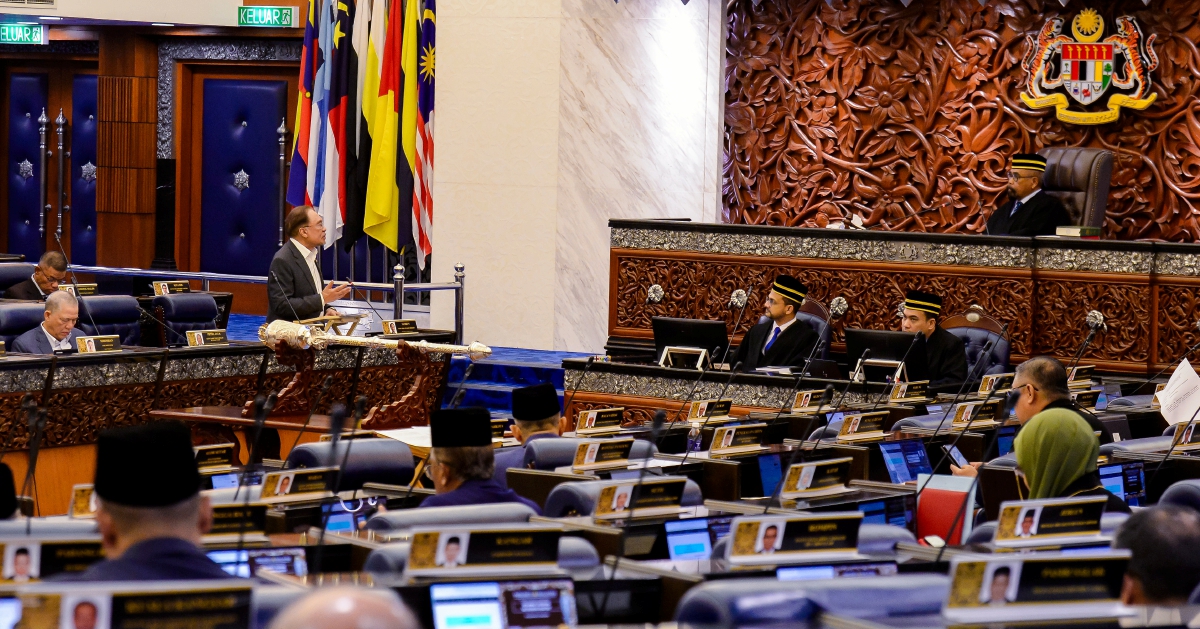
Prime Minister Datuk Seri Anwar Ibrahim has signalled a more disciplined approach to federal-state fiscal relations, making clear that Kuala Lumpur cannot be expected to routinely absorb financial consequences flowing from decisions made by state administrations. The statement represents a notable tightening of the centre's purse strings, with implications for how subnational governments calibrate their policy choices and budget planning across Malaysia.
Anwar's position underscores growing tensions between the federal and state tiers as Putrajaya grapples with competing demands on the national treasury. The remark suggests the government intends to impose greater accountability on state authorities for the financial ramifications of their own initiatives, rather than defaulting to a bailout model that has historically blurred fiscal responsibility between federal and subnational levels.
This clarification becomes particularly pertinent in Malaysia's federal framework, where state governments exercise considerable autonomy over sectors including education infrastructure, healthcare delivery, local development projects, and administrative expenditure. When state decisions generate unforeseen costs or budgetary overruns, the question of who bears responsibility—and ultimately, who pays—has long remained contentious. By drawing this distinction, Anwar is essentially signalling that states must now exercise greater financial discipline and foresight.
The timing of this statement carries weight given Malaysia's ongoing fiscal pressures. The federal government continues to service substantial debt, manage complex social programmes, and fund national development priorities. Federal coffers have been stretched across pandemic recovery measures, infrastructure commitments, and subsidy regimes that consume significant portions of annual revenue. Against this backdrop, the premature absorption of state-initiated costs effectively diverts resources away from centrally-managed initiatives.
State governments operate under varying degrees of fiscal autonomy. While wealthier states such as Selangor and Penang generate considerable internal revenue through state-owned enterprises and commercial ventures, less developed states remain heavily reliant on federal allocations and grants. Anwar's directive effectively creates a two-tier incentive structure: states with stronger revenue bases gain flexibility in policy implementation, whilst others must exercise caution lest their fiscal mistakes trigger cuts to federal transfers.
The statement also carries institutional significance for Malaysia's federal-state administrative relationship. Historically, the federal government has functioned partly as a default lender of last resort for state fiscal shortfalls, particularly when these generated public services disruptions. This practice, while sometimes politically expedient, has incentivised moral hazard at the state level, encouraging administrators to make commitments without fully accounting for downstream costs. Anwar's intervention appears designed to correct this perverse dynamic.
For state-level policymakers, the implication is straightforward: future initiatives must be subjected to more rigorous financial modelling and risk assessment. Whether a state contemplates expanding civil service numbers, establishing new hospitals, launching transportation subsidies, or expanding welfare programmes, administrators can no longer assume federal bail-outs will materialise if expenditures spiral. This constraint may slow certain state-led developments but could also concentrate resources on higher-impact initiatives.
The pronouncement carries broader implications for Malaysian federalism. Political scientists note that fiscal federalism—the allocation of revenues and expenditures between tiers of government—forms a critical pillar of stable federal systems. When the centre routinely absorbs costs originating from subnational decisions, it effectively weakens democratic accountability. Citizens in particular states may hold state governments responsible for policy outcomes whilst the financial consequences are borne nationally, creating a disconnect between decision-makers and those who fund their decisions.
For sectors like healthcare and education, where delivery often falls to state authorities, this principle creates particular complications. If states cannot rely on federal absorption of escalating costs, some may reduce service provision to remain fiscally viable, potentially creating disparities across states. Federal oversight bodies and policy coordinators will likely face intensifying demand for clearer guidelines delineating which categories of state spending qualify for federal co-financing and which remain purely a state responsibility.
The policy also signals Putrajaya's intent to tighten expenditure controls government-wide. If the federal apparatus expects greater financial accountability from states, similar expectations logically extend to federal ministries and agencies. This cascading effect could gradually shift Malaysian public administration towards more austere fiscal management across multiple levels and sectors, with downstream consequences for public service delivery, infrastructure investment timelines, and social programme expansion.
For investors and businesses monitoring Malaysia's governance architecture, the statement suggests a gradual professionalisation of fiscal management and clearer delineation of state versus federal financial responsibilities. Predictability in budget allocation and cost-sharing frameworks often correlates with more stable policy environments and reduced regulatory uncertainty.
Anwar's statement ultimately reflects a maturing institutional perspective on federal-state relations. Rather than treating fiscal transfers as political entitlements subject to negotiation and crisis response, the Prime Minister is positioning them as outcomes of transparent, accountable processes where state-level decision-makers bear genuine consequences for their financial choices. Whether this approach gains traction depends substantially on implementation consistency and whether federal authorities themselves demonstrate equivalent fiscal discipline.

