The glittering spectacle of Paris Couture Week unfolded this season against an unexpectedly challenging climatic backdrop, as a relentless heatwave transformed the French capital into a furnace. The annual gathering of fashion's elite, typically characterised by meticulous sartorial planning and architectural silhouettes, took on a different character as temperatures soared and attendees grappled with an unfamiliar challenge: looking spectacular while remaining comfortable in extreme heat.
The tension between fashion ideology and practical necessity became evident as soon as celebrities began arriving at the shows. High couture traditionally demands precision tailoring, structured garments, and often layers that would normally keep guests elegantly contained. Yet the sweltering conditions forced a subtle recalibration of how fashion's biggest names approached their red-carpet moments. Rather than abandoning elegance entirely, the week demonstrated that the industry's most influential figures could adapt their aesthetic without compromising on refinement, suggesting a shift toward more wearable luxury in an era of climate extremes.
Songwriter Ejae offered an intriguing fashion solution that bridged tradition and adaptation: a simple black folding fan that she paired with her ensemble. The accessory, practically invisible in haute couture circles, became an understated style statement that spoke to both European fashion heritage and pragmatic concession to contemporary conditions. This approach typified the week's broader philosophy—acknowledging the heat without allowing it to dictate the overall fashion narrative.
Among female attendees, the most prevalent strategy involved celebrating the shoulder and neckline, transforming what might ordinarily have been considered a necessary reveal into a deliberate design choice. Tan Sri Michelle Yeoh arrived in a refined black design that exemplified this approach, demonstrating that exposed shoulders need not compromise sophistication. The move represented less a departure from couture conventions and more a reclamation of minimalist elegance, where what remained untouched mattered as much as what was revealed.
The sundress—or contemporary interpretations thereof—experienced an unexpected renaissance among the fashion-forward attendees. Priyanka Chopra's scalloped gown embodied this aesthetic, capturing the breezy sensibility of warm-weather dressing while maintaining the structured quality that couture demands. These choices acknowledged that elegance could be achieved through grace rather than complexity, a philosophy that may well influence collections beyond this exceptional season as designers worldwide confront increasingly unpredictable weather patterns.
Fabric selection emerged as a critical tool for achieving thermal comfort without sacrificing luxury perception. Silk and silk-adjacent materials dominated the week, offering attendees a pathway to maintain the sensory luxury that couture audiences expect while benefiting from the fabric's natural breathability. Shorter hemlines proliferated similarly, not as a trend statement but as a logical response to heat—allowing greater freedom of movement and air circulation whilst maintaining the polished silhouette that Paris Couture Week demands.
Menswear at the event reflected parallel adaptations, with relaxed tailoring becoming the unexpected uniform of choice. Bad Bunny and Hudson Williams were among the male attendees who embraced oversized suiting rendered in lighter hues, often styled without undershirts to maximise ventilation. This represented a significant departure from traditional menswear formality, where precision fit and layered sophistication have long been markers of sartorial authority. The acceptance of looser proportions suggests that even fashion's most conservative segments are beginning to acknowledge that comfort and elegance need not remain opposing forces.
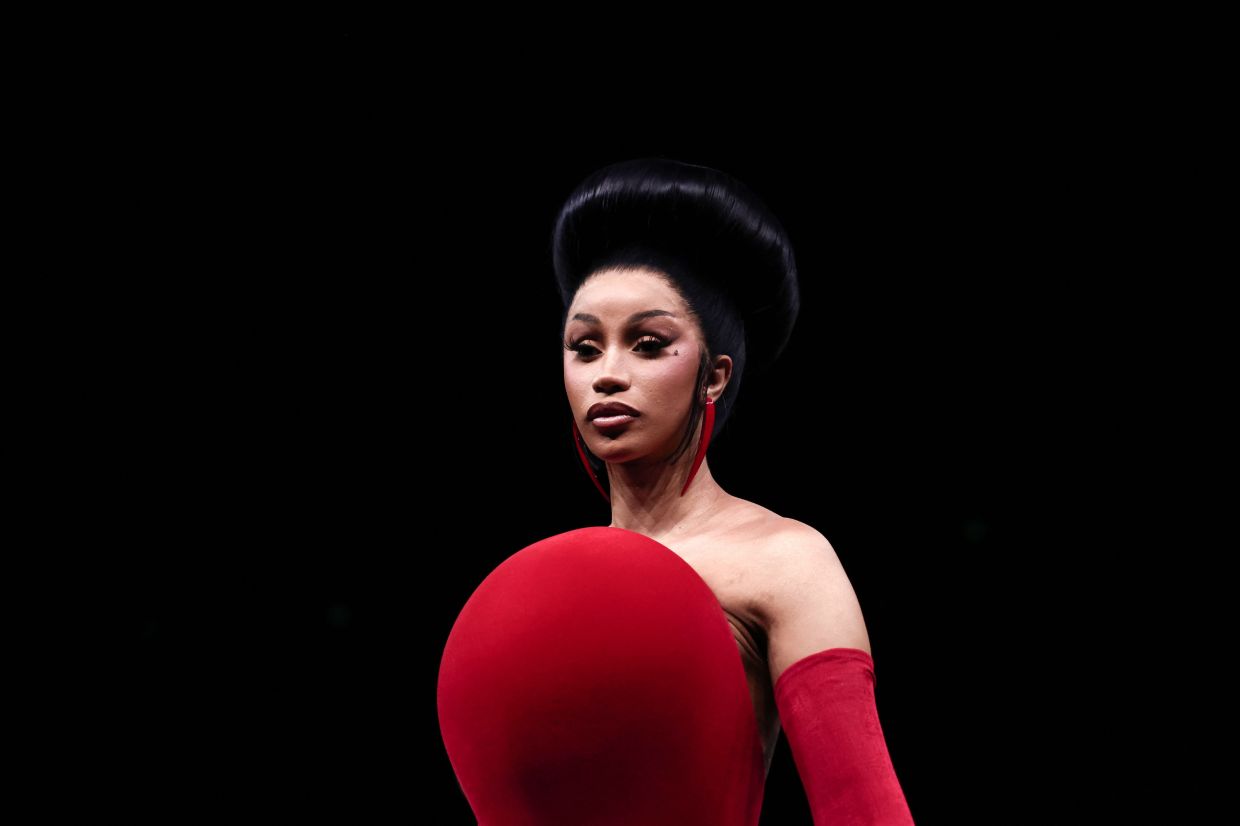
Cardi B stood out as perhaps the week's most notable exception to this pragmatic sensibility, appearing in a highly structured, exceptionally fitted garment that prioritised sculptural impact over climatic consideration. Her choice underscored an important truth about fashion: that some statements demand sacrifice, and for certain performers and personalities, the aesthetic impact justifies the physical cost. Yet even this counterpoint illustrated how dramatically the week's consensus had shifted toward wearability.
The broader implication of Paris Couture Week's heat-driven adaptations extends beyond the immediate spectacle of celebrity dressing. As Southeast Asian observers watching European fashion closely, Malaysian and regional readers should note that this season represented a quiet but significant validation of climate-responsive design. With Southeast Asia already experiencing sustained high temperatures and humidity, the demonstrated willingness of international couture houses and their clients to embrace lighter fabrics, looser silhouettes, and breathable construction offers a template for how luxury fashion might evolve in our regional context.
This shift also reflects a larger conversation within the fashion industry about sustainability and practicality—topics increasingly relevant to conscious consumers across Asia. When celebrities and designers acknowledge that beautiful clothing must also function within real environmental conditions, they implicitly endorse an aesthetic philosophy that resonates with regional sensibilities around efficiency and purpose-driven design. The success with which Paris Couture Week attendees maintained elegance whilst adapting to heat suggests that future collections may increasingly prioritise garments capable of performing across diverse climate zones.
Looking ahead, the heatwave that challenged Paris Couture Week may ultimately have catalysed a meaningful evolution in how luxury fashion conceptualises elegance. By demonstrating that refinement, sophistication, and comfort need not exist in perpetual opposition, this season has potentially redirected the industry toward more inclusive, globally-conscious design practices. For Malaysian fashion enthusiasts and industry professionals, the message is clear: the future of couture lies not in rigid adherence to historical conventions, but in intelligent adaptation that preserves luxury's essence whilst acknowledging the realities of twenty-first-century living.

