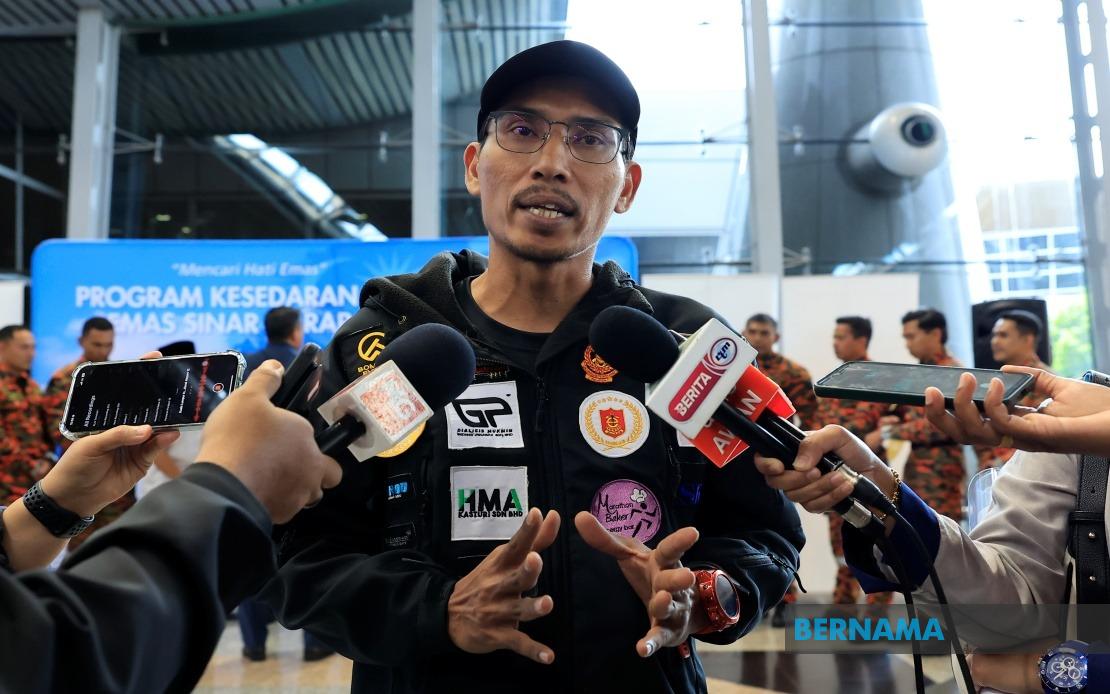
The family of Mohd Fakhrul Munir Mohd Isa, a 44-year-old specialist with Malaysia's Fire and Rescue Department, is maintaining cautious optimism after he went missing during catastrophic flooding and landslides that struck Rasuwa district in Nepal. The experienced climber, known affectionately as Loe, was part of a ten-member Malaysian expedition headed toward Everest Base Camp when the natural disaster severed communication with the team. His relatives have chosen to lean on faith and positive thinking rather than despair, even as authorities work to establish contact with the stranded group.
Mohd Saiful Munir Mohd Isa, Loe's 46-year-old brother and an operations officer at the Port Klang Fire and Rescue Station, fielded questions from journalists on the family's behalf, striking a delicate balance between determination and acceptance. He attributed the communication blackout not to any accident but to the overwhelming destruction wrought by the natural disaster across the affected region. The family has maintained a vigil of prayer, hoping that Loe and his companions will emerge unharmed from whatever circumstances have separated them from contact with the outside world. Yet Mohd Saiful Munir acknowledged the need for realistic expectations, noting that the family recognises the gravity of their situation and has prepared itself mentally for any outcome.
The missing officer's passion for mountaineering was not a reckless pursuit but rather a defining feature of his professional and personal identity. Loe's frequent expeditions to Nepal reflected his deep commitment to climbing, transforming the Himalayan nation into what his brother described as a second home. According to Mohd Saiful Munir, his sibling ventured to Nepal between three and five times annually, treating these trips with the discipline and familiarity of a seasoned adventurer rather than a casual tourist. Beyond mountaineering, Loe cultivated other outdoor pursuits, demonstrating a lifestyle centred on physical challenge and natural environments. His last communication with family members occurred roughly one week before his departure for Nepal, leaving them with no recent updates on his condition or whereabouts.
Based on the expedition's intended itinerary, officials believe the Malaysian contingent was traversing the valley region when the disaster struck with devastating force. Mohd Saiful Munir characterised their brother's predicament not as an accident born from poor judgment but as a catastrophic entrapment, where survivors faced overwhelming environmental obstacles and technological barriers preventing them from signalling for help. The valley setting, while part of a carefully planned route to one of the world's highest peaks, offered limited communication infrastructure and escape routes once flooding and landslides transformed the landscape into a danger zone. This geographic reality underscores how even experienced mountaineers face circumstances beyond their control when natural forces unleash their full destructive potential.
Two Malaysian Fire and Rescue Department officials feature among those missing in the wake of the Rasuwa flooding. Fire and Rescue Department director-general Datuk Seri Nor Hisham Mohammad publicly confirmed the identities of the missing officers as Mohd Sani Harul, deputy director of the Planning and Research Division, and Mohd Fakhrul Munir Mohd Isa. The presence of two professional firefighters within the expedition group suggests the Malaysian contingent possessed trained expertise in emergency response and survival, though such qualifications offer limited advantage against the raw destructive power of flash floods and mountainside collapses. Their professional backgrounds may have positioned them to assist other expedition members, potentially directing resources toward collective survival rather than focusing on personal escape.
The larger Malaysian expedition numbered ten individuals, representing a substantial group attempting one of Asia's most demanding mountaineering challenges. The scale of the missing team raises urgent logistical questions about rescue coordination, resource allocation, and communication protocols for international expeditions operating in high-altitude terrain. Nepal's rescue services, already stretched managing domestic casualties from the disaster, must now coordinate efforts to locate and assist multiple foreign nationals scattered across dangerous and unstable terrain. The challenge compounds when considering that Rasuwa district experienced multiple simultaneous catastrophes—flash flooding coupled with landslides—creating hazardous conditions that could render conventional rescue approaches extremely difficult or temporarily impossible.
Nepal experiences periodic natural disasters due to its geographical position within the Himalayan range and monsoon system, yet such familiarity with risk does not eliminate tragedy when extreme weather overwhelms even experienced guides and climbers. The Everest Base Camp route, while well-established and traversed by thousands annually, remains fundamentally dependent on stable weather and geological conditions. Flash flooding in mountain valleys can transform established trails into torrential channels within minutes, and landslides triggered by saturated soils reshape terrain unpredictably. Expeditions departing Malaysia represent considerable investment of time, financial resources, and personal sacrifice, making the contrast between careful planning and sudden catastrophe particularly poignant for families awaiting news.
Mohd Saiful Munir's insistence on relying exclusively on official information from authorities reflects a deliberate strategy to avoid misinformation during crisis situations. In the social media age, unverified reports and speculation can circulate rapidly, potentially misleading families or triggering premature conclusions about missing persons' fates. By maintaining a disciplined approach to information sources, the family positions itself to respond appropriately when genuine updates arrive from search and rescue coordination bodies or Nepal's government agencies. This restraint, though requiring considerable emotional fortitude, represents the most productive course for families navigating uncertainty.
The disappearance of Malaysian nationals in Nepal carries implications beyond individual tragedy, affecting bilateral relations and protocols governing Malaysian citizen safety abroad. Foreign affairs authorities typically engage with host governments to coordinate search efforts, provide consular support to families, and gather intelligence about conditions in affected regions. This incident may prompt Malaysian government agencies to review mountaineering expedition safety protocols, travel advisories for high-risk destinations, and emergency communication systems for groups operating in remote terrain. Professional bodies within Malaysia's fire and rescue service will likely conduct retrospective analyses to identify any lessons applicable to future expeditions by department members.
The broader context of mountaineering expeditions reflects an enduring human commitment to exploration and personal achievement despite inherent risks. Thousands of climbers, guides, and support personnel traverse Nepal's mountains annually, with the vast majority completing their expeditions safely. However, natural disasters remind everyone that mountains remain fundamentally wild environments where human planning, skill, and technology operate within nature's constraints rather than dominating them. Each disappearance or tragedy reshapes how expedition organisers, climbers, and families assess risk and prepare mentally for possibilities beyond anyone's control. For the family of Mohd Fakhrul Munir Mohd Isa, this difficult reality combines with determination to sustain hope while accepting that outcomes may diverge sharply from their wishes.

