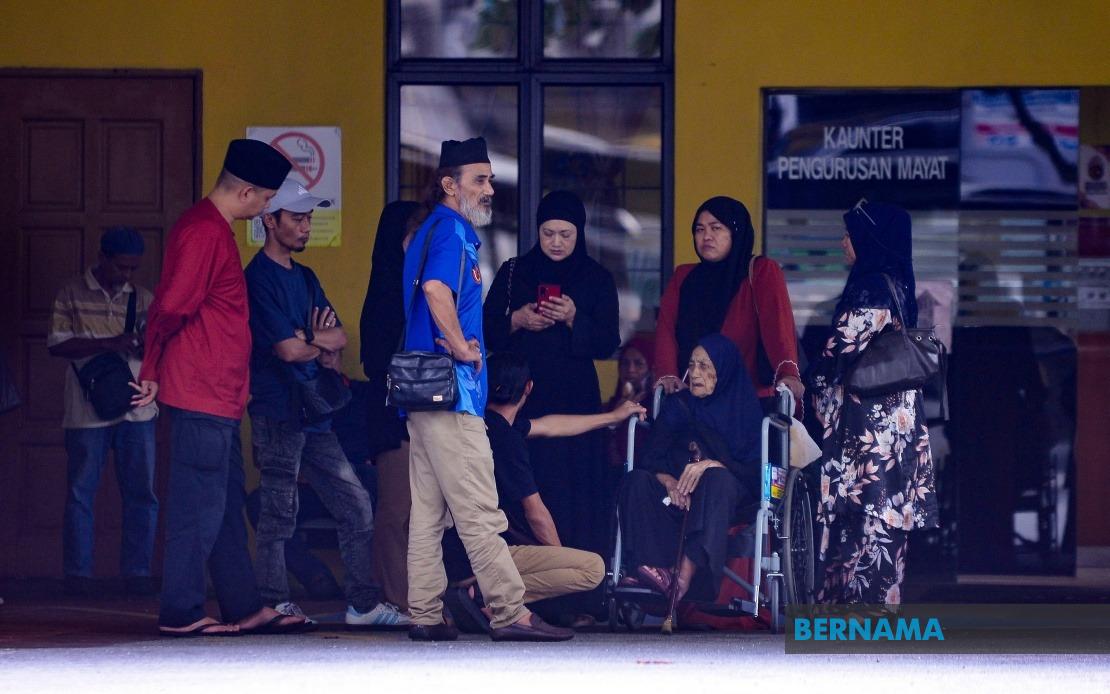
A family member of those caught in a fatal collision at Maju Junction involving a Malaysian Immigration Department lorry is pressing authorities for a comprehensive and transparent investigation to establish accountability for the tragedy that claimed three lives. Mohd Nadzri Razali, 69, whose sister was among the injured, is particularly troubled by reports suggesting the government vehicle proceeded through a red traffic signal before the disaster unfolded in the early hours of the morning on Jalan Sultan Ismail.
The incident has devastated the extended family, with Mohd Nadzri emphasising that answers are needed to prevent similar tragedies. Speaking from his home in the Mambang Di Awam neighbourhood near Kuala Lumpur, he expressed deep concern that preliminary accounts indicate the immigration lorry may have disregarded traffic regulations at the busy intersection. He called for authorities to examine every detail of what occurred and to ensure those responsible face appropriate consequences, stressing that his late brother-in-law Shaik Mohd Firdaus Shaikh Yahya, 53, and his two daughters deserve justice through a proper inquiry.
The collision occurred around 1 am when an empty Isuzu Black Maria operated by the Immigration Department was en route from the Kuala Lumpur Immigration Office to Chow Kit to conduct enforcement operations targeting undocumented workers. According to witness accounts and preliminary investigations, the lorry entered the Maju Junction intersection with its emergency beacon and siren active while the traffic signal in its lane displayed red. Simultaneously, a Proton Saga proceeding on a green light made contact with the lorry, leaving the driver with insufficient time to avoid the impact.
The force of the collision sent the immigration vehicle skidding across the intersection in an uncontrolled path, striking four pedestrians from the same family and a separate Inokom Matrix vehicle. Three members of the pedestrian group died at the scene: Shaik Mohd Firdaus Shaikh Yahya, his 25-year-old daughter Siti Nor Sazlin, and his 12-year-old daughter Siti Darwisyah Auni. Their mother, Norhayati Razali, 55, sustained serious injuries and remains hospitalised in the Intensive Care Unit at Kuala Lumpur Hospital.
Mohd Nadzri indicated that his sister's condition has shown some improvement, with reports that she has regained consciousness, though her medical status remains uncertain. The family is exploring the possibility of transferring her to Hospital Ipoh or Teluk Intan for continued treatment, depending on her clinical progress and the attending physicians' assessments. The uncertainty surrounding her recovery adds to the family's anguish as they grapple with the sudden loss of three members in a single incident.
The tragedy has compounded the family's grief, as they had only recently mourned the loss of another family member on 30 May. Mohd Nadzri, who resides in the same residential area as his sister's family, noted that the devastation of losing three relatives simultaneously has shaken the extended family deeply. He recalled that he last encountered the victims about two weeks prior when they had travelled together to Teluk Bakong in Ayer Tawar to maintain the graves of earlier deceased family members, a poignant reminder of life's fragility.
The family has made arrangements to lay the three deceased to rest in a single grave at the Muslim Cemetery in Kampung Air Hitam Labu in Kampar, reflecting both the closeness of their loss and the practical considerations of a joint funeral. This decision underscores the emotional and cultural significance of the tragedy within the family's immediate and extended networks in the Kampar and surrounding areas.
Police and transport authorities have registered the case under Section 41(1) of the Road Transport Act 1987, which addresses reckless or negligent driving causing death or injury. This legal framework suggests that investigators will examine whether the lorry driver's actions—particularly the apparent disregard for the red traffic signal—constitute criminal negligence. The choice of this particular charge indicates that authorities are treating the matter with appropriate seriousness, though the investigation's transparency and thoroughness will be crucial in determining whether justice is adequately served.
The incident raises broader questions about emergency vehicle protocols and accountability. While government vehicles operating on official duties may activate sirens and beacons to alert the public, the fundamental obligation to respect traffic signals when doing so remains critical to public safety. The collision demonstrates the inherent danger when any vehicle, regardless of its official status, proceeds through intersections against traffic signals, potentially placing civilians at severe risk. For Malaysian road users, the case serves as a stark reminder of the need for all drivers—including those operating government vehicles—to exercise extreme caution at busy intersections.
The family's call for transparency reflects growing public expectations that investigations into incidents involving government agencies be conducted with full accountability and public scrutiny. In Malaysia's context, where trust in institutional processes can be variable, families affected by such tragedies often find that clear, timely communication about investigation findings and outcomes helps provide some measure of closure and reassurance that preventive measures will be implemented. Mohd Nadzri's insistence on justice suggests the family will likely monitor the investigation's progress closely and may pursue civil remedies alongside any criminal proceedings.

