Malaysia's Federal Agricultural Marketing Authority (FAMA) announced that its Agro MADANI Sales (JAM) initiative has generated RM46.72 million in revenue during the opening five months of 2024, operating through 1,833 separate events conducted across the country. The achievement marks a significant milestone in the government's efforts to revitalise the agricultural sector while creating sustainable income opportunities for producers and ensuring consumers gain access to competitively priced farm products without middleman markups.
The programme represents a strategic intervention in Malaysia's agri-food distribution system, addressing long-standing inefficiencies that have historically disadvantaged smallholder farmers and independent producers. By creating direct consumer access points, FAMA has effectively shortened the value chain, allowing agricultural entrepreneurs to retain greater profit margins whilst simultaneously offering shoppers better pricing than conventional retail channels. This dual benefit reflects the underlying philosophy of the initiative—strengthening both supply-side productivity and demand-side accessibility simultaneously.
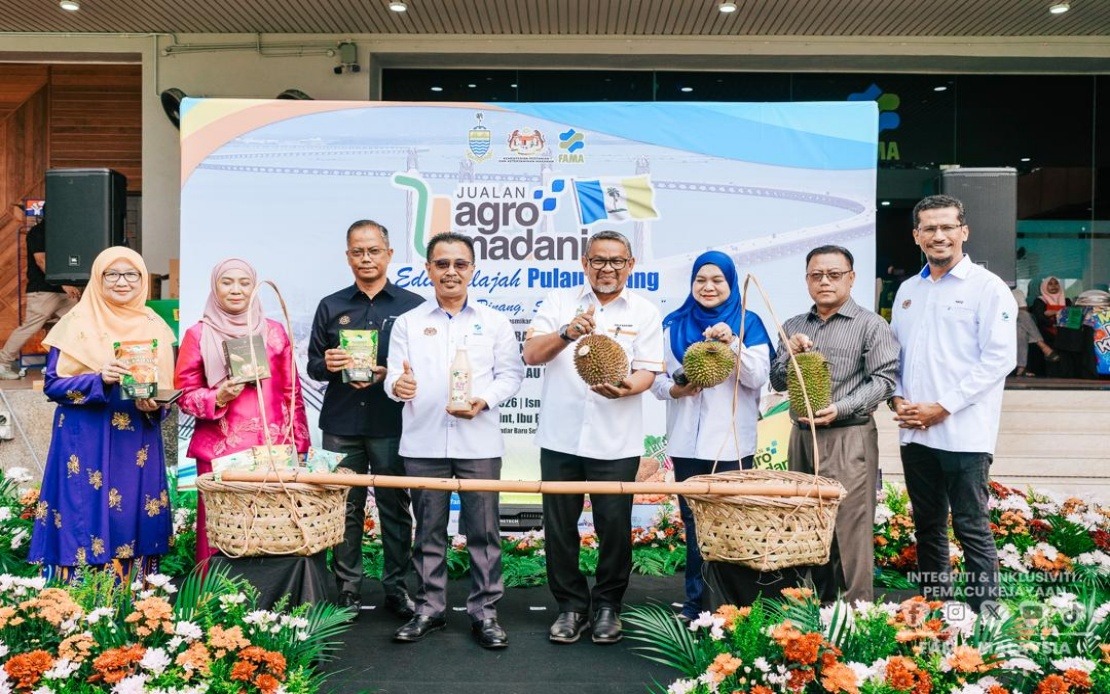
Penang hosted the third iteration of the JAM roadshow at FAMA's Selayang headquarters, drawing participation from 30 local entrepreneurs operating across 45 separate sales lots. The state edition targeted attracting 2,000 visitors with a projected revenue of RM100,000, representing FAMA's commitment to rotating the programme across different regions to ensure equitable distribution of marketing opportunities. The presence of state-level officials, including Penang Rural Development, Agrotechnology, Food Security and Cooperatives Committee Exco Datuk Rashidi Zinol, underscores the collaborative approach between federal and state governments in supporting agricultural commerce.
The Penang edition showcased the programme's effectiveness in promoting regionally distinctive agricultural products. Premium durian varieties including Balik Pulau selections, Black Thorn, Red Prawn, and Hor Lor cultivars featured prominently, alongside the lesser-known but increasingly popular Cempedak King. These specialty fruits command premium positioning in upscale markets yet remain relatively inaccessible to mainstream consumers through conventional retail distribution. By bringing producers directly to end-consumers, JAM democratises access to high-quality agricultural products that would otherwise be concentrated in elite shopping districts or remain commercially unviable for individual farmers to market independently.
Beyond fresh produce, the Penang event integrated agro-based processed goods and value-added agri-food items developed by state entrepreneurs. This diversification strategy acknowledges that agricultural sustainability increasingly depends upon value-addition and product differentiation rather than commodity-based price competition. By providing market platforms for entrepreneurs operating throughout the production-to-consumption spectrum, FAMA facilitates the emergence of more sophisticated agricultural businesses capable of capturing greater value.
The programme extends beyond purely commercial transaction. Visitors experienced gastronomic offerings showcasing Penang's iconic culinary heritage, including nasi kandar, Penang laksa, char kuey teow, mee sotong, and traditional air sarbat. This experiential dimension transforms the event from a functional farmers' market into a cultural celebration of regional food identity, generating greater consumer engagement and emotional connection to local agricultural products. Such positioning proves particularly valuable in an era of globalised food systems where local agricultural identity risks erosion.
FAMA explicitly positioned the JAM initiative within broader objectives of strengthening Malaysia's agri-food marketing infrastructure. The agency articulated commitment to expanding entrepreneurial market access whilst simultaneously improving consumer purchasing power through direct producer engagement. This framing acknowledges the competitive pressures emerging from regional agricultural markets and the necessity for Malaysian producers to develop greater market sophistication and consumer orientation.
The collaboration between FAMA and the Penang Bumiputera Development Council through the joint entrepreneurship development initiative reflects Malaysia's continued emphasis upon Bumiputera economic participation within agricultural sectors. This targeted approach recognises historical disparities in Bumiputera representation within commercial agriculture and aims to progressively strengthen indigenous participation throughout agri-food value chains. By combining financial platforms like JAM with institutional capacity-building initiatives, the authorities attempt to generate sustainable competitive advantages for Bumiputera entrepreneurs.
FAMA director-general Abdul Rashid Bahri's participation in the Penang event signals high-level institutional commitment to the programme's expansion and refinement. The personal involvement of leadership in regional activations demonstrates that JAM represents a prioritised strategic initiative rather than a peripheral marketing experiment. This sustained leadership engagement suggests likelihood of continued programme expansion and resource allocation across successive quarters.
The RM46.72 million achievement across five months annualises to approximately RM112 million in potential revenue, representing substantial economic activity channelled through direct agricultural marketing platforms. For the agricultural sector, where production often outpaces consumer demand due to distribution limitations, such platforms provide critical demand absorption capacity. For consumers, particularly in middle and lower-income segments, direct access to agricultural products at reduced prices enhances household purchasing power and food security.
Looking forward, the programme's success invites consideration of scaling mechanisms and geographic prioritisation. Rural regions with significant agricultural production but limited market infrastructure represent logical expansion targets. Similarly, integration with digital platforms could enhance programme efficiency and geographic reach without necessarily reducing the direct-consumer engagement that constitutes JAM's fundamental value proposition. The Penang roadshow represents not merely an isolated event but rather a component within increasingly sophisticated agricultural marketing architecture that positions Malaysia competitively within Southeast Asian food systems.

