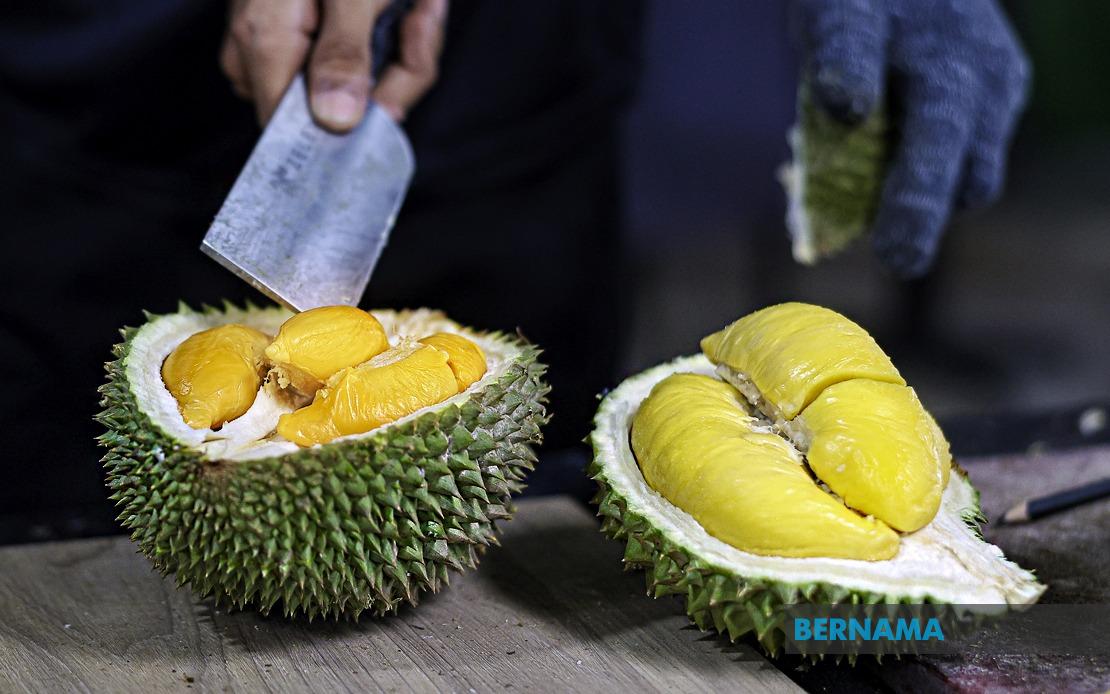
The Federal Agricultural Marketing Authority (FAMA) has unveiled an aggressive marketing and price-support initiative targeting Penang's booming durian sector, recognising the state's growing importance as a premium fruit producer and the logistical challenges posed by rising supply. Speaking at the launch of the Penang Durian Festival in Nibong Tebal on June 28, FAMA's Penang director Mohd Hafiz Nurulhuda detailed a comprehensive 2026 Seasonal Fruits Marketing and Intervention Plan designed to stabilise the market and ensure growers receive fair returns during the June-to-August peak harvest window.
Penang's durian production has climbed to an estimated 18,000 metric tonnes this year, marking a notable increase from approximately 17,000 metric tonnes in the previous season. This trajectory underscores the state's emergence as a significant player in Malaysia's durian economy, traditionally dominated by Pahang, Johor, and Terengganu. The uptick reflects broader investments in orchard productivity and improved cultivation techniques across Penang's growing durian belt. However, the expansion also mirrors a wider regional supply surge that has prompted authorities across multiple states to implement protective mechanisms to prevent price collapses that could devastate smallholder growers who depend on the commodity for income.
Mohd Hafiz stressed that Penang's vulnerability to oversupply pressures remains relatively contained compared with other producing regions. The critical distinction lies in the composition of Penang's harvest: roughly 30 per cent comprises kampung durian, the lower-value village varieties that typically face fiercer price swings, while the remainder consists of premium cultivars with more insulated demand and pricing. This structural advantage provides Penang considerable resilience, though vigilance remains essential as other states increasingly boost output of comparable premium strains.
The authority has engineered a multi-layered intervention framework to shield both producers and the market equilibrium. Premium varieties such as Black Thorn and Musang King, which command retail prices between RM30 and RM40 per kilogramme, have remained stable throughout the season, reflecting consistent demand from domestic consumers and export partners. More significantly, FAMA has negotiated a forward-purchase agreement covering approximately 85 metric tonnes of durian, committing the agency to acquire fruit at agreed terms before harvest. Additionally, the agency has established a price floor of RM2.70 per kilogramme for kampung durian, guaranteeing growers a minimum return should market prices deteriorate.
The distribution infrastructure underpinning this strategy extends beyond traditional wholesale channels. FAMA has inaugurated two temporary collection centres in Balik Pulau and Seberang Jaya, strategic locations that consolidate fruit from dispersed orchards and facilitate bulk movements to markets beyond Penang. These facilities have already channelled approximately 50 metric tonnes into the supply chain. Simultaneously, the authority has directed 310 metric tonnes to its retail and foodservice outlets, while expanding direct sales linkages into the Klang Valley's densely populated consumer base. This multifaceted distribution approach mitigates the risk of localised gluts that could trigger sharp price deterioration in any single market.
The intervention plan reflects recognition that Malaysian durian's competitive positioning extends beyond domestic consumption. Premium varieties such as Musang King have established themselves in affluent international markets, particularly in China, Thailand, and Singapore, where they command premium prices justified by reputation for sweetness, creamy texture, and consistency. Penang's growing reputation for quality fruit—particularly through agro-tourism ventures that brand the state as a destination for premium durian experiences—contributes to this export narrative. The authority's emphasis on upgrading orchard facilities and developing agro-tourism infrastructure therefore serves a dual purpose: strengthening the state's appeal to international buyers while creating ancillary revenue streams through farm visits, tastings, and related hospitality.
Chief Minister Chow Kon Yeow's participation in the festival opening, coupled with the launch of the Road to MAHA 2026 programme, signals the state government's strategic commitment to positioning durian as a cornerstone of Penang's agricultural and tourism economies. MAHA, the annual Malaysia Agricultural, Horticulture and Agro-tourism Exhibition, functions as a national showcase for agricultural innovation and produce marketing. Penang's targeted participation reflects ambitions to leverage the platform for brand-building and buyer engagement, drawing domestic and international participants to experience the state's growing reputation in premium fruit production.
The broader context underscores the complexity of managing agricultural markets in an era of rising production across Southeast Asia. Thailand, Vietnam, and Indonesia have substantially expanded durian cultivation, intensifying regional competition and pressing Malaysian producers to differentiate through quality, consistency, and brand identity. Penang's strategy—centred on premium positioning, supply-chain modernisation, and agro-tourism integration—represents an attempt to compete on non-price dimensions rather than engage in a race-to-the-bottom scenario. This approach acknowledges that Malaysian durian, while esteemed globally, cannot rely indefinitely on volume advantages as competitors scale up production.
For smallholder growers in Penang, the intervention mechanisms and expanded marketing channels provide material protection against income volatility. The RM2.70 kampung durian floor price, while modest in absolute terms, offers crucial downside protection to lower-income producers who lack storage facilities or direct market access. Forward-purchase agreements similarly reduce uncertainty surrounding harvest timing and buyer availability. Cumulatively, these measures reflect FAMA's adaptive posture toward agricultural volatility, moving beyond passive price monitoring to proactive demand creation and supply stabilisation.
The initiative also carries implications for Malaysia's broader aspirations to strengthen agricultural exports and rural incomes. Durian represents one of the nation's most valuable agricultural exports by revenue per tonne, and maintaining producer viability and market confidence proves essential for sustaining competitiveness. Penang's experience—combining supply-side productivity gains with demand-side distribution innovation and price-floor protections—offers a replicable model for other high-value commodities facing regional supply pressures.
Looking forward, the success of FAMA's 2026 intervention will hinge on sustained coordination between state and federal authorities, grower associations, and private-sector distribution partners. Market conditions, competing regional supply, and international demand dynamics will test the framework's flexibility. Nonetheless, the comprehensive nature of Penang's response, integrating technology adoption, marketing sophistication, and social protections, positions the state to navigate the evolving durian landscape more effectively than competitors relying solely on supply expansion.

