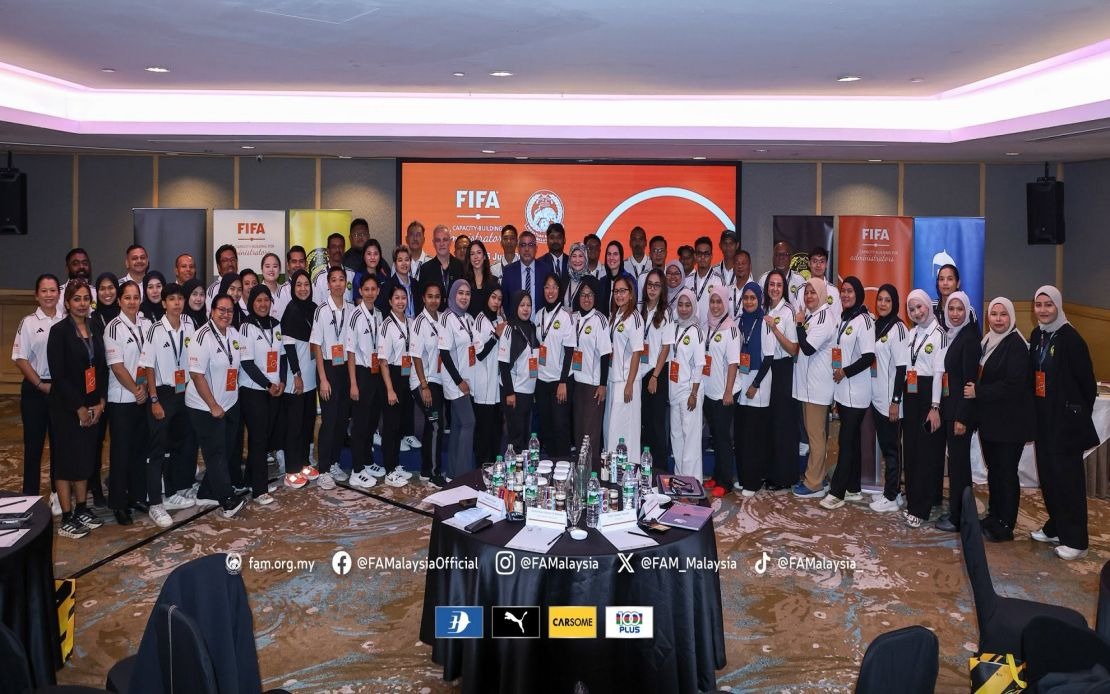
Malaysia's football governing body is making a deliberate push to elevate the standards of women's football administration through a targeted capacity-building initiative launched this week. The Football Association of Malaysia (FAM) has organised the FIFA Capacity-Building For Administrators 2026 programme in collaboration with FIFA, marking a significant step in professionalising the management structures that underpin the national women's game. This four-day training course, which commenced on June 23, brings together two FIFA Women's Football Development Experts—Safia Abdeldayem and Pema Choden Tshering—to guide participants through a comprehensive curriculum focused on strengthening leadership and organisational competencies across the women's football landscape.
The initiative reflects a strategic recognition within FAM that sustainable growth in women's football depends on more than just technical prowess on the pitch. While developing skilled players and coaches remains essential, the federation is now prioritising the invisible infrastructure that enables teams and competitions to operate effectively. This balanced approach acknowledges that administrative shortcomings, inadequate management systems, or poorly structured support networks can undermine even the most talented squads. By investing in the people who manage competitions, oversee club operations, and coordinate player welfare, FAM is addressing a critical gap that has historically received less attention than the sport itself.
Participants in the programme will engage with a series of targeted modules designed to equip them with practical knowledge and frameworks applicable to their roles. The Women's Leadership component focuses on developing individual capability and confidence among female administrators and managers, recognising that women remain underrepresented in sports governance across much of Asia. The Women's Competition module addresses the structural and operational aspects of organising tournaments and leagues, from scheduling to financial management. A dedicated focus on Club and Players' Rights ensures that administrators understand their obligations to protect athletes and maintain ethical standards within organisations. The Strategic Planning segment helps teams and federations develop coherent long-term visions and actionable roadmaps for progression.
The timing of this initiative carries particular significance for Malaysian women's football. The nation has invested considerable effort in recent years to raise the profile and competitive standard of its women's teams across various age groups and competitions. However, inconsistent performances and structural challenges have sometimes hindered progress that the quality of talent might otherwise suggest. By systematically developing a cadre of well-trained administrators and managers, FAM creates the foundation upon which coaching innovations and player development initiatives can achieve their full potential. Better-organised clubs and teams can attract sponsorship more effectively, retain talented players, and provide the professional environment that modern athletes increasingly demand.
The presence of senior FAM officials at the launch underscores institutional commitment to the programme. Datuk Noor Azman Rahman, FAM's secretary-general, along with Datuk Suraya Yaacob—who holds positions within both FIFA's Women's National Team Competitions Committee and the Asian Football Confederation's Women's Football Committee—demonstrated tangible leadership support. Soleen Al-Zoubi, FAM's Women's Football Technical Director, likewise participated, ensuring continuity between administrative development and technical coaching frameworks. This alignment between different operational levels signals that women's football development is not a peripheral concern but a mainstream priority within Malaysian football governance.
The broader regional context makes this development noteworthy for Southeast Asian football. Several neighbouring countries, including Thailand and Vietnam, have made significant strides in elevating their women's national teams' competitiveness in recent AFC tournaments. Malaysia faces competitive pressure to maintain relevance and momentum in regional women's football. Administrative excellence becomes a differentiator when talent levels are relatively balanced; the federation that better organises its resources, manages player welfare, and structures its competitions attracts and retains the best talent. This programme thus serves not merely as internal capacity-building but as a competitive necessity in an increasingly professionalized regional landscape.
FAM's stated belief that expanding the pool of skilled team managers, administrators, and women leaders will create a stronger and more sustainable ecosystem reflects modern sports management philosophy. The multiplication of expertise across multiple individuals and organisations reduces dependency on a small group of leaders and distributes responsibility more equitably. When more women occupy positions of authority and decision-making within football structures, the sport naturally becomes more inclusive and responsive to the needs of female participants. This creates a virtuous cycle where young women see pathways to leadership roles beyond playing, encouraging greater overall engagement with the sport.
The FIFA partnership adds credibility and ensures that training content aligns with international best practices. As the global governing body, FIFA sets standards that cascade through continental confederations and national associations. By engaging directly with Malaysian administrators, FIFA simultaneously advances its own strategic goals around women's football development globally while supporting FAM's specific institutional objectives. This multilevel approach means that Malaysian administrators gain access to expertise and frameworks that have proven effective elsewhere, avoiding the need to reinvent solutions to common challenges.
Looking forward, the impact of this programme will depend significantly on implementation and reinforcement. One-off training courses can inspire and inform, but sustained improvement requires follow-up support, ongoing networking, and institutional changes that consolidate lessons learned. FAM will need to ensure that trainees apply their new knowledge within their organisations, that information flows back to federation leadership, and that systemic barriers to implementation are systematically addressed. If executed comprehensively, this initiative could catalyse meaningful improvements in how Malaysian women's football is managed at club and national levels, ultimately benefiting athletes and the sport itself.