A respected UMNO Youth leader with a decade-long track record in party politics has died tragically in Bentong, along with three family members, when their vehicle was struck by a falling tree on a major road connecting Kuala Lumpur and Bentong. Mohd Radzi Rahimi, 40, was killed instantly, as were his wife Nuriani Mohammad Jafri, 36, his five-year-old son Muhammad Rizz Hazim, and his brother-in-law Mohammad Nizam Mohammad Jafri, 35. The accident occurred near Janda Baik at approximately 1 pm on the old road between the two towns. The family's vehicle, a four-wheel-drive, bore the full force of the impact as the tree came down during what appeared to be an ordinary journey homeward.
Mohd Radzi's political career spanned more than a decade within UMNO structures, establishing him as a rising figure within the party's youth wing. He had invested approximately ten years serving the Maran UMNO Youth division before ascending to the position of Youth chief within that division and subsequently earning appointment as Treasurer of the broader Pahang UMNO Youth movement. These positions reflected significant trust placed in him by party elders and demonstrated his capability in handling both organisational and financial responsibilities within the party's youth hierarchy. His trajectory through party ranks suggested someone with genuine commitment to UMNO's grassroots operations and capable of commanding respect among younger party members.
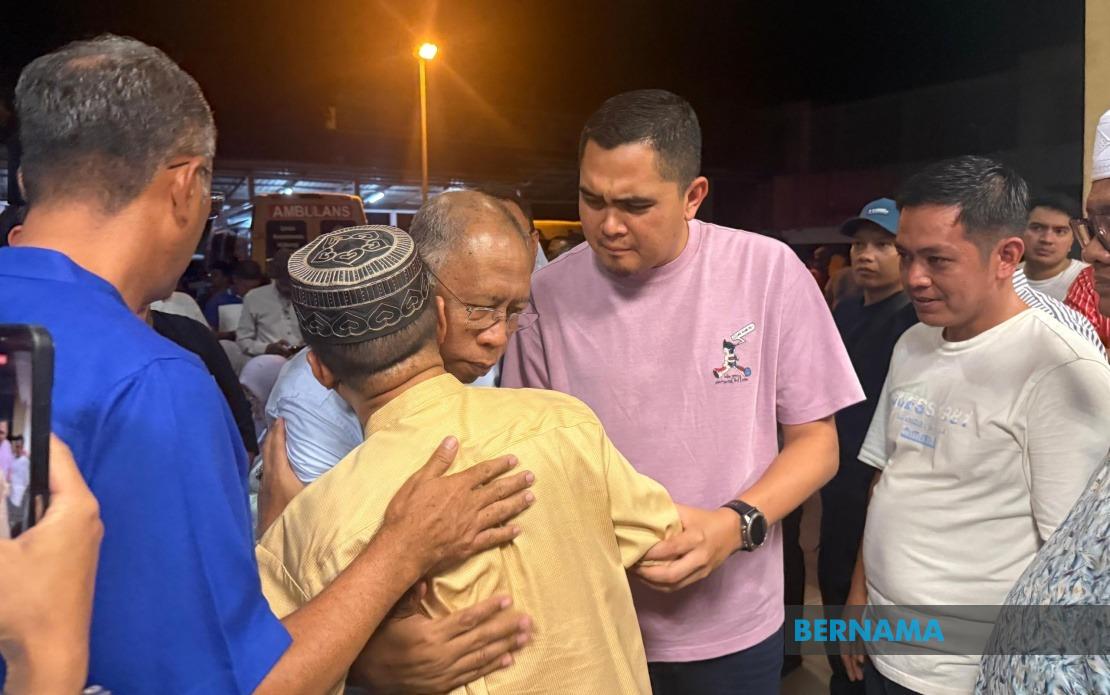
His father, Rahimi Abd Samad, 63, recounted the extent of his son's involvement to journalists at Sultan Haji Ahmad Shah Hospital's forensic unit in Temerloh. He emphasised that Mohd Radzi had cultivated strong relationships across UMNO membership, particularly within the youth segment. The attendance of high-ranking party figures at the hospital, including UMNO Youth chief Datuk Dr Muhammad Akmal Saleh, who came to pay respects, underscored the standing Mohd Radzi had achieved within party circles. The visit by the national youth chief—rather than merely divisional or state-level representatives—indicated recognition of Mohd Radzi's significance within UMNO's broader organisational structure.
The fatal journey had begun innocuously as a family outing. According to his father's account, Mohd Radzi had departed for Pulau Pangkor, Perak, on Thursday to participate in a motorcycle programme organised jointly with youths from his Maran constituency. The activity was framed as routine community engagement, the type of event a politically active figure would regularly undertake. The convoy was returning home after completing the programme when tragedy struck without warning. Rahimi recalled that nothing in his son's demeanour before departure suggested any concern, describing the atmosphere as entirely normal. The last conversation between father and son offered no intimation of the disaster awaiting.
The other surviving member of the immediate family faced severe consequences from the accident. Muhammad Rizz Haziq Mohd Radzi, the elder son, sustained critical head injuries and was undergoing intensive treatment at HoSHAS at the time of reporting. His survival amid circumstances that claimed the lives of four others placed him in a state of precarious health, with recovery prospects uncertain. The contrast between his condition and that of his deceased family members highlighted the random and brutal nature of the accident's consequences.
Beyond immediate family, the incident reverberated through UMNO's hierarchy at state and divisional levels. UMNO Supreme Council member Datuk Seri Shahaniza Shamsuddin, who also serves as Maran UMNO division chief, visited the family to express condolences. Kuantan UMNO division chief Datuk Seri Ab. Hamid Nazahar similarly made the journey to pay respects. These visits reflected standard protocol for senior figures responding to loss within party circles, yet their presence also suggested the degree to which Mohd Radzi's death represented a notable loss for UMNO's Pahang operations.
The postmortem process concluded at 9 pm the same evening, clearing the way for funeral arrangements according to Islamic rites. The deceased were to be taken to Masjid Kampung Paya Luas in Temerloh for the customary ritual washing and shrouding, followed by transport to Masjid As-Syakirin in Maran, where funeral prayers would be conducted prior to burial at Taman Sri Chendung Muslim cemetery. These arrangements reflected standard Islamic funeral procedures observed throughout Malaysia.
The tragedy occurred on a section of road that sees considerable traffic, with the old Kuala Lumpur-Bentong route forming part of the regional transport network connecting Selangor and Pahang. Tree-related incidents on Malaysian roads, whilst not uncommon during heavy weather, typically occur as isolated events. The timing near Janda Baik, a picturesque area along the route, provided no particular warning of hazard. The incident raises questions about roadside vegetation management on major thoroughfares, particularly those traversing forested or semi-forested terrain where fallen trees pose ongoing risks to motorists.
For UMNO, the loss represented the removal of an emerging leader from its Pahang apparatus during a period when the party has faced various political challenges at both state and national levels. Mohd Radzi's youth—still in his fourth decade—and his progression through party structures suggested potential for further advancement. His death creates a vacuum in the Maran division's youth leadership and removes a treasurer whose responsibilities encompassed financial management of Pahang UMNO Youth's operations. Succession arrangements for his various positions remain unaddressed, though such matters typically follow established party procedures.
The sudden nature of the tragedy, combined with the loss of multiple family members simultaneously, adds a dimension of personal devastation to the broader political implications. The accident serves as a stark reminder of the unpredictability of travel hazards in Malaysia, even on established routes, and the manner in which routine activities can transform instantly into catastrophe. For the UMNO party structure in Pahang, the incident marks an unexpected setback in its institutional continuity.

