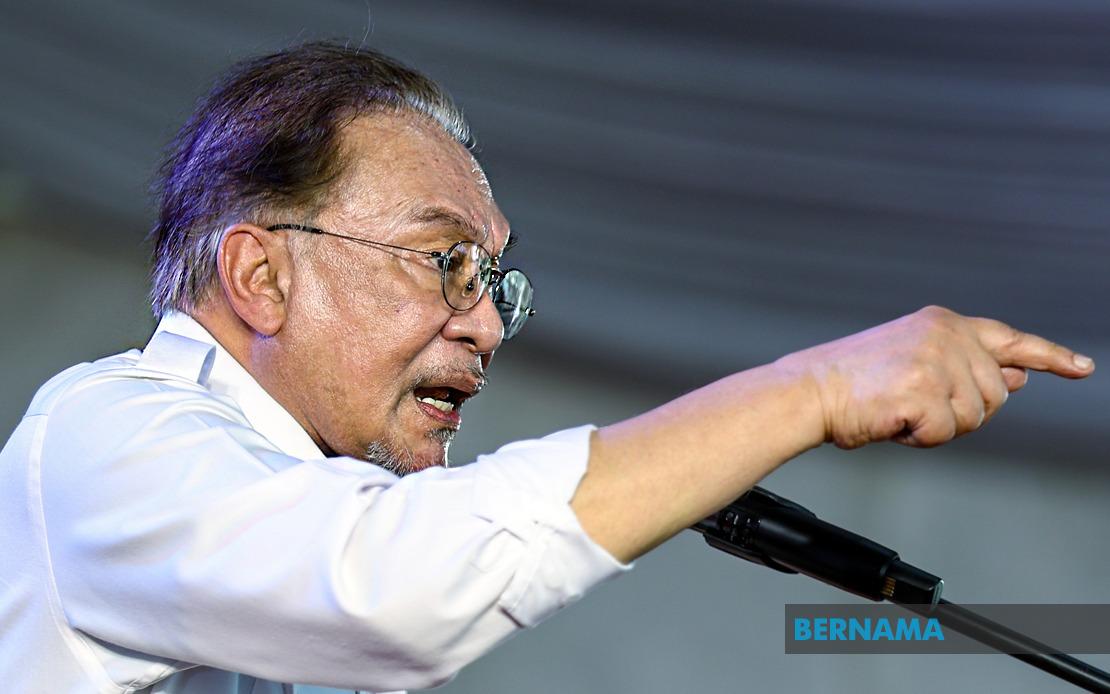
Prime Minister Datuk Seri Anwar Ibrahim has called on government officials at every tier to ensure equitable engagement with all communities, positioning fair governance as a cornerstone of Malaysia's cohesion and prosperity. Speaking during a community leaders' gathering in Johor Bahru on July 4, Anwar underscored that while the MADANI Government has pursued policy reforms nationally, translating these commitments into practice remains uneven at state and municipal levels, revealing a significant implementation gap within the administrative machinery.
Anwar's message centres on a nuanced understanding of fairness in governance that extends beyond simply approving every community petition or application. Instead, he advocates for a system where citizens and groups receive genuine opportunity to present their perspectives through transparent processes, ensuring that decisions appear—and actually are—reached through impartial mechanisms. This distinction matters significantly in Malaysia's context, where perceptions of administrative bias can fuel communal grievances and undermine trust in institutions. The Prime Minister stressed that leaders must remain receptive to engagement across different communities while adhering to existing legal frameworks and established principles, creating space for dialogue without compromising institutional integrity.
The timing and location of these remarks carry particular weight. Johor, Malaysia's second-largest state and a crucial economic engine, has emerged as a political battleground where different governing coalitions implement competing visions of inclusive governance. By addressing community leaders directly in the state capital, Anwar signals that the federal government is monitoring how sub-national authorities apply their decision-making powers. The implicit message is that fairness in governance is not merely aspirational rhetoric but an operational requirement with implications for federal-state relationships and resource allocation.
Anwar expanded his framework beyond conventional economic metrics, arguing that Malaysia's development cannot be measured purely through gross domestic product growth or infrastructure spending. He contends that national progress must equally encompass the preservation of unity, the cultivation of compassion, and the maintenance of mutual respect among the country's diverse populations. This perspective reflects growing recognition among policymakers that social fragmentation poses threats as serious as economic stagnation, particularly in a multicultural society where historical tensions can resurface when institutional fairness is questioned.
The Prime Minister highlighted the geographic distribution of economic expansion as evidence of MADANI's developmental approach. Investment flows are now reaching beyond traditional concentration zones such as the Klang Valley and Penang, extending into Negeri Sembilan, Melaka, and Johor through the Johor-Singapore Special Economic Zone (JS-SEZ), as well as Sabah and Sarawak. This regional rebalancing carries implications for how different communities perceive their stake in national economic gains. If development benefits appear unevenly distributed or favour particular groups, perceptions of unfairness intensify, regardless of objective economic statistics.
An emerging concern in Anwar's remarks centres on the role of technological advancement and economic transformation in shaping social cohesion. As Malaysia embraces artificial intelligence, digital transformation, and the energy transition, these shifts must be guided by what Anwar describes as strong moral values, cultural understanding, and religious principles. This framing acknowledges that technological change generates anxieties about displacement, cultural erosion, and social dislocation—concerns that political actors can exploit if institutional leadership fails to anchor change within broader frameworks of shared purpose and mutual benefit.
Anwar expressed particular alarm at the persistence of narratives weaponising race and religion, characterising such discourse as corrosive to Malaysia's social fabric and destabilising to national cohesion. He called on religious leaders to assume greater responsibility in promoting faith-based messages centred on compassion, justice, and mutual understanding within their communities. This appeal reflects the reality that religious authorities command substantial moral authority in Malaysia, particularly among segments of the population that may be sceptical of secular political messaging. By enlisting religious leaders as champions of unity, the Prime Minister seeks to mobilise institutions with deep community roots and credibility.
Anwar further assigned leaders at all levels a responsibility to provide accurate information and actively resist narratives that instrumentalise communal identities for political advantage. This plea implies recognition that competing political forces are actively promoting divisive framings, capitalising on genuine anxieties and grievances. Countering such efforts requires not merely passive abstention but active dissemination of alternative narratives grounded in factual information and constructive framing.
Central to Anwar's message is an appeal to commonality and shared interests that transcend communal boundaries. He articulated a vision where Malaysians across communities seek identical fundamental goods: quality education for children, healthcare for elderly parents, functional community infrastructure, and freedom to practice their chosen beliefs. These aspirations, he noted, are not novel demands but constitutional guarantees established by Malaysia's founding generation. This rhetorical move attempts to reframe unity not as forced conformity or sacrifice of distinct identities, but as rational cooperation among groups pursuing compatible objectives.
The framing of constitutional protections for religious freedom as settled legacy rather than contested terrain represents an implicit pushback against recent political movements suggesting that Malaysia's constitutional framework requires fundamental revision. By anchoring these protections in the work of Malaysia's founders, Anwar positions their preservation as honouring the independence generation rather than imposing external constraints on contemporary governance.
Deputy National Unity Minister R Yuneswaran's presence at the Johor event signals coordinated messaging across government structures responsible for social cohesion. The involvement of multiple ministries in articulating and promoting fairness and unity suggests this represents deliberate policy positioning rather than incidental commentary. It also indicates that the government perceives sufficient concern about governance fairness at sub-national levels to warrant high-level attention and reinforcement of messaging.
The practical challenge facing Malaysian leadership remains substantial. Translating Anwar's calls for fair engagement and transparent governance into consistent administrative practice across federal, state, and local institutions involves changing institutional cultures, constraining discretionary power, and establishing measurable accountability mechanisms. Whether current efforts prove sufficient to rebuild public confidence in institutional impartiality will substantially influence Malaysia's stability trajectory in coming years.

