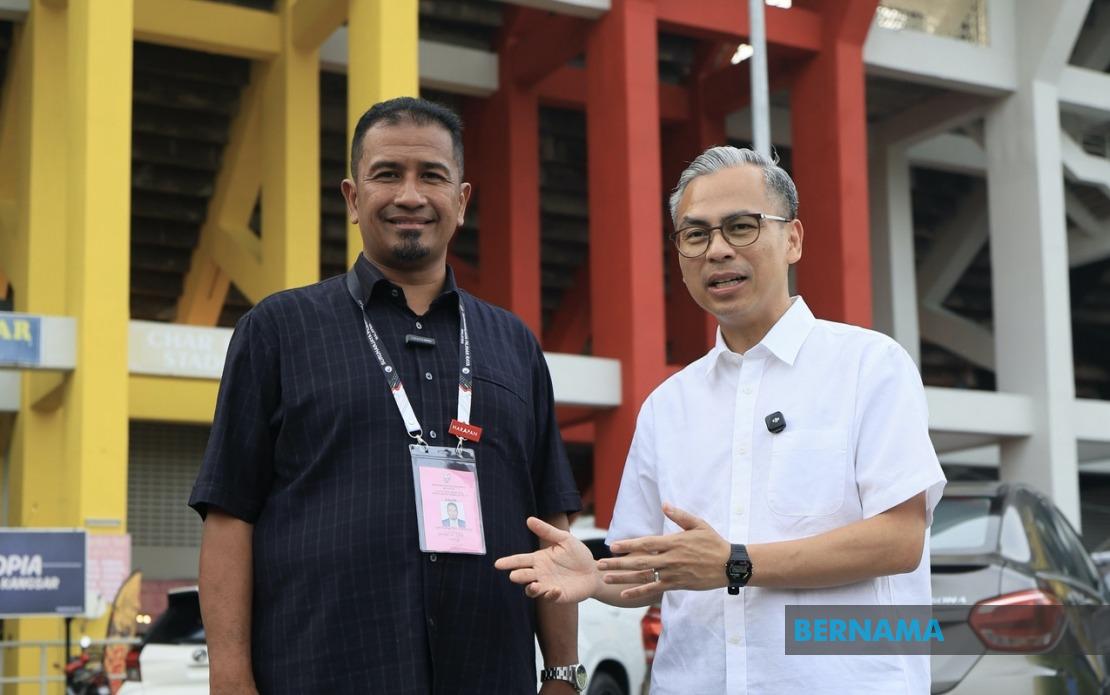
Communications Minister Datuk Seri Fahmi Fadzil has called for greater maturity in campaigning as the Negeri Sembilan state election enters its second week, following reports of vandalism against Pakatan Harapan candidate materials in the Rantau constituency. The plea underscores growing concerns about the tone of political contests in Malaysia and reflects broader efforts by the ruling coalition to set ethical standards as polling day approaches on August 1.
Fahmi made his remarks in Seremban while supporting PH candidate Nur Azman Mohamad during a campaign event at Paroi Stadium. The vandalism complaints highlight friction within the electoral process, with Rantau candidate Dr Azizul Hakim Mahdi reporting that multiple billboards bearing his name and campaign materials had been deliberately damaged. Social media posts documenting the incidents have added a digital dimension to what would traditionally remain a street-level problem, amplifying visibility and raising public awareness of the allegations.
The Communications Minister took a measured approach to the incidents, characterising vandalism as a serious matter requiring proper investigation while avoiding direct accusations. By framing such actions as offences that fall within the purview of law enforcement authorities, Fahmi positioned the government as above the fray, emphasising that PH would not respond to provocation with counter-accusations. This stance reflects a strategic calculation that moral authority lies with those who maintain composure and focus on substantive campaigning rather than tit-for-tat exchanges over alleged misconduct.
Fahmi's core message emphasised that electoral contests should be won through the persuasive power of ideas and verifiable facts rather than through intimidation or acts designed to damage opponents' campaign infrastructure. The appeal extended to all political parties participating in the Negeri Sembilan election, not merely those opposing PH, suggesting that the minister views campaign ethics as a shared responsibility across the political spectrum. This inclusive framing is significant in Malaysian politics, where accusations of double standards can quickly undermine a party's credibility with swing voters.
The minister's observations about campaign intensity proved prescient regarding the trajectory of state elections in Malaysia. He noted that the first week typically sees parties operating at moderate pace, with campaign activities ramping up dramatically as polling day approaches. Fahmi anticipated a marked acceleration in the final week, with Prime Minister Datuk Seri Anwar Ibrahim already conducting multiple stops and senior leaders expected to intensify their ground presence. This pattern of escalating activity is standard in Malaysian electoral cycles but creates additional pressure on candidates and party machinery to maintain discipline and avoid situations that could generate negative headlines.
The reference to Prime Minister Anwar's parallel campaign activities underscores how state elections function as microcosms of national political battles. Negeri Sembilan holds particular significance within Malaysian politics as a state where federal leadership involvement can influence outcomes and regional political dynamics. The presence of the Prime Minister on the campaign trail signals the federal government's investment in the result, implying that success carries implications beyond the state legislature and reflects on the central government's standing and legitimacy.
The Election Commission's timeline structures the electoral process with early voting scheduled for July 28 and general polling on August 1, providing a compressed campaign window that intensifies all activity. This condensed schedule means that incidents occurring early in the campaign period, such as billboard vandalism, can dominate news cycles and shape voter sentiment during a critical period when many voters are still forming their preferences. Fahmi's intervention therefore serves a strategic purpose beyond mere moralising, attempting to prevent any single incident from becoming the defining narrative of the campaign.
Billboard vandalism and campaign material destruction occupy a peculiar space in Malaysian electoral politics, situated between civil disputes and criminal offences. While technically unlawful, such incidents are often treated with relative leniency if perpetrators are not apprehended immediately, creating a grey zone where apparent impunity can breed further violations. Fahmi's explicit labelling of vandalism as an offence and his call for authorities to investigate sends a signal that such behaviour will not be tolerated, potentially deterring further incidents even if enforcement remains inconsistent.
The broader context for such appeals reflects Malaysia's evolving political culture following the 2020 federal election and subsequent political turmoil. Concerns about the tone and conduct of electoral campaigns have become more prominent in public discourse, with civil society groups and media frequently commenting on whether campaigns meet standards of decorum and substantive engagement. Fahmi's intervention taps into this emerging sensitivity, positioning PH and the federal government as custodians of higher campaign standards. For Malaysian voters, particularly those in urban and semi-urban areas of Negeri Sembilan, such messaging can reinforce perceptions of which coalition offers more responsible governance.
The communication also reveals implicit tensions within Malaysian political coalitions. While Fahmi spoke on behalf of PH, the vandalism allegations implicate unidentified actors whose political affiliation remains unconfirmed. By refraining from direct accusations, Fahmi avoids escalating partisan rhetoric while maintaining the moral high ground. However, this restraint may frustrate party activists who view such incidents as evidence of systematic opposition tactics deserving more forceful response. The minister's approach therefore reflects a calculation that measured responses serve the broader interest better than inflammatory rhetoric during a critical electoral period.
Looking forward to the final week of campaigning, Fahmi's call for healthy competition sets expectations for conduct that both major coalitions will struggle to maintain if grassroots tensions continue escalating. The effectiveness of his appeal will depend partly on whether rival parties publicly reciprocate the commitment to clean campaigning and partly on whether authorities respond promptly to any future incidents. For Malaysian readers, particularly those in Negeri Sembilan, such appeals signal whether the nation's political class has matured sufficiently to conduct competitive elections without resorting to destructive tactics that diminish democratic quality and public trust.

