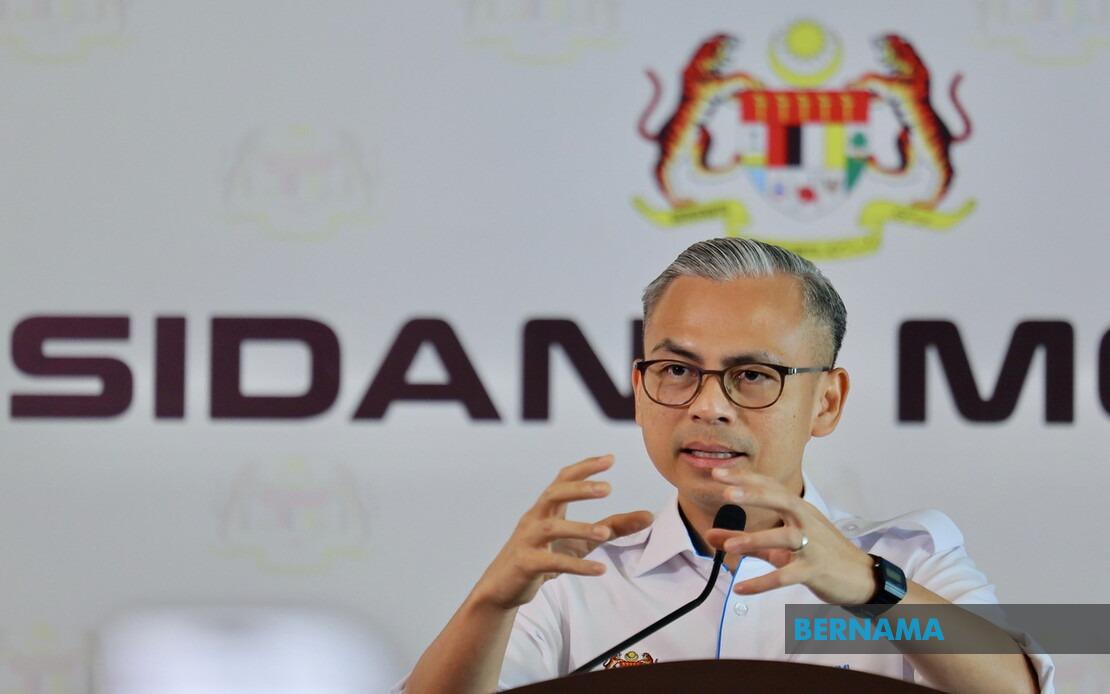
Communications Minister Datuk Seri Fahmi Fadzil has urged Malaysians to embrace national unity and patriotic values as the country prepares to commemorate its National Day and Malaysia Day celebrations. In a message released on Berita RTM's social media channels, Fahmi underscored that Malaysia's independence represents the collective sacrifices and determined efforts of preceding generations, a legacy that demands recognition and preservation for future citizens.
The minister emphasised that the strength of the nation rests fundamentally on the ability of Malaysians to transcend demographic boundaries. Regardless of ethnicity, faith, cultural traditions or socioeconomic standing, citizens must work collaboratively to reinforce the bonds of unity, cultivate reciprocal respect, and maintain the social equilibrium that has historically anchored Malaysia's resilience through periods of challenge.
Fahmi's message aligns with this year's national celebration theme, "Malaysia MADANI: Kesejahteraan Dinikmati" — a framework centring on shared prosperity and collective wellbeing. The minister highlighted that national advancement cannot be the preserve of privileged segments of society; rather, progress and economic gains must be distributed equitably so that all Malaysians, irrespective of their circumstances, experience tangible improvements in their lives and opportunities.
The concept of shared responsibility that Fahmi articulated reflects a broader governance philosophy gaining traction within Southeast Asian nations grappling with income inequality and regional disparities. By framing development as a collective endeavour rather than a top-down distribution model, the minister signalled a commitment to inclusive prosperity — a messaging priority for Malaysian policymakers seeking to address persistent socioeconomic divides within urban and rural communities alike.
Unity messaging from senior government figures carries particular weight in Malaysia's multiethnic context, where religious and cultural sensitivities remain potent political considerations. Fahmi's statement avoided controversial topics whilst maintaining emphasis on the foundational principles enshrined in the Federal Constitution — principles that have theoretically guided the nation since independence in 1957. This calibrated approach reflects the Communications Ministry's role in articulating government positions on matters of national cohesion.
The timing of such appeals — coinciding with National Day observances in August and Malaysia Day on September 16 — represents a symbolic moment for national introspection. Both dates carry historical significance: August 31 marks Malaya's independence from British colonial rule, whilst September 16 commemorates the formation of Malaysia through the merger of Malaya, Sabah, Sarawak, and Singapore (though Singapore later separated in 1965). These dual celebrations offer policymakers platforms to reinforce narratives of continuity, resilience and forward momentum.
Fahmi's invocation of patriotic spirit comes at a juncture when Malaysia navigates complex domestic and regional dynamics. Economic headwinds, evolving geopolitical pressures, and internal political realignments have created an environment where appeals to national unity carry practical governance implications. When senior ministers invoke collective responsibility, they are implicitly acknowledging that fragmentation — whether along ethnic, religious, or political lines — poses tangible risks to developmental objectives and regional stability.
The emphasis on Malaysia commanding respect on the global stage reflects a longstanding national aspiration. As Southeast Asia's third-largest economy and a middle-income nation with aspirations toward high-income status, Malaysia seeks to position itself as a stable, cohesive actor within regional frameworks like ASEAN. Domestic unity messaging thus serves dual purposes: domestically, it reinforces social cohesion; internationally, it signals governance competence and institutional stability to investors, trading partners, and multilateral institutions.
Fahmi's call for togetherness and mutual respect also carries implicit resonance with Malaysian citizens who have witnessed periods of heightened ethnic or religious tension. By emphasising shared stakes in national prosperity and collective progress, the minister attempted to reframe potentially divisive issues through an economic and developmental lens — suggesting that parochial interests ultimately prove self-defeating when weighed against common advancement. This rhetorical strategy has proven effective in Malaysian political discourse, where appeals to shared material interest can transcend more intractable identity-based disagreements.
The broader implications of such messaging extend beyond ceremonial observance. As Malaysia approaches midterm reviews of its national development plans and faces emerging challenges including technological disruption, climate adaptation, and demographic shifts, government leaders must continually reconstruct social consensus around shared national objectives. Patriotic appeals, though sometimes dismissed as performative, serve pragmatic functions in maintaining the psychological cohesion necessary for implementing difficult policy decisions.
Looking forward, the success of unity messaging will ultimately depend on whether stated commitments to inclusive prosperity translate into concrete policy outcomes. Malaysian citizens across different communities will gauge government sincerity by observing whether development dividends genuinely reach underserved populations, whether institutional mechanisms for addressing communal grievances function effectively, and whether political discourse remains anchored in constitutional principles or drifts toward more polarising rhetoric. The gap between aspirational statements and implementation realities has historically determined public receptiveness to national unity appeals.

