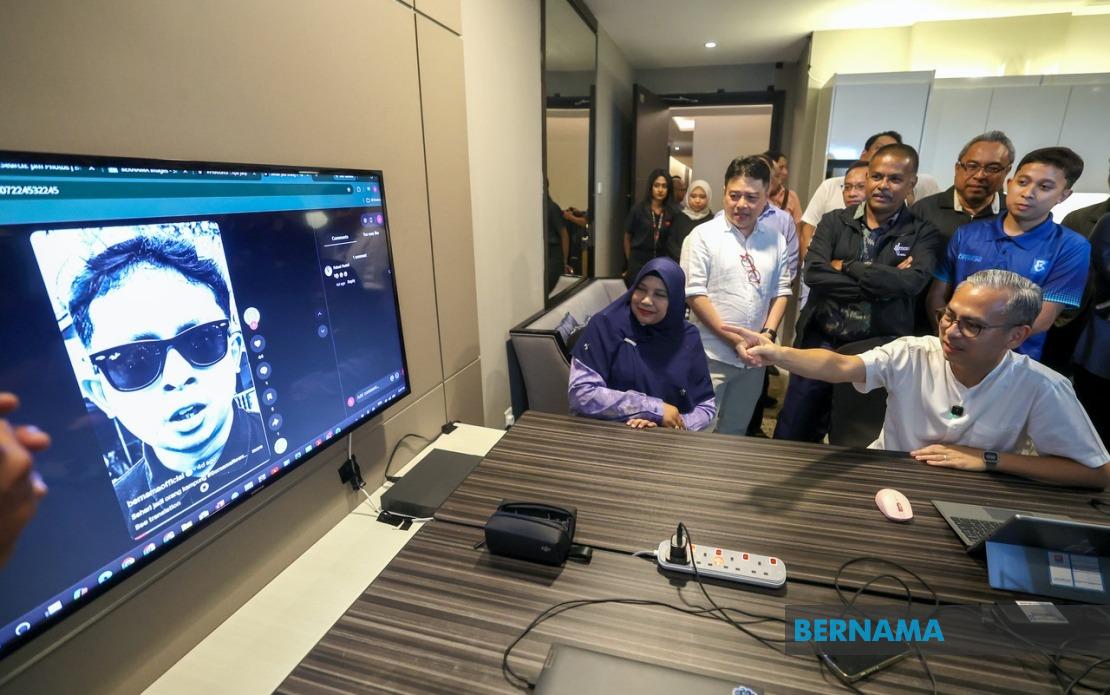
Communications Minister Datuk Fahmi Fadzil has commended the Malaysian National News Agency (Bernama) for its dedication in delivering timely and accurate reporting during the Johor state election, following an inspection of the organisation's dedicated operations centre in Johor Bahru. The minister's visit underscored the government's confidence in the national news agency's capacity to serve as a reliable information conduit during major democratic events, reflecting broader concerns about media infrastructure and accountability during electoral processes across Southeast Asia.
During his tour of the Bernama media hub, Fahmi observed firsthand the coordination between journalists, sub-editors, editors, and television personnel tasked with monitoring polling activities across the state. The comprehensive setup reflected careful planning to ensure voters and the public received dependable updates as events unfolded. The minister's presence at the facility highlighted the strategic importance placed on coordinated media operations during significant political moments, when information accuracy becomes critical for public confidence in democratic institutions.
The operational scope of Bernama's coverage was notably extensive, with 44 personnel—including journalists, cameramen, and photographers—deployed to report from all corners of Johor. Their remit stretched from the southern regions of Endau through to Tanjung Surat and into Johor's northern districts, demonstrating the logistical complexity of organising comprehensive election coverage across a geographically dispersed state. For Malaysian readers familiar with Johor's size and population spread, this distribution of resources illustrated the practical challenges news organisations face in delivering balanced coverage to remote areas often underserved by commercial media outlets.
Fahmi's commendation extended specifically to Bernama's leadership team, including chief executive officer Datin Paduka Nur-ul Afida Kamaludin and editor-in-chief Arul Rajoo Durar Raj, for their preparation and coordination efforts. The minister noted that the facilities provided to working journalists met satisfactory standards, enabling them to perform their duties without significant operational constraints. Such explicit ministerial recognition of news agency leadership carries weight in Malaysia's media ecosystem, where state-owned outlets occupy a particular position within both the information landscape and government relations.
The minister's extended presence at the operations centre—spending more than an hour inspecting facilities and engaging with staff—conveyed a message about the government's investment in institutional competence during electoral periods. By publicly validating the infrastructure and personnel arrangements, Fahmi effectively positioned Bernama as a dependable source during the election cycle, a particularly relevant signal given ongoing debates about media reliability and institutional trust in Malaysian public discourse. The gesture also reflected appreciation for the agency's role in maintaining information flow during democratic exercises, which remains central to Malaysia's political stability.
The Johor state election itself represented a significant electoral undertaking, with 172 candidates contesting 56 seats across the state. Early voting had commenced on the day of Fahmi's visit, with the main polling exercise scheduled for Saturday, July 11. The scale of this democratic exercise necessitated robust media coordination to track campaigning activities, candidate statements, and election administration across multiple constituencies. Bernama's preparedness for comprehensive coverage thus carried implications beyond the immediate electoral cycle, establishing precedent for how the national agency manages major news events requiring statewide coordination.
From a regional perspective, the emphasis on institutional media coordination during elections reflects broader Southeast Asian trends. Countries across the region have grappled with questions about information integrity during voting periods, with news organisations playing crucial roles in either buttressing or undermining public confidence in electoral outcomes. Bernama's systematic approach to covering Johor's polls contributed to Malaysia's continued reliance on structured institutional frameworks for managing election-related information flows, contrasting with less organised media environments elsewhere in Southeast Asia where electoral periods sometimes witness information vacuums or contradictory reporting.
The specific mention of Bernama TV staff operating alongside print journalists and photographers highlighted the diversified nature of modern election coverage. Digital and televised platforms have become equally critical as traditional newswire services in reaching Malaysian audiences, particularly younger voters who increasingly access news through multiple channels simultaneously. Bernama's multi-platform deployment therefore reflected evolving requirements in political communication and voter information access.
The minister's statement that facilities and support provided to on-duty personnel were "satisfactory" carries particular significance for understanding working conditions within Malaysia's state media infrastructure. Adequate facilities—including workspace, technology, and logistical support—directly influence reporting quality and journalist wellbeing during demanding electoral periods requiring extended hours and high-pressure deadline management. Public ministerial validation of these arrangements sends signals about institutional standards and expectations across Malaysia's public sector media landscape.
Fahmi's visit and subsequent remarks also reflected the government's broader relationship with Bernama during electoral periods. As the national news agency, Bernama holds statutory responsibilities for distributing official information and maintaining archival records of significant national events. Demonstrating ministerial satisfaction with the agency's operations reinforces its institutional legitimacy and signals continued government commitment to maintaining Bernama's role as the authoritative source for election-related information, particularly important given the rise of alternative news sources and social media platforms that sometimes disseminate unverified claims during politically sensitive periods.
The operational model Bernama deployed in Johor—with centralised coordination from a main operations centre coupled with distributed field personnel across the state—represents institutional best practice for managing statewide news coverage. This approach ensures consistent editorial standards, coordinated story-checking, and unified narrative frameworks while maintaining local relevance and context-specific reporting. For Malaysian journalists and media organisations observing Bernama's operations, the model offers lessons in scaling coverage operations without sacrificing quality or consistency.
Moving forward, the successful execution of Bernama's Johor election coverage would likely serve as a template for subsequent state electoral exercises and national voting periods. The infrastructure, staffing arrangements, and coordination mechanisms demonstrated during this cycle could inform media planning for future democratic exercises. Additionally, the institutional learning from large-scale coordinated coverage operations contributes to Malaysia's evolving media ecosystem, where tensions between state-owned news outlets and emerging independent platforms continue reshaping how election information reaches the public.
The episode also underscored continuities in Malaysian political communication, where formal ministerial engagement with state media institutions remains a significant aspect of government-media relations. Rather than approaching such visits as ceremonial, Fahmi's detailed inspection and specific feedback suggested substantive interest in institutional performance. This hands-on engagement style reflects the importance Malaysian government officials accord to managing information flows during electoral contests, when public perception and voter understanding of events shape political outcomes and institutional legitimacy.

