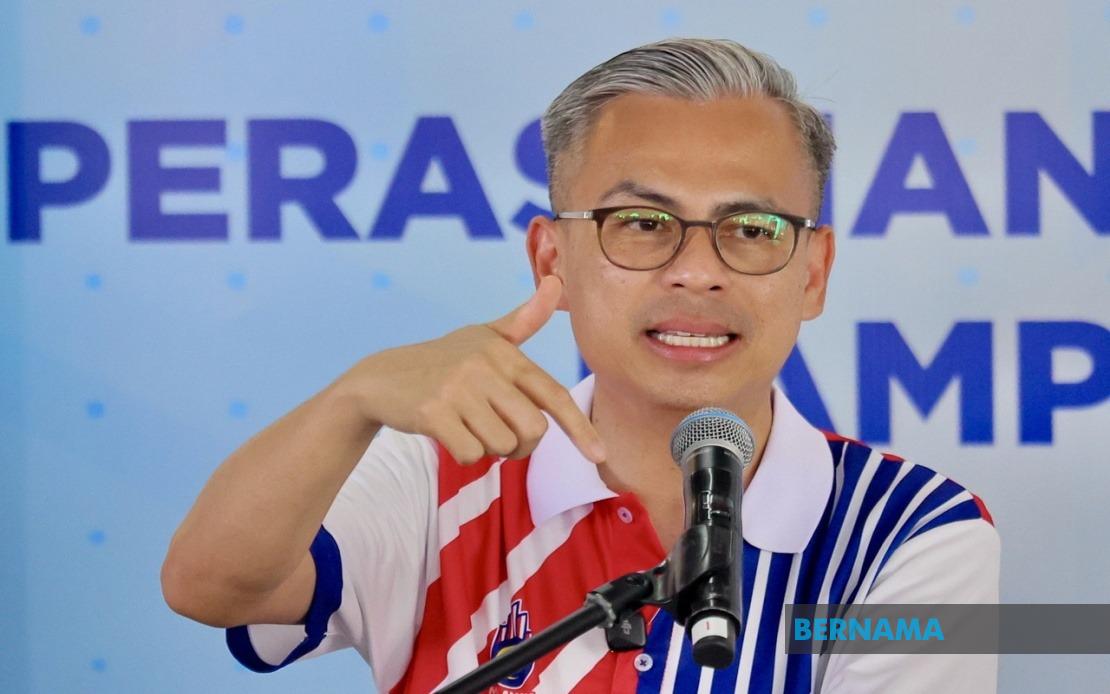
Communications Minister Datuk Fahmi Fadzil has strongly criticised the individuals responsible for creating a counterfeit WhatsApp account that impersonates Pakatan Harapan's Endau state seat candidate Saiful Nizam Samat. In a comment posted on Saiful Nizam's official Facebook page, Fahmi characterised the deception as an irresponsible action reflecting the desperation of certain parties to gain electoral advantage. The minister's public rebuke underscores growing concerns about the integrity of campaign communications during the Johor state election, where digital platforms have become increasingly central to voter engagement and information dissemination.
Saiful Nizam himself issued a formal denial regarding the fraudulent account, making clear that the WhatsApp profile bearing his name and likeness holds no affiliation whatsoever with him, his campaign operations, or his official campaign machinery known as Team SS. The fake account had been actively utilising his identity and profile photograph to engage with members of the public under the false pretence of representing his election campaign. This type of impersonation represents a sophisticated form of electoral malpractice that exploits voter trust and the digital trust infrastructure that candidates and parties have painstakingly built with their constituencies.
In his Facebook statement, Saiful Nizam shared photographic evidence of messages originating from the fraudulent account, which brazenly identified itself as "I am Saiful Samad, the future Endau assemblyman." The account had been leveraging his legitimate political credentials and campaign branding to establish false legitimacy with potential voters. Such tactics illustrate the evolving sophistication of disinformation campaigns during electoral periods, wherein bad actors weaponise social media to sow confusion, harvest personal information, or manipulate voter sentiment without accountability.
The Endau state seat contest represents a highly competitive political battleground, with four distinct political parties fielding candidates in what promises to be a closely watched race. The four-cornered fight involves representatives from Barisan Nasional, Pakatan Harapan, Perikatan Nasional, and Parti Orang Asli Malaysia, each vying for voter support in a constituency where every vote may prove decisive. The emergence of fake campaign accounts in such a tightly contested environment raises questions about the adequacy of existing safeguards and the vulnerability of voters to coordinated disinformation strategies during the critical final stages of campaigning.
Saiful Nizam urged the public to exercise heightened vigilance when engaging with online political communications, particularly regarding requests for personal information or participation in unverified campaign activities. He specifically advised voters who receive suspicious messages claiming to originate from him or his campaign to verify such communications directly through Team SS's officially recognised and monitored communication channels. This guidance reflects the necessity for campaigns to establish robust verification mechanisms that allow voters to distinguish authentic communications from fraudulent impositions, a challenge that has become increasingly urgent as digital campaigning intensifies.
The incident highlights the persistent vulnerability of democratic processes to manipulation through digital means, particularly in contexts where voter authentication and digital literacy may vary across constituencies. Fake accounts masquerading as candidates can undermine the legitimacy of campaigns, create confusion regarding authentic policy positions, and potentially expose voters to scams or phishing attempts designed to harvest sensitive personal data. For Malaysian voters increasingly reliant on social media for political information, the ability to distinguish authoritative sources from fraudulent actors represents a critical competency during election periods.
Communications authorities and political parties face mounting pressure to establish clearer protocols for digital verification and to work collaboratively with technology platforms to identify and remove impersonation accounts swiftly. The speed at which such accounts can proliferate and gain traction with unsuspecting voters underscores the limitations of reactive responses to electoral disinformation. More proactive measures, including pre-campaign verification systems, voter education initiatives, and closer coordination between platforms and electoral bodies, appear necessary to safeguard the integrity of digital campaign spaces.
The Johor state election occurs against a backdrop of broader Southeast Asian concerns regarding the resilience of electoral systems to digital manipulation. Malaysia's experience with fake campaign accounts mirrors challenges documented in neighbouring democracies, suggesting that regional approaches to digital electoral integrity might yield valuable lessons for coordinating responses across borders. The stakes extend beyond individual electoral contests to encompass broader questions about public trust in democratic institutions and the perceived fairness of electoral competition.
For voters in Endau and elsewhere in Johor, the episode serves as a timely reminder that verification and caution must accompany engagement with online political communications. Official campaign websites, verified social media accounts marked by platform authentication systems, and direct communication through established party channels remain the most reliable means of obtaining authentic information about candidates and their policy platforms. As digital campaigning continues evolving, voter responsibility and digital literacy assume greater importance in protecting against manipulation and maintaining confidence in electoral legitimacy.

