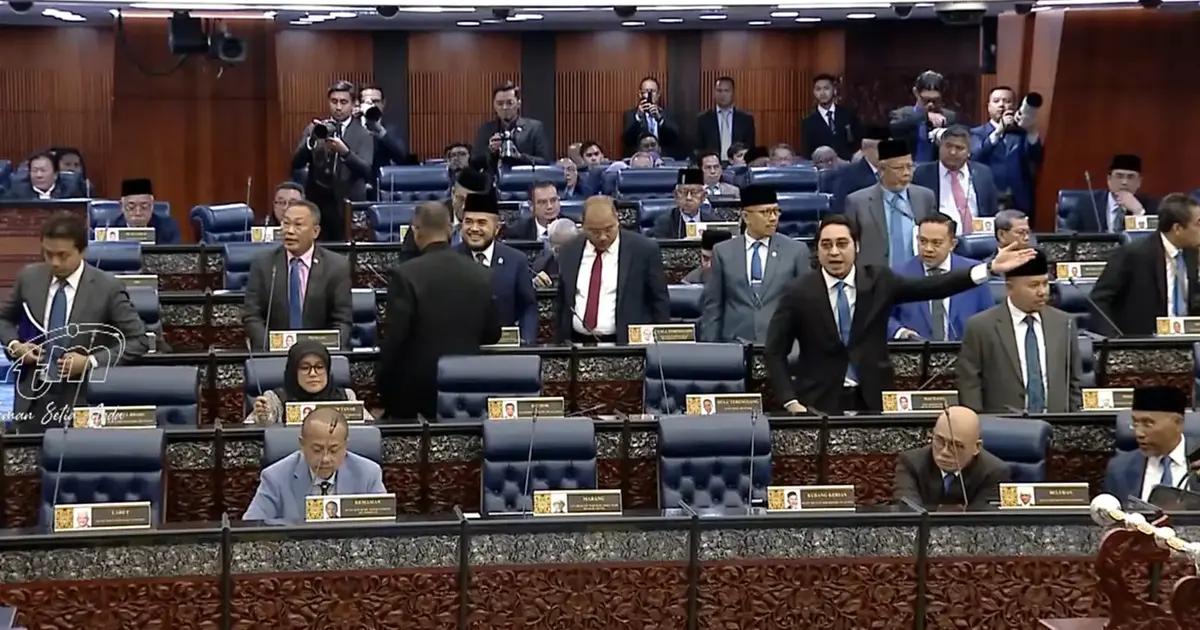
Communications Minister Fahmi Fadzil has publicly commended members of parliament from Bersatu for their willingness to participate in the sitting of the Tabung Haji Royal Commission of Inquiry report, drawing a marked distinction between their conduct and the absence displayed by other parliamentarians aligned with the Perikatan Nasional coalition.
The Tabung Haji Royal Commission inquiry represents a significant parliamentary exercise aimed at investigating matters related to Malaysia's pilgrimage management institution. The attendance and participation of legislators in such proceedings reflects their commitment to accountability and oversight mechanisms within government. Fahmi's remarks underscore the political divisions that have emerged around how different coalition parties approach legislative scrutiny.
The incident highlights broader tensions within the Perikatan Nasional alignment, which has shown internal fractures on various parliamentary matters. While Bersatu chose to engage substantively with the commission's report and participate in the related parliamentary sitting, other PN-aligned MPs opted for a walkout strategy. This divergence in parliamentary tactics signals that despite formal coalition arrangements, constituent parties maintain distinct approaches to governance and accountability issues.
Bersatu's decision to remain engaged in the proceedings carries particular significance given the political dynamics of Malaysian parliament. The party's choice to participate rather than withdraw demonstrates a willingness to engage with institutional processes, even when they may scrutinize government functions or reveal uncomfortable truths about public agencies. This approach contrasts sharply with boycott or walkout strategies, which some view as attempts to avoid difficult questions or sidestep accountability.
The Royal Commission inquiry into Tabung Haji touches on matters of considerable public interest, as the institution manages pilgrim savings and oversees arrangements for Malaysian Muslims undertaking the Hajj. Any findings or recommendations emerging from such an inquiry carry implications for millions of Malaysians who have deposits with Tabung Haji and rely on its services. The transparency and thoroughness of parliamentary engagement with these findings therefore matter significantly to public confidence.
Fahmi's public acknowledgement of Bersatu's participation serves multiple purposes within the political landscape. It recognizes and rewards cooperative behaviour, potentially encouraging other MPs to adopt similar approaches to legislative scrutiny. Such commentary also creates political differentiation between parties, with Bersatu gaining credit for transparency-oriented behaviour while other PN members face potential criticism for their absence during important proceedings.
The walkout by other Perikatan Nasional-linked MPs raises questions about their motivations and concerns. Whether the absence reflected disagreement with the inquiry's findings, protest against the questioning process, or other tactical political considerations remains a matter for interpretation. However, from a parliamentary governance perspective, such walkouts undermine the deliberative and scrutinous functions that legislatures are meant to perform.
For Malaysian observers, these developments illustrate how coalition politics can fragment under pressure, with constituent parties making independent judgments about high-stakes parliamentary proceedings. Bersatu's choice to engage stands in relief against the broader PN political positioning, potentially affecting inter-party relationships and affecting how voters perceive each party's commitment to democratic accountability and institutional oversight.
The broader implications extend to public perception of how parliament functions as a check on executive power. When some MPs absent themselves from scrutiny proceedings, whether for principled or tactical reasons, it diminishes the collective effectiveness of parliament as an oversight body. Fahmi's commendation of those who stayed engaged effectively highlights this tension between individual party interests and the institutional health of parliament as a whole.
Moving forward, this episode may influence how other parties approach future Royal Commission inquiries and parliamentary scrutiny sessions. The distinction Fahmi has drawn between Bersatu's participation and other parties' walkouts creates a political record that voters and party activists will likely reference when evaluating parties' commitment to transparency and accountability. In Malaysian political culture, where institutional legitimacy carries significant weight, such positioning can have medium-term consequences for party reputation and electoral performance.
The Tabung Haji RCI proceedings thus serve as more than a technical review of a single institution. They represent a test of parliamentary values and parties' willingness to subject their own or related government functions to public scrutiny. Bersatu's engagement, as praised by Fahmi, suggests at least one coalition component recognizes the political and governance benefits of appearing committed to institutional accountability rather than attempting to evade or obstruct inquiry processes.

