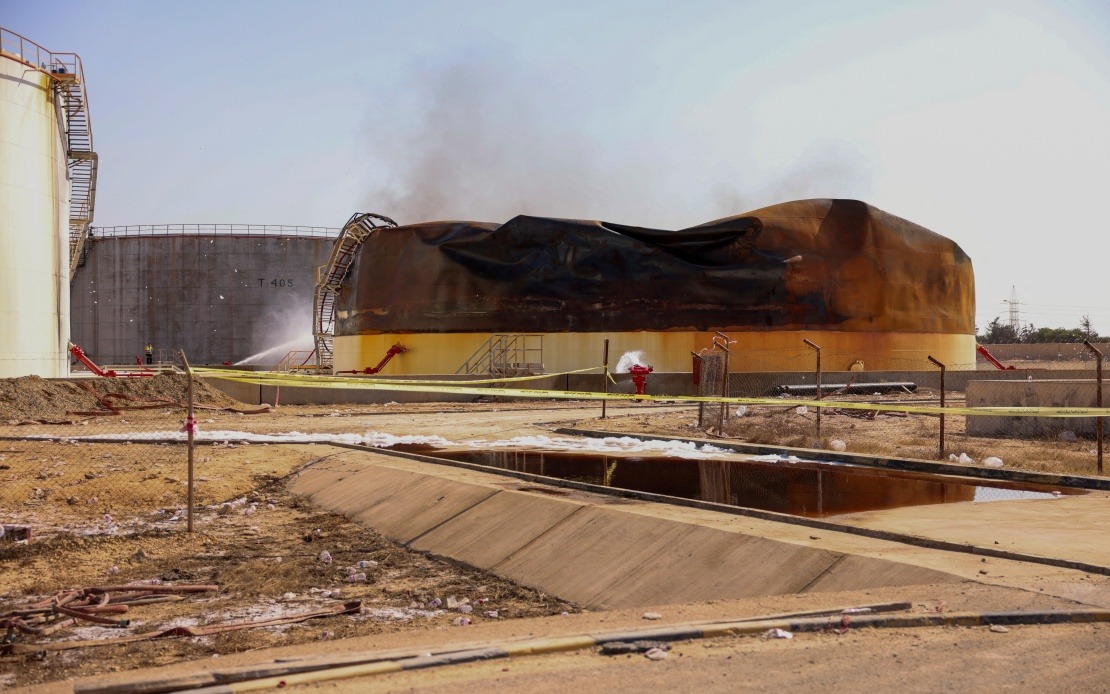
A significant explosion occurring Saturday near the Zawiya power plant in western Libya has triggered substantial disruptions to the country's electricity generation capacity, according to the state-owned General Electricity Company of Libya (GECOL). The blast damaged several operational generation units at the facility, prompting immediate shutdown procedures and rendering those units temporarily inoperative. GECOL confirmed that technical teams have commenced investigations to establish the precise cause and circumstances of the explosion, with authorities prioritizing the restoration of electricity services across affected areas.
The timing of this incident adds urgency to Libya's energy crisis, which has plagued the nation for years as political instability and infrastructure damage have hamstrung power generation capacity. The Zawiya power plant represents a critical component of Libya's electricity infrastructure, serving as a major supplier to western regions including Tripoli and surrounding population centers. The loss of multiple generation units at such a facility threatens to compound existing shortages that have forced rolling blackouts and rationing across the country.
GECOL officials emphasized that restoration efforts are proceeding methodically to prevent further complications or safety hazards. The company has committed to gradually bringing electricity services back online and expects power supplies to normalize within a reasonable timeframe, though no specific timeline was provided. In a statement expressing regret over the incident, GECOL apologized to citizens for the consequent disruptions and pledged that operational teams would persist in their work until the entire electricity grid achieves full stability and normal functioning.
This explosion occurs within a volatile security context for the Zawiya region. Just one week prior, a series of unidentified drone attacks targeted multiple critical infrastructure facilities within the city, including oil storage installations, desalination plants responsible for freshwater production, and power generation infrastructure. These coordinated attacks raised serious questions about the security vulnerabilities facing Libya's essential services and sparked renewed concerns about the potential for further incidents.
No militant group or state actor has publicly claimed responsibility for either the drone strikes or the explosion, leaving their origins shrouded in uncertainty. The Libyan authorities have launched formal investigations aimed at identifying the sources of the unmanned aircraft involved in the earlier attacks and determining the identity of those responsible. The inability to swiftly attribute these incidents reflects the broader security challenges facing Libya, where multiple armed factions and external actors have historically wielded influence over critical infrastructure.
For regional observers and Southeast Asian countries maintaining economic ties with Libya, these security incidents underscore the fragility of the nation's recovery efforts. Libya's oil and gas sector remains crucial to the broader Mediterranean and African energy landscape, and disruptions to electricity infrastructure often cascade into complications for petroleum production and export operations. As Malaysian companies and investors maintain interests across North Africa, the instability in Libyan infrastructure has implications for broader economic relationships and energy security in the region.
The repetition of attacks on Zawiya's infrastructure over such a short timeframe suggests a deliberate targeting strategy, whether by rival militias competing for territorial control or by external powers seeking to destabilize the government. The convergence of explosions and drone strikes within days points to either a coordinated campaign or an escalating cycle of violence that threatens the delicate balance of the existing security situation. For Libya's struggling government, which lacks the military capacity to defend all critical installations, this represents an acute vulnerability.
The electricity crisis has broader humanitarian dimensions that extend beyond industrial concerns. Rolling blackouts affect hospitals, water treatment facilities, and essential services relied upon by ordinary Libyans. The damage to desalination plants compounds water scarcity issues, creating interconnected crises where energy disruptions ripple into public health and welfare challenges. GECOL's restoration efforts therefore carry significance beyond technical utility statistics.
Looking forward, the underlying issue of Libya's infrastructure resilience requires addressing not merely the immediate restoration of damaged equipment, but the structural vulnerabilities that allow repeated attacks to succeed. Whether through improved security protocols, hardened installations, or political settlements that reduce incentives for sabotage, Libya faces difficult choices about how to protect its critical infrastructure. The frequency of recent incidents suggests that current protective measures remain inadequate, potentially necessitating substantial investment and international cooperation.

