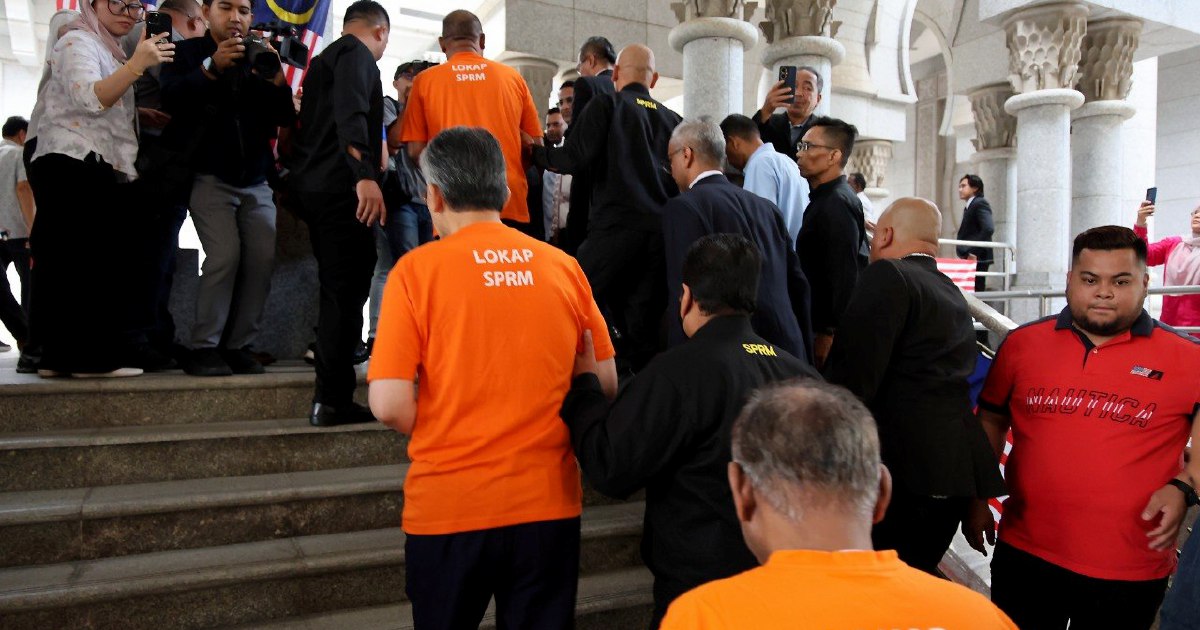
The Putrajaya magistrates' court hosted a significant development in an ongoing investigation as two prominent former government officials made appearances for remand proceedings. Among those attending were a former leader of Lembaga Tabung Haji, the Malaysian hajj pilgrims' fund management institution, alongside a retired Treasury secretary-general. The hearing marks a continuation of scrutiny into matters affecting high-level governance within Malaysia's financial and religious institutions.
Lembaga Tabung Haji has faced considerable public attention in recent years following questions about its operational performance and management decisions. The institution, which manages savings and investments for Muslims intending to perform the hajj pilgrimage, holds significant trust within the Malaysian community given its custodial role over billions of ringgit belonging to millions of depositors. When serious questions emerge about its leadership, they naturally attract substantial media coverage and public interest.
The involvement of a former Treasury secretary-general underscores the cross-institutional dimensions of this investigation. Malaysia's Treasury occupies a pivotal position in government financial management and policy formulation, making any allegations or inquiries involving former senior officials particularly noteworthy for understanding governance accountability mechanisms. The pairing of TH and Treasury figures suggests investigators are examining potential connections or decisions spanning multiple government agencies.
Court proceedings of this nature typically involve determining whether detained individuals should remain in custody while investigations continue, or whether they may be released under bail or other conditions. Remand hearings represent a crucial procedural checkpoint in Malaysia's criminal justice system, balancing the state's investigative needs against suspects' rights to liberty. The fact that these individuals faced court appearances indicates authorities had deemed their detention necessary at some stage of the inquiry.
For Malaysian investors and pilgrims who have entrusted funds with TH over many years, such legal proceedings carry practical implications. Questions about institutional governance directly impact confidence in the organization's ability to safeguard deposits and deliver promised services. Similarly, concerns involving Treasury officials raise broader questions about financial oversight and internal government accountability structures that reassure citizens about how public and semi-public institutions operate.
The investigation appears to form part of a broader pattern of scrutiny affecting Malaysia's governance landscape in recent years. Whether examining alleged improprieties in government-linked companies, financial irregularities, or decision-making processes, authorities have pursued various inquiries that have sometimes resulted in charges against prominent figures. This reflects evolving expectations around transparency and accountability in institutions managing public or quasi-public resources.
Context matters significantly here. Lembaga Tabung Haji's history includes periods of considerable debate regarding investment strategies, dividend distributions, and administrative efficiency. Depositors have occasionally raised concerns about returns on their savings relative to market alternatives or about transparency in how the institution deploys its substantial asset base. Such institutional questions sometimes intersect with governance inquiries, particularly when they involve decisions made by senior leadership.
For Southeast Asian readers observing Malaysian developments, these proceedings illustrate how even established institutions managing public trust can become subject to legal investigation. Regional observers often track how different countries handle governance accountability, making Malaysia's approach to investigating senior officials relevant to broader conversations about institutional integrity across the region.
The legal proceedings themselves will likely unfold over considerable time. Malaysian courts handle such matters through established procedures, with remand hearings representing only an initial stage. Depending on investigation outcomes, various scenarios could eventually emerge, ranging from charges being filed to inquiries concluding without prosecutions. The coming weeks and months will reveal further details as the investigation progresses and the judicial process advances.
These developments reflect ongoing efforts to maintain institutional accountability within Malaysia's governmental and semi-governmental structures. Whether the investigation ultimately results in charges, settlements, or other resolutions remains to be determined through proper legal channels. For now, the court appearances represent a public acknowledgment that relevant authorities are actively pursuing matters deemed sufficiently serious to warrant formal legal proceedings involving individuals who previously held positions of considerable responsibility.
The case underscores why governance and institutional management remain central concerns for Malaysian society. Public and pilgrimage-linked institutions depend fundamentally on the trustworthiness of their leadership and operational frameworks. When questions arise about how such institutions function, and when former officials face legal scrutiny, it prompts broader reflection on strengthening mechanisms that protect the interests of depositors, citizens, and stakeholders who depend on these organizations.

