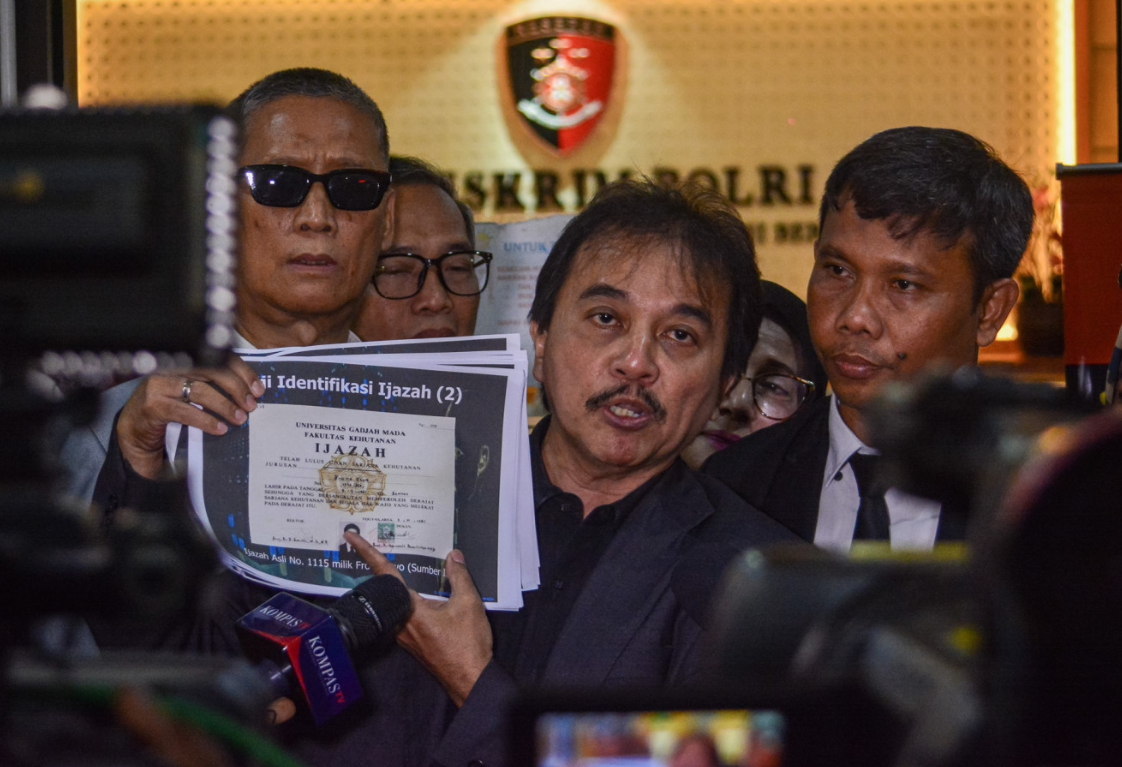
Jakarta police have arrested former youth and sports minister Roy Suryo and health activist Tifauzia 'Tifa' Tyassuma on suspicion of defamation related to their public questioning of ex-president Joko 'Jokowi' Widodo's university diploma, marking a significant turning point in a dispute that has consumed Indonesian political discourse for six years. The two were taken into custody at their homes on Friday morning as the investigation advanced toward prosecution, according to Roy's legal counsel Ahmad Khozinudin, signalling that authorities are moving aggressively to resolve what has become a deeply polarising matter within Indonesia's political establishment.
The General Crimes Directorate of Jakarta Police characterised the detention as standard procedure required before transferring the case file to prosecutors, following the completion of the investigation's preliminary phase. Investigation director Sr Comr Iman Imanuddin explained during a briefing that the arrest facilitated the necessary handover of evidence and documentation to the prosecutor's office, allowing the criminal justice system to proceed without administrative impediments. The police also conducted mandatory health assessments and verified evidence collection as part of established protocol, Imanuddin said, framing the detention as a routine administrative measure rather than punitive action.
Roy and Tifa stand accused not only of defaming Jokowi through their assertions regarding the diploma's authenticity but also of manipulating electronic documents to substantiate their claims. The charges invoke the controversial Electronic Information and Transactions Law, which carries a potential prison sentence of up to six years and has drawn criticism from civil liberties advocates across Southeast Asia for its sweeping application to speech-related offences. The specificity of charges relating to document manipulation suggests investigators believe the pair engaged in methodical efforts to construct a false narrative, distinguishing their case from simple public commentary or opinion.
The diploma controversy itself has deep historical roots in Indonesian politics, beginning in 2019 when social media users initially circulated questions about the legitimacy of Jokowi's academic credentials. What started as online speculation evolved into a sustained campaign that periodically resurfaces, drawing participation from various political actors and civil society figures. The dispute has proven remarkably durable despite official interventions, reflecting underlying tensions within Indonesia's political landscape and demonstrating how questions about leadership credentials can maintain salience across multiple election cycles and administrations.
Legal proceedings surrounding the matter have multiplied and become increasingly complex. In 2022, civil litigation commenced against individuals making diploma allegations. Throughout 2025, additional investigations and court proceedings have involved numerous parties making competing claims and counterclaims. In May 2025, the National Police formally declared the diploma authentic and concluded an earlier forgery investigation, seemingly closing one chapter of the dispute. However, a case review conducted in July 2025 provided a platform for critics including Roy Suryo to continue challenging the police's conclusions, demonstrating that official determinations have failed to resolve the underlying controversy.
Roy's career trajectory makes his involvement particularly noteworthy. Having served as youth and sports minister during the administration of former president Susilo Bambang Yudhoyono, he represents an earlier political generation with institutional memory and established networks within Indonesia's bureaucratic apparatus. His credentials and past government service lend particular weight to his public statements, potentially explaining why authorities regard his allegations as particularly damaging to Jokowi's reputation and why they have prioritised prosecution compared to other individuals initially named as suspects.
The detention immediately provoked criticism from Roy and Tifa's legal representation. Refly Harun, their attorney, publicly questioned the justification for arrest, noting that both individuals had consistently appeared for police questioning and complied with all summonses. He characterised the detention as disproportionate, particularly given that the prosecutor's office was not scheduled to receive the case file until the following Monday, rendering a three-day detention seemingly unnecessary from a procedural standpoint. This defence argument raises questions about whether the arrest serves legitimate investigative purposes or functions as intimidation.
The case illustrates the precarious position of political critics in Indonesia, where defamation and electronic information laws can be wielded as instruments against those who question official narratives. For Malaysian observers, the situation carries particular resonance, as similar concerns about the use of defamation law and digital crime statutes to suppress legitimate political speech have periodically surfaced in Malaysian jurisprudence and commentary. The Indonesian case demonstrates how governments throughout Southeast Asia navigate tensions between protecting individual reputations and preserving space for public debate on matters of significant national interest.
Police records indicate that eight individuals were originally named as suspects in the defamation case. However, authorities subsequently dropped charges against three of them—Eggi Sudjana, Damai Hari Lubis, and Rismon Sianipar—following mediation processes. This selective prosecution pattern suggests either that investigators determined those individuals bore lesser responsibility or that mediation offered them an exit strategy unavailable to Roy and Tifa. The differentiated treatment raises questions about the consistency of prosecutorial standards and whether other factors beyond evidentiary considerations influence charging decisions.
For regional observers, the escalation carries implications beyond Indonesia's borders. The case reflects broader patterns across Southeast Asia where governments employ legal mechanisms to manage political controversies and control narratives around leadership credentials and institutional integrity. As Malaysia's own political landscape remains subject to competing narratives regarding institutional performance and governmental legitimacy, the Indonesian experience offers cautionary lessons regarding the deployment of defamation and cybercrime legislation in contexts where political polarisation runs high and public trust in institutions remains fragile.
The unfolding prosecution will test Indonesian judicial independence and commitment to protecting political speech. If courts ultimately convict Roy and Tifa, the precedent could chill public willingness to question official accounts on matters of significant public importance. Conversely, acquittals or lenient sentences might suggest that courts recognise important distinctions between malicious defamation and good-faith political debate. The outcome will likely influence how Indonesian civil society organisations and political actors calibrate their approach to scrutinising official claims and holding leadership accountable through public discourse.