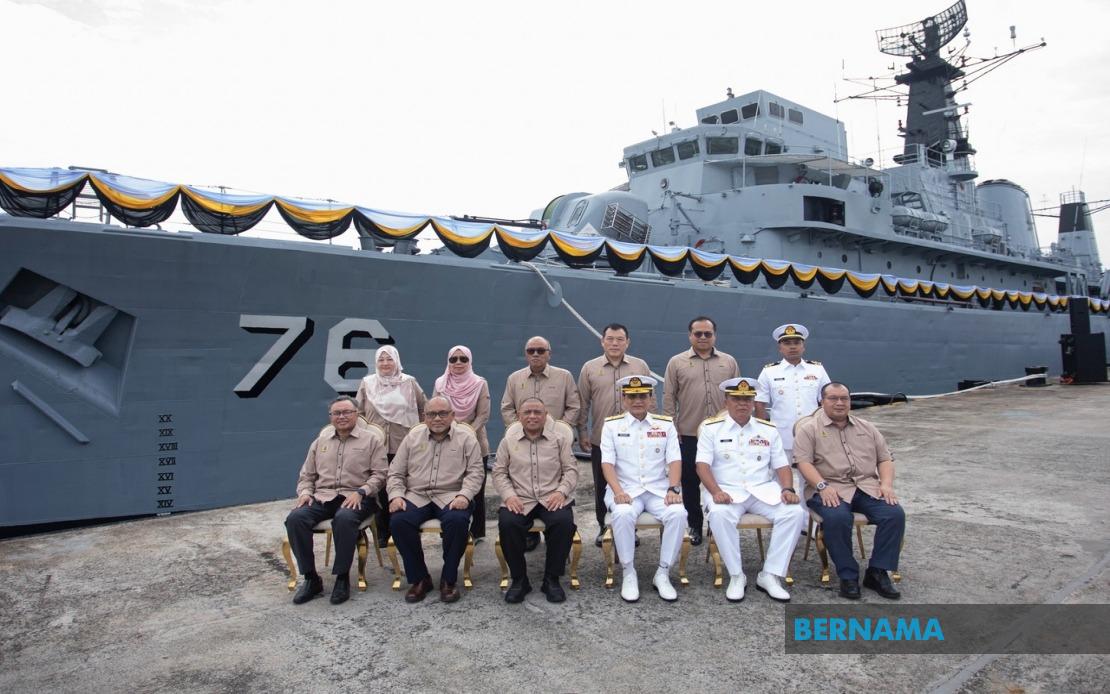
The decommissioned naval vessel Hang Tuah has passed into the custodianship of the Perak state government following an official handover ceremony at Lumut Naval Base, marking the beginning of an ambitious initiative to repurpose the historic warship as a cultural and tourism landmark. The Royal Malaysian Navy formally transferred the vessel to state authorities on July 27, with Western Fleet Commander Vice Admiral Datuk Baharudin Wan Md Nor presiding over the ceremony at the strategic base located in Lumut, a district in northwestern Perak.
Menteri Besar Datuk Seri Saarani Mohamad outlined a comprehensive vision for the transformed vessel, which will operate under the banner of the Royal Ship Hang Tuah Memorial Museum. The state government intends to launch public access to the facility in 2027, positioning the ship as a fresh attraction within Perak's maritime tourism portfolio. The initiative reflects growing efforts across Malaysia's coastal states to leverage historical military assets as educational and recreational destinations that blend heritage preservation with economic development objectives.
The undertaking represents a collaborative arrangement between two entities: Menteri Besar Incorporated Perak, the state government's development arm, and Aero Art Sdn Bhd, a private partner contracted to manage project coordination and implementation. This public-private partnership structure has become increasingly common in Malaysian state-level infrastructure projects, allowing governments to distribute financial risk and tap private sector expertise while maintaining public oversight of culturally significant assets.
The initial development phase carries a budgeted cost of RM30 million, with implementation proceeding through sequential stages rather than a single construction push. This phased approach enables the state to manage cash flow more effectively and adjust plans based on early-stage outcomes and visitor feedback. The broader complex surrounding the vessel will incorporate multiple functional zones designed to serve diverse audiences and generate varied revenue streams.
Beyond the museum vessel itself, the Perak government envisions an integrated precinct incorporating a freely accessible public park, thereby lowering barriers to initial visitation and community engagement. A dedicated commercial zone will accommodate local entrepreneurs operating food stalls, gift shops, and service outlets, directly channelling economic benefits to grassroots business operators within Lumut. Family-oriented recreational spaces and community gathering areas round out the offering, transforming the site from a single-vessel attraction into a broader destination that appeals to school groups, tourists, and local residents seeking leisure activities.
The development incorporates infrastructure for hosting cultural programmes, themed exhibitions, and conferences, positioning the site as a multipurpose venue beyond simple museum operations. This flexibility strengthens the financial sustainability model, as conference and event rental income can supplement visitor admission revenues during off-peak tourism periods. The emphasis on programmable space reflects contemporary museum management practices prioritising year-round activation and diverse revenue generation.
State authorities frame the project explicitly as a revitalisation initiative for Lumut's Marina Wing and Esplanade districts, areas that have historically struggled to attract sustained visitor traffic despite their waterfront positioning and maritime heritage. The Hang Tuah museum complex is expected to generate increased foot traffic, stimulate related hospitality and dining spending, and create direct employment in hospitality, security, maintenance, and curatorial roles. Local business operators already established in the area should benefit from expanded consumer footfall.
The initiative aligns with the broader Perak Sejahtera 2030 Plan, the state government's strategic roadmap emphasising balanced economic growth, environmental sustainability, and equitable wealth distribution. Within this framework, the memorial museum project qualifies as sustainable development infrastructure that supports local economic diversification while preserving cultural and historical assets for future generations. The explicit linkage to an overarching state development strategy suggests the project has achieved political priority status and secured multi-year funding commitments.
Menteri Besar Saarani characterised the memorial museum as embodying military appreciation and recognition of Royal Malaysian Navy personnel's historical and ongoing contributions to maritime security and national sovereignty. By converting a decommissioned warship into an educational museum, the state government transforms a vessel that once served operational defence purposes into an asset serving public education and historical consciousness. This symbolic conversion resonates particularly in Perak, where the Lumut Naval Base remains an active military installation and significant economic employer.
The maritime tourism diversification dimension addresses a broader policy objective within Perak's development strategy: reducing economic dependence on traditional sectors like agriculture, mining, and manufacturing while capitalising on underutilised assets and attractions. Malaysia's maritime heritage remains relatively underdeveloped as a tourism product compared to beach resorts or cultural monuments, presenting opportunities for states with naval history and waterfront infrastructure to differentiate their tourism offerings and capture specialist visitor segments.
The 2027 opening timeline allows approximately four years for design finalisation, environmental assessments, structural preservation work on the vessel itself, and construction of supporting facilities. This duration, while seemingly extended, reflects realistic project management for heritage vessel conservation, which demands specialised expertise and cannot be rushed without risking irreversible damage to historically significant structures. International examples of decommissioned warship museums, such as those in Singapore and South Korea, demonstrate that thoughtful phased development produces superior outcomes compared to accelerated implementation.
For Malaysian policymakers and regional observers, the Hang Tuah project illustrates emerging patterns in heritage asset management, where military and government institutions increasingly view redundant facilities not as liabilities requiring disposal, but as potential cornerstones of sustainable local development. The partnership structure, though locally specific, potentially offers a template replicable across Malaysia's naval ports and former military installations seeking productive repurposing.

