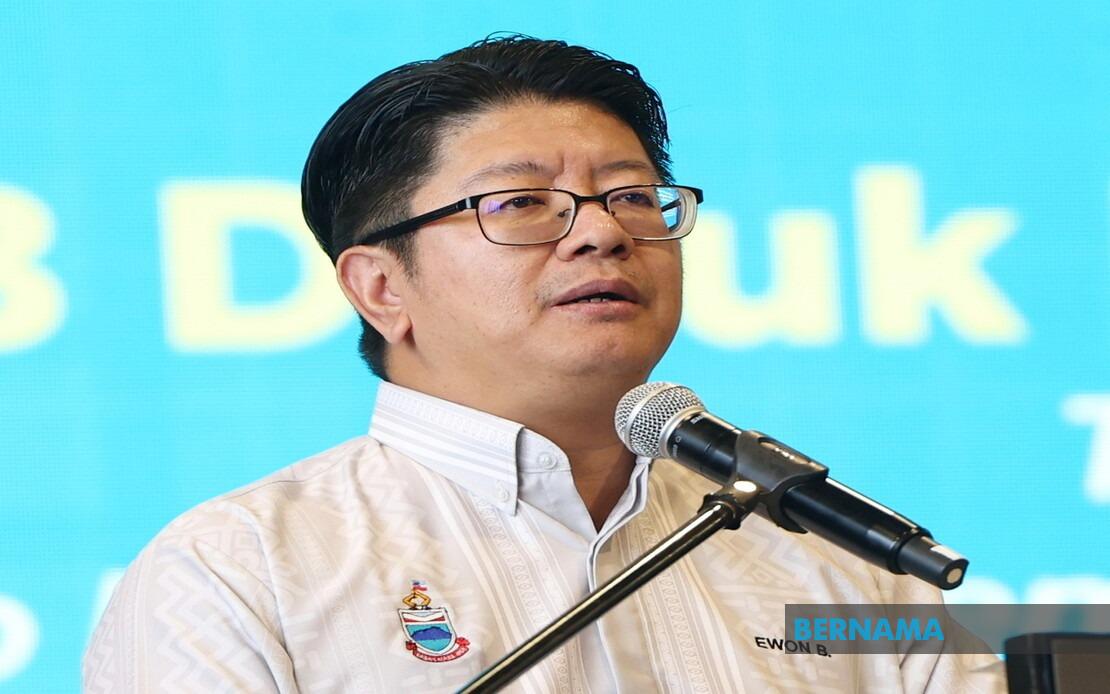
Datuk Ewon Benedick and Datuk Donald Peter Mojuntin have secured another term leading the United Progressive Kinabalu Organisation (UPKO), maintaining their positions as president and deputy president respectively following elections held during the party's 17th triennial delegates conference in Penampang on August 10. The outcome reflects continuity within Sabah's longstanding political establishment, as neither the top two positions nor the five vice-presidential seats faced any challenges from rival candidates, signalling internal consensus around the existing hierarchy.
The unopposed nature of the leadership contest underscores UPKO's preference for stability at a critical juncture. With the 2026-2029 term ahead, the party is consolidating around experienced figures rather than opening the field to new contenders. This approach carries implications for internal party dynamics in Sabah, where UPKO has historically served as a moderate voice within the broader political ecosystem. The five vice-presidents—Jairaiaz Joseph, Datuk Wong Thien Fook, Datuk Pangiran Lalung, Datuk Basari Sarikun, and Datuk Dr Laurentius Nayan Ambu—likewise encounter no opposition, suggesting the party leadership has secured broad backing among delegates.
In his remarks at the conference's conclusion, Ewon articulated a vision of party unity and democratic deference, emphasizing that the election outcome should fortify rather than fracture the organisation. His language acknowledged the significance of internal electoral processes while framing the results as a collective decision made by party membership. By characterising all UPKO members as part of a single extended family, Ewon sought to bind together disparate factions and interests under a unified banner, a rhetorical move common in Malaysian political parties seeking to maintain cohesion ahead of electoral cycles.
The newly-reaffirmed leadership carries responsibility for translating party priorities into concrete policy outcomes within government structures. As UPKO operates within the Gabungan Rakyat Sabah (GRS) coalition framework, with GRS chairman Datuk Seri Hajiji Noor serving as Sabah Chief Minister, UPKO's elected representatives must navigate the complex terrain of coalition politics. Ewon's emphasis on presenting party resolutions to the government leadership reflects awareness that UPKO's influence depends significantly on its ability to deliver member interests through the GRS partnership.
Parliamentary and state legislative assembly representation offers UPKO platforms to articulate party positions on matters affecting Sabah constituents. The reference to future debates in these chambers indicates Ewon's expectation that UPKO representatives will maintain visible roles in legislative proceedings, ensuring the party remains relevant beyond formal coalition arrangements. This suggests UPKO seeks to balance coalition loyalty with maintaining a distinct political identity—a delicate equilibrium essential for parties within larger alliances.
Beyond the upper echelons, UPKO's party wings experienced more substantial leadership transitions. Carlye Lajimin assumed the UPKO Youth chieftaincy with Newbaxter Tibin as deputy, displacing previous office-holders and signalling generational change within the grassroots structure. These shifts may indicate efforts to revitalise youth engagement, a persistent challenge for established Malaysian political parties competing for younger voters' attention and participation. The youth wing's composition becomes particularly significant given Malaysia's evolving demographic, where younger voters increasingly demand responsiveness to contemporary concerns including economic opportunity, climate action, and digital governance.
The UPKO Women's wing witnessed partial renewal, with Mohina Sidom retaining her position as chief while Lomiti Jahan entered the leadership as deputy chief. Women's political representation within UPKO mirrors broader patterns across Malaysian parties, where senior female figures occupy important roles yet remain statistically underrepresented in top-tier decision-making structures. The women's wing's evolution may reflect ongoing internal discussions about gender balance in party politics, though the retention of Sidom suggests satisfaction with existing direction among female delegates.
Emmanuel Atin's election as UPKO Young Generation chief, alongside Alison Chan as deputy chief, establishes further leadership layers addressing distinct age cohorts. This tiered structure recognises that youth activism encompasses diverse generational experiences—from university students to working professionals in their thirties—each requiring tailored engagement approaches. Targeted youth and young generation structures have become commonplace across Malaysian political parties seeking to segment membership bases and develop customised communication strategies.
UPKO's leadership renewal occurs within Sabah's broader political context, where coalition dynamics continue reshaping the state's governance landscape. The GRS coalition, anchoring Chief Minister Hajiji Noor and encompassing multiple component parties including UPKO, represents a post-2020 realignment designed to provide stable governance alternatives. UPKO's role within this coalition framework influences both its internal development and external political positioning. The party must simultaneously satisfy member expectations while maintaining coalition discipline—a requirement that often generates tensions within multi-party governing arrangements.
The unopposed elections might reflect either confidence in existing leadership or potential reluctance among ambitious members to challenge incumbents perceived as well-entrenched. Malaysian political parties occasionally experience suppression of internal competition when party machinery favours particular candidates, though available information suggests the August 10 elections proceeded through established democratic processes. The broader question of whether UPKO offers sufficient internal democratic competition to identify and develop emerging talent remains relevant for the party's long-term viability and capacity to adapt to changing electoral landscapes.
Ewon's emphasis on strengthening rather than weakening the party through electoral processes highlights awareness that internal divisions can inflict lasting damage on political organisations. This concern reflects lessons learned from Malaysian politics' turbulent recent decades, where internal party conflicts have precipitated splits and electoral defeats. By stressing unity and collective family identity, the UPKO leadership aims to prevent factionalism from undermining party effectiveness during the 2026-2029 term, which will encompass federal and state electoral cycles critical to UPKO's future influence and relevance within Sabah's political matrix.

