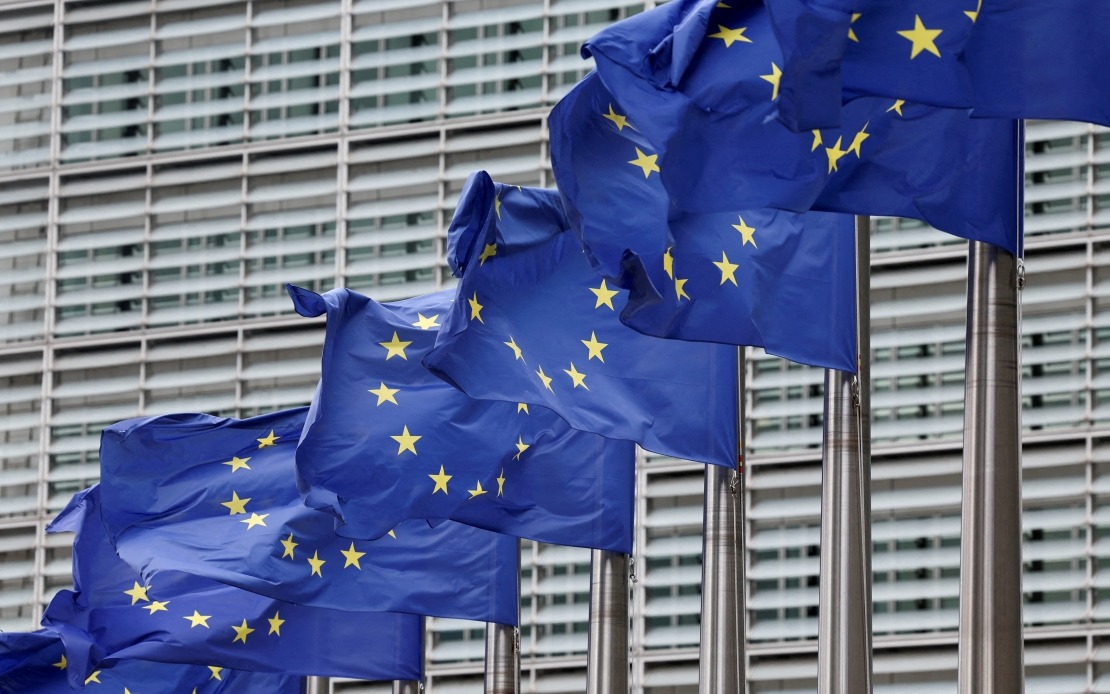
The European Union's top diplomats gathered in Brussels on Monday to contemplate escalating pressure on Israel over its controversial settlement policy in the occupied West Bank, marking another flashpoint in the bloc's increasingly fractious approach to Middle Eastern geopolitics. The discussions represent a critical juncture in Europe's relationship with Tel Aviv and underscore the persistent tension between member states over how aggressively Brussels should respond to Israeli territorial expansion. The meeting reflected broader European anxieties about the trajectory of the Israeli-Palestinian conflict and the international community's capacity to influence outcomes through punitive economic measures.
The European Commission had prepared an extensive menu of policy options for ministers to consider, ranging from targeted trade restrictions to outright bans on importing products originating from Israeli settlements. These potential measures would represent a significant escalation from Europe's largely rhetorical criticism to date, translating political discomfort into concrete economic consequences. The proposed framework signals that Brussels is prepared to move beyond statements of concern toward mechanisms that could directly impact Israeli settlement enterprises and their international commercial networks. The sophistication of these options reflects months of preparatory work within Commission bureaucracies tasked with designing sanctions architectures that could withstand legal challenges and diplomatic scrutiny.
Yet the path toward unified EU action remained perilously uncertain. The bloc's internal landscape revealed a stark geographical and ideological divide on the appropriate response. Spain, Ireland, and Belgium had emerged as the most vocal advocates for stringent punitive measures, reflecting broader progressive constituencies within their respective countries and a willingness to challenge Israeli government policy. Conversely, Germany—Europe's economic powerhouse and a crucial voice in EU deliberations—had consistently resisted such proposals, a stance rooted in historical sensitivities and deep bilateral ties with Israel. This fundamental disagreement suggested that achieving the consensus required for foreign policy sanctions would prove extraordinarily difficult, if not impossible.
The procedural mechanics underlying EU decision-making amplified these divisions. Should member states classify trade restrictions as foreign policy sanctions, unanimity would become mandatory, meaning a single dissenting voice could block implementation. Germany's historical reluctance provided precisely such a veto point. Alternatively, if the measures could be framed purely as trade policy rather than foreign policy instruments, a qualified majority threshold would apply—requiring support from fifteen of the twenty-seven member states representing at least sixty-five percent of the EU's total population. This lower hurdle theoretically offered a pathway around German resistance, but such reclassification would invite legal contestation and could damage the pretence of unified European foreign policy that Brussels jealously guards.
For Malaysian and Southeast Asian observers, these EU deliberations carry broader implications extending beyond Israeli-Palestinian dynamics. The European Union's internal paralysis on Middle Eastern policy reflects the continent's declining capacity to forge consensus on contentious international issues during an era of rising great power competition. Malaysia, with its own complex relationship with Israel and its traditional advocacy for Palestinian rights within international forums, watches as Western institutions struggle to translate moral positions into enforceable mechanisms. The outcome of EU discussions sends signals about whether multilateral bodies can effectively constrain state behaviour through sanctions, a question directly relevant to Asian concerns about constraints on any major power's conduct.
The Russian and Iranian dimensions of the Monday meeting further contextualised the settlement sanctions debate within Europe's broader geopolitical anxieties. Ministers were scheduled to address developments stemming from what the EU characterised as the Iranian war and the Russian invasion of Ukraine—twin security crises that have consumed European diplomatic and defence resources. The consensus appeared stronger regarding additional sanctions against Russian individuals, entities, and organisations, though questions persisted about whether an expansive new package incorporating comprehensive trade restrictions could gain final approval. This differential receptivity to Russia-focused sanctions compared to Israel-focused measures revealed the EU's strategic calculus regarding which international actors it prioritised constraining.
Ukraine's direct involvement in the consultations underscored Europe's security preoccupations. Ukrainian Foreign Minister Andrii Sybiha had been invited to participate in informal discussions with EU ministers, reflecting Kyiv's status as a frontline state and the ongoing centralisation of European foreign policy attention on the Russian threat. This invitation also signalled that Europe's diplomatic energies and political capital remained disproportionately devoted to European security challenges rather than Middle Eastern controversies. For Malaysian policymakers observing from Southeast Asia, this demonstrated how major powers' foreign policy focus inevitably concentrates on threats perceived as most proximate and existentially significant.
The broader question haunting these deliberations concerns the European Union's strategic coherence and its capacity to maintain unified positions on contentious international matters. The inability to achieve consensus on Israeli settlements—an issue that combines humanitarian concerns with economic leverage points—suggested persistent structural weaknesses in EU foreign policy architecture. The contrast between the EU's ambitions to function as a geopolitical actor and its demonstrated difficulties in coordinating positions on non-existential issues represents a recurring pattern. For regional observers in Southeast Asia monitoring the global balance of power, such European divisions signal that non-alignment or flexible positioning toward major powers remains strategically rational.
The week ahead would test whether diplomatic language could obscure fundamental disagreements or whether the EU would need to publicly acknowledge its inability to forge common ground. The settlement sanctions discussion represented more than a technical debate about trade policy instruments; it reflected competing visions of Europe's role in global affairs and its willingness to prioritise principle over consensus. Malaysian analysts recognising their own region's need for flexible diplomacy might find instruction in observing how the EU manages—or fails to manage—the tension between moral conviction and pragmatic coalition-building in an increasingly multipolar world.

