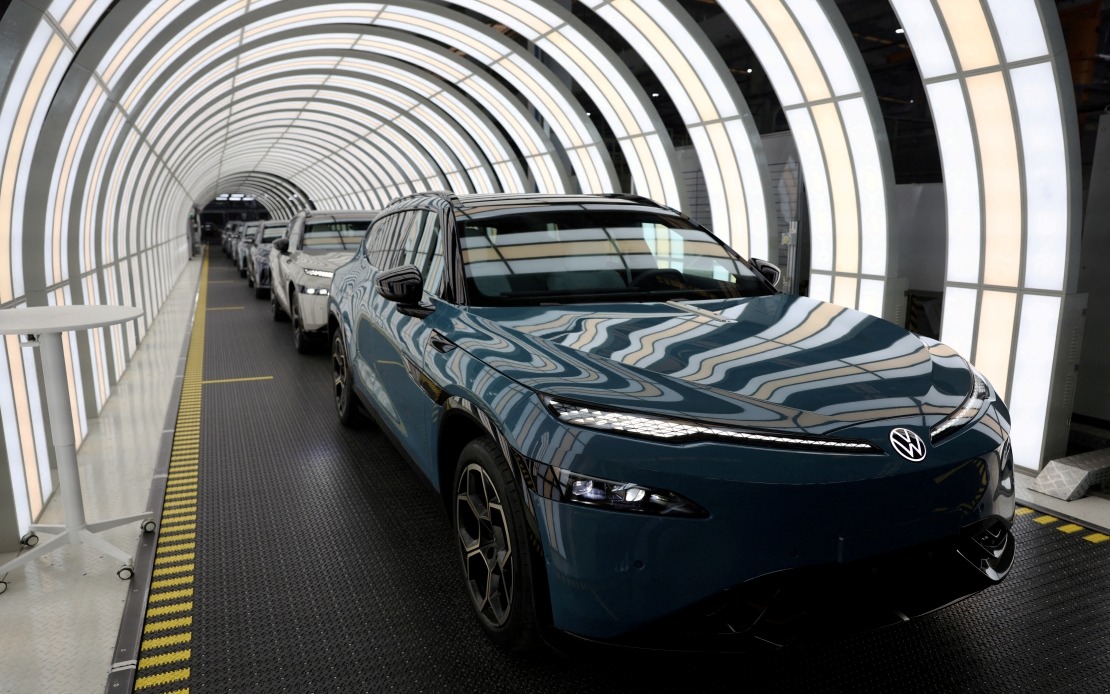
The European Union's punitive tariff regime on Chinese electric vehicles is fundamentally reordering automotive supply chains, with Western producers redirecting manufacturing back to the continent and Chinese firms simultaneously doubling down on establishing European production bases. A comprehensive analysis by the European transport advocacy group Transport & Environment reveals the dramatic realignment occurring in the region's automotive sector, with data compiled from GlobalData showing clear winners and losers in this geopolitical reshuffling of the world's fastest-growing auto segment.
Western automotive brands including BMW, Dacia, Volvo, Smart and Tesla have substantially curtailed their dependence on Chinese production facilities to supply the European market. The proportion of battery electric vehicles sold under Western nameplates that originate from China collapsed to just 23 per cent of total EV sales during the first quarter of 2025, a striking decline from the 38 per cent recorded throughout 2024. This shift represents a deliberate strategic repositioning by legacy European carmakers and the American EV leader Tesla, all of whom possess substantial manufacturing infrastructure across the continent and now view those facilities as strategically valuable buffers against trade friction.
Tesla's experience exemplifies this broader trend. The Californian electric vehicle manufacturer saw the proportion of its European sales sourced from its Shanghai gigafactory tumble from 23 per cent to 19 per cent within the same twelve-month window. While Tesla maintains dominant market share in Europe's premium EV segment, the company's reduced reliance on Chinese sourcing signals a pragmatic recognition that maintaining production balance across geographic markets insulates it from future tariff escalations or supply chain disruptions. This hedging strategy reflects the degree to which trade policy uncertainty has become a permanent feature of corporate planning in the sector.
The tariff architecture implemented by the European Commission in 2024 has created a distinctly stratified impact across Chinese competitors. While manufacturers including BYD and Geely have sustained robust export growth despite the duties—leveraging excess manufacturing capacity in China that far exceeds domestic demand—the Chinese state-owned automotive enterprise SAIC has experienced a precipitous collapse in European market penetration. The disparity in outcomes stems directly from Brussels' tariff determination process, which imposed levies on SAIC nearly double those applied to other Chinese competitors after concluding the company benefited disproportionately from government subsidies throughout its entire supply chain, from raw material procurement through final assembly.
This differentiated tariff approach reveals the political economy underlying the EU's trade enforcement strategy. Rather than applying uniform duties, Brussels calibrated its response to reflect the degree of state support embedded in each producer's business model. SAIC's steeper tariff burden—reflective of more extensive state subsidy throughout its value chain—has rendered European sales economically unviable, demonstrating how trade policy can function as a targeted instrument against competitors deemed to benefit from what Brussels views as unfair government backing. The outcome underscores that European protectionism operates with surgical precision rather than the blunt instrument of uniform barriers.
Paradoxically, even as tariffs constrain Chinese EV imports, Chinese manufacturers have dramatically accelerated investment in European production infrastructure. Since the EU initiated its formal subsidy investigation in 2023, Chinese automakers have announced plans for ten new production facilities across the continent. This expansion strategy reflects a sophisticated response to protectionist barriers: by establishing manufacturing presence within the EU's customs boundary, Chinese firms can circumvent tariffs entirely while gaining geographic proximity to consumers and regulatory centers. The planned European factories represent a permanent commitment to the region's market rather than a temporary accommodation of trade frictions.
Chinese automakers have simultaneously pivoted their product strategy to exploit a tariff gap overlooked by European policymakers. Plug-in hybrid vehicles—which blend combustion engines with electric propulsion—have become the focus of accelerated Chinese export campaigns. The European market share captured by Chinese plug-in hybrid producers has surged to 13 per cent in 2025 from just 3 per cent in 2024, a fourfold expansion within a single year. This rapid growth reflects both excess production capacity in China seeking alternative outlets and a regulatory arbitrage opportunity: plug-in hybrids face lighter tariff treatment than pure battery electric vehicles, creating a window for Chinese manufacturers to maintain revenue while the tariff regime settles.
For Malaysia and Southeast Asia broadly, this European tariff drama carries significant implications. The region's automotive and battery supply chains have become increasingly intertwined with both Chinese and Western production networks. Malaysian manufacturers supplying components to Chinese EV makers may face indirect pressure as those customers shift investment toward European facilities. Conversely, opportunities emerge for Southeast Asian suppliers capable of serving the Western manufacturers expanding production within Europe. The tariff-driven reshuffling is creating incentives for companies throughout the region to deepen ties with whichever producers gain sustainable competitive advantages through this restructuring process.
The supply chain realignment also carries geopolitical dimensions extending beyond simple trade calculations. Western automakers' renewed commitment to European production represents a strategic bet on the region's political stability and regulatory alignment with their interests. Chinese firms' accelerated investment in European factories signals a determination to maintain market access regardless of tariff barriers, suggesting confidence in long-term European demand growth and a calculation that local production provides insulation against future protectionist measures. This competition for manufacturing footprint reflects deeper contestation over which firms and nations will capture value in the rapidly expanding global EV sector.
The tariff regime's effectiveness in reshaping production decisions appears partial and contingent. Western producers have indeed shifted supply chains, validating the protectionist logic that tariffs influence investment behavior. Yet Chinese manufacturers have responded through counterstrategies—infrastructure investment and product line diversification—rather than simply retreating. The outcome suggests EU tariffs will succeed in stimulating European manufacturing investment by Western competitors while simultaneously accelerating Chinese industrial development within the continent. The intended and unintended consequences of Brussels' tariff policy are thus reshaping the global automotive landscape in ways that extend far beyond simple import reduction.
Looking forward, the dynamics set in motion by the 2024 tariffs appear to have longer-term structural implications. Western automakers' renewed confidence in European production capacity may sustain increased investment even if trade tensions ease. Chinese firms' European manufacturing plans represent irreversible commitments likely to expand into significant capacity. The outcome could paradoxically produce greater European automotive autarky while simultaneously embedding Chinese manufacturing within the continent—achieving protectionist objectives through supply chain relocation rather than pure import prevention. For policymakers throughout Southeast Asia observing these developments, the episode illustrates how trade barriers reshape investment flows and supply chain geography far beyond their immediate jurisdictions.

