The European Union has announced a substantial humanitarian package worth €2.1 million to assist Colombia in the aftermath of a devastating 7.4 magnitude earthquake that struck the country earlier this week and claimed at least 181 lives. The decision underscores the bloc's rapid response capability to major natural disasters in the Western Hemisphere and reflects the strategic partnership between Brussels and Bogotá at a time when regional stability remains a pressing concern.
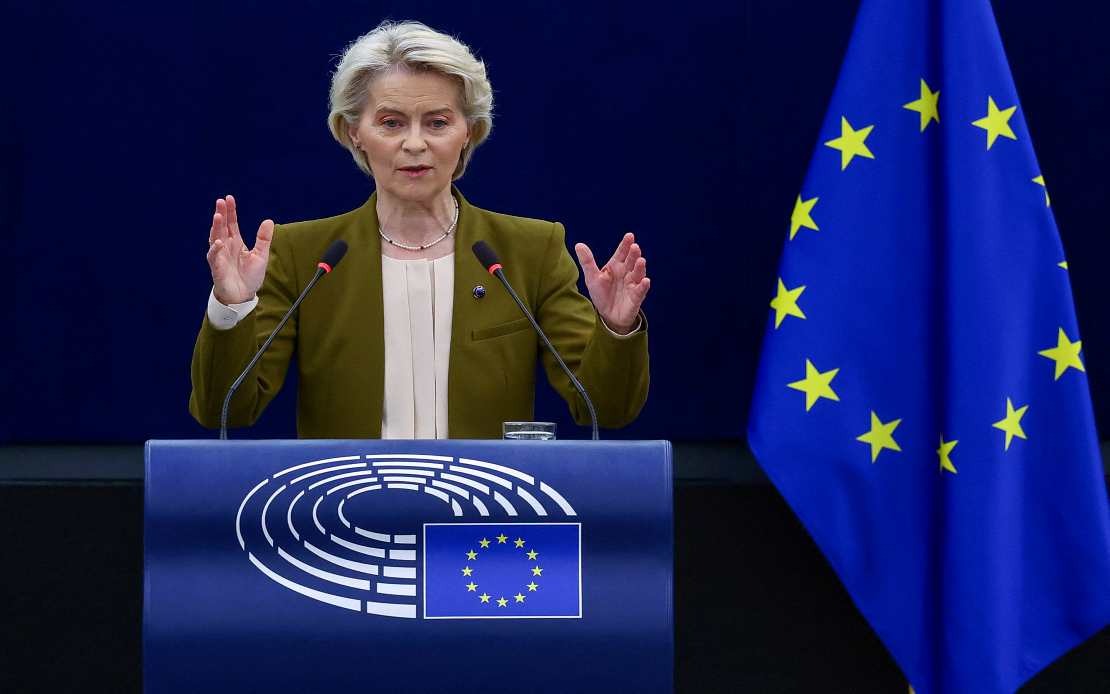
European Commission President Ursula von der Leyen confirmed the financial commitment on Wednesday, emphasising that the EU stands ready to support Colombian authorities as search and rescue operations intensify across affected areas. The framing of European assistance as part of ongoing coordination suggests a medium-term engagement rather than a one-off emergency transfer, signalling Brussels' intention to remain engaged throughout the recovery phase. This approach has become standard practice for the EU in responding to major natural disasters globally, particularly in strategically important regions.
The €2.1 million allocation is designed to address the immediate humanitarian needs of affected populations through a comprehensive assistance framework. The funds will be channelled towards critical services including emergency health interventions, clean water provision, sanitation facilities, and hygiene materials—all essential components of disaster response that prevent secondary health crises such as disease outbreaks in the aftermath of structural collapse. Beyond immediate survival needs, the package encompasses shelter provision, food distribution, protection services, and cash assistance that enables displaced persons to purchase essential goods from local markets, thereby supporting both humanitarian objectives and local economic activity.
The European Commission demonstrated the urgency of the situation by deploying an initial €100,000 immediately through the German Red Cross, which maintains an operational presence in the hardest-hit regions of Chocó and Valle del Cauca. This preliminary allocation was designated specifically to address the pressing needs of approximately 2,500 families, representing a strategic decision to establish immediate humanitarian infrastructure before the full funding tranche could be mobilised. The choice to work through established Red Cross networks reflects the EU's preference for channelling assistance through established humanitarian organisations with proven track records and local expertise.
Beyond financial assistance, the EU has leveraged its technological capabilities to support Colombian authorities in their emergency response operations. European satellite mapping services are now available to assist ground-level rescue and coordination efforts, providing real-time imagery that helps emergency teams identify collapsed structures, assess infrastructure damage, and plan efficient deployment of limited resources. This technological contribution demonstrates that modern disaster response extends beyond capital transfers to encompass knowledge-sharing and technical support that can prove decisive in saving lives during critical early phases of emergency management.
The decision to mobilise aid at this scale reflects broader European strategic interests in Latin America and Colombia specifically. The country remains a crucial ally for the EU in addressing regional challenges including counter-narcotics operations, democratic governance, and economic development. A robust European response to national emergencies reinforces diplomatic relationships and demonstrates solidarity that extends beyond trade negotiations or geopolitical positioning. For Malaysian observers, the European approach offers a template for how developed economies coordinate rapid humanitarian response with sustained diplomatic engagement in strategically important regions.
Colombian authorities have maintained contact with European Commission officials to ensure that assistance evolves in response to conditions on the ground. This dynamic coordination mechanism reflects lessons learned from previous major disasters where initial humanitarian assessments proved incomplete or inaccurate as the full scope of damage became apparent. By establishing ongoing dialogue, both parties acknowledge that earthquake damage unfolds gradually—initial casualty counts typically rise, hidden structural damage emerges, and secondary hazards such as landslides develop in days following the primary seismic event.
For Southeast Asian nations including Malaysia, the European response to the Colombian earthquake carries instructive implications regarding international disaster assistance frameworks. The deployment of €2.1 million, while substantial, represents a measured response calibrated to immediate humanitarian needs rather than long-term reconstruction. This distinction matters because it signals that while wealthy nations provide emergency relief, affected countries must mobilise their own resources for the protracted reconstruction phase that typically extends across months and years. Malaysia's own experience with natural disasters—from the 2004 Indian Ocean tsunami to more recent flooding events—demonstrates the importance of international coordination without creating dependency on external funding.
The earthquake's magnitude and casualty count position it among Colombia's most destructive seismic events in recent decades, explaining the scale of the EU response. The concentration of damage in Chocó and Valle del Cauca suggests significant geographic limitations to the affected area, potentially enabling more targeted allocation of resources. However, these regions encompass economically marginalised populations and areas with limited infrastructure, meaning that earthquake-triggered disruptions reverberate across vulnerable supply chains and livelihoods already compromised by pre-existing development deficits.
The availability of EU satellite mapping represents a relatively low-cost contribution with potentially high-impact applications, particularly given Colombian terrain challenges that complicate ground-based assessment. In mountainous regions where Chocó and Valle del Cauca contain significant territory, remote sensing proves invaluable for identifying landslides, assessing river systems disrupted by seismic activity, and planning helicopter-based humanitarian access where terrestrial routes are compromised. This technical contribution illustrates how wealthy nations can maximise humanitarian impact by deploying existing capabilities rather than restricting assistance to direct financial transfers.
The European Commission's statement that it remains coordinated with Colombian authorities regarding evolving assistance needs signals a commitment extending beyond the initial €2.1 million pledge. This formulation suggests that if preliminary assessments reveal that immediate humanitarian requirements exceed current funding allocations, additional support may materialise. Such flexibility acknowledges the uncertainty inherent in disaster response while avoiding commitments that sophisticated donors often use to manage political expectations.
As Colombia navigates the immediate crisis phase, the EU's rapid mobilisation of resources demonstrates the functioning of international solidarity mechanisms that Malaysian policymakers continue developing through ASEAN coordination frameworks. The contrast between European institutional capacity for rapid decision-making and the sometimes-cumbersome consensus-based approaches favoured in Southeast Asian regional forums merits consideration as ASEAN nations strengthen disaster response protocols. The Colombian case ultimately illustrates that effective humanitarian response requires both financial resources and institutional mechanisms capable of translating political commitment into operational assistance within hours rather than days.

