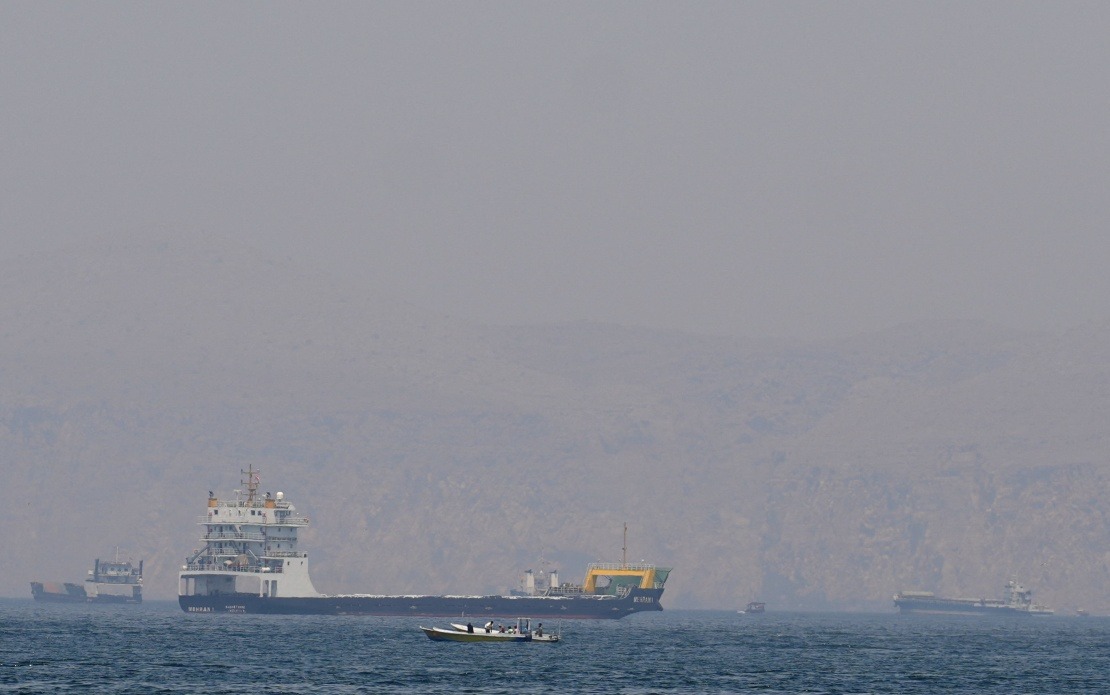
The European Union and the Gulf Cooperation Council have issued a forceful joint statement rejecting any attempt by a nation to assert control over the Strait of Hormuz, one of the world's most critical maritime chokepoints. Their declaration, released following a high-level security forum in Brussels, underscores growing international alarm over escalating tensions in the Middle East and the threat to global shipping routes that depend on unrestricted passage through this vital waterway.
The two blocs were unequivocal in their legal position: no bilateral agreement, accord, or understanding between states can lawfully restrict the right of passage through an international strait. This foundational principle, they emphasized, is anchored in established international maritime law and applies universally to all nations, regardless of their geopolitical standing. The statement carries particular weight given that it represents both a major global economic bloc and the oil-rich monarchies whose economic interests are deeply tied to stability in the Persian Gulf.
Kaja Kallas, the EU's foreign policy chief, and Bahraini Foreign Minister Abdullatif bin Rashid Al-Zayani, representing the GCC Ministerial Council, jointly presided over the forum that produced the declaration. Their co-leadership symbolizes a coordinated diplomatic effort to establish common ground on maritime security at a time when regional instability threatens international commerce and navigation rights. The participation of both the Gulf states and Brussels represents an unusual alignment between Western and Middle Eastern powers on a shared security concern.
International law, as codified in the UN Convention on the Law of the Sea, guarantees freedom of navigation through straits designated for international use. The Strait of Hormuz, through which roughly one-fifth of global petroleum traded internationally passes daily, clearly qualifies under this framework. The EU and GCC reiterated that no state possesses authority to suspend, obstruct, or condition these rights, and certainly cannot levy charges or require permits for innocent passage. This legal clarity becomes crucial when viewed against mounting disputes over maritime control in the region.
The statement took direct aim at what the blocs characterized as Iranian aggression against commercial shipping. They condemned attacks on vessels transiting the waterway and on the sovereign territories of multiple regional nations in the strongest possible terms. These incidents, the joint declaration stressed, endangered civilian lives and seafarer safety, contravened international law, and breached UN Security Council Resolution 2817, which addresses maritime security in the area. The blocs asserted that no justification could legitimize such actions under any conceivable circumstances.
The escalation reflects genuine anxiety about the implications of military confrontation for global energy markets and international commerce. For Malaysia and Southeast Asian nations heavily dependent on Middle Eastern oil and gas imports, unimpeded passage through the Strait of Hormuz remains economically vital. Disruptions to shipping or escalating insurance costs due to regional instability would transmit inflationary pressures throughout the region's supply chains, affecting everything from fuel prices to manufacturing competitiveness.
The EU and GCC called on Iran to immediately and unconditionally terminate all hostile actions and cease any interference with maritime navigation. They demanded that the Strait of Hormuz remain accessible without conditions, transit fees, or service charges—language clearly directed at preventing any unilateral assertion of control or revenue-raising schemes. This framing acknowledges the core concern driving international coalescence: that one regional power might exploit its geographical position to extract economic rents or weaponize access to international commerce.
The two blocs extended explicit solidarity to all affected nations and seafarers of every nationality caught in the crossfire. They pledged sustained coordination to maintain freedom of navigation and safeguard international shipping routes and personnel operating within them. This commitment signals ongoing diplomatic and potentially security cooperation between the EU and Gulf states to counter threats to maritime commerce, suggesting structured mechanisms may be established for real-time information sharing and coordinated responses to future incidents.
Notably, the statement advocated for restraint and reaffirmed commitment to dialogue and diplomatic resolution as the pathway forward. This language underscores recognition that military escalation serves no party's interests and that sustained negotiation remains the only viable mechanism for de-escalation. The emphasis on diplomacy contrasts sharply with the current military trajectory in the region, where the US and Iran have engaged in direct exchanges, suggesting international pressure for a shift toward more constructive engagement.
The broader regional context involves a Pakistani-brokered memorandum of understanding signed in June intended to terminate ongoing conflict and establish enduring peace arrangements. Yet despite this agreement, military tensions have continued mounting, indicating that underlying disputes remain unresolved and that the mechanisms for enforcing peace commitments may be insufficient. The EU-GCC statement implicitly calls for leveraging diplomatic channels to move beyond the current stalemate toward genuine de-escalation.
For Southeast Asia, this assertion of international legal principles regarding maritime rights carries implications extending beyond the Strait of Hormuz. As nations in the region navigate disputes over freedom of navigation and territorial claims in the South China Sea, the EU-GCC statement reinforces customary international law principles that protect smaller nations' rights to transit through contested waters. The alignment of major economic and regional powers around these legal norms provides precedent and diplomatic reinforcement for similar claims across other strategically significant waterways.
The joint statement represents a rare consensus among diverse geopolitical actors on maritime law and security. Its significance lies not merely in condemning current aggression but in establishing clear legal boundaries that no state, however powerful regionally, may transgress with international acceptance. This reaffirmation of international maritime law serves as a foundation for broader stability and predictability in global trade and commerce, concerns that unite governments across continents regardless of other differences.

