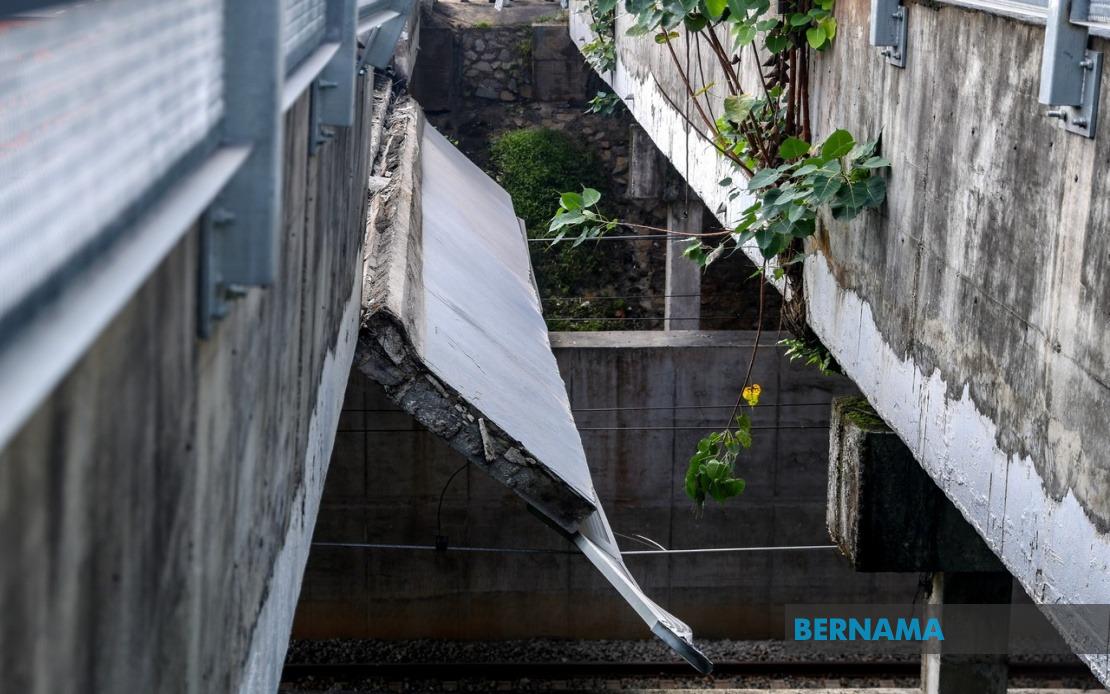
A lorry collision with railway infrastructure in Johor has thrown commuter schedules into disarray, forcing Keretapi Tanah Melayu Berhad (KTMB) to implement contingency transport arrangements for thousands of passengers affected by the disruption to Electric Train Service (ETS) operations. The incident, which occurred on the Kulai-Kempas Baru rail track, has necessitated a coordinated response involving shuttle buses operating between JB Sentral, Kempas Baru, and Kulai stations to maintain passenger connectivity across the affected corridor.
The cascading impact of the accident has touched three significant ETS routes departing from JB Sentral: the service to Padang Besar, the direct connection to KL Sentral, and the northern route to Butterworth. KTMB's decision to deploy shuttle buses represents a pragmatic solution to bridge the gap created by the physical damage to rail infrastructure, though the arrangement has created bottlenecks and extended travel times for passengers accustomed to the direct speed advantages of rail transport. The transport company has also suspended the Kulai-Kempas Baru route of its Shuttle Selatan service, while maintaining operations on the Pasir Gudang and other local connections to preserve some network connectivity.
The technical challenge facing KTMB extends beyond simple track repairs. A concrete structure—identified as a parapet—has collided with the overhead line (OHL) system that powers the electric trains, creating a dual restoration requirement. The fallen parapet must be removed using specialised heavy equipment, and the electrical infrastructure must be thoroughly inspected and certified safe before trains can resume normal operations. This multi-faceted approach to restoration reflects the complexity of modern rail systems, where damage to one component can cascade through interconnected systems.
According to KTMB's statement, the lorry company involved in the incident, Transmare-Chemie (M) Sdn Bhd, informed the railway operator at 3 am that securing a 120-tonne crane presented an immediate obstacle to initiating removal works. The company indicated that lifting operations would commence around 10 am once the crane became available, establishing a realistic but uncertain timeline for the resumption of full services. This dependency on external contractor resources illustrates the vulnerabilities in Malaysia's rail infrastructure recovery processes, where access to specialist equipment can dictate the pace of restoration.
For passengers facing disruptions, KTMB has offered two principal options: continued travel via shuttle bus connections to reach their intended destinations, or the possibility of securing full refunds for their tickets. This dual-track approach acknowledges the varying circumstances of affected passengers—some may have flexible schedules permitting them to accept delays, whilst others may find the extended journey times incompatible with their commitments. KTMB staff stationed at affected stations have been briefed to provide additional assistance and guidance to confused or frustrated passengers navigating the altered service landscape.
The incident highlights the vulnerability of Malaysia's rail corridors to external hazards, particularly in areas where road and rail infrastructure run in proximity. The Kulai-Kempas Baru section has now experienced consecutive days of disruption, with the previous day's incident involving a lorry carrying flammable liquid that skidded near the tracks, creating a power supply failure that delayed both Shuttle Selatan and ETS services. This pattern of consecutive incidents in the same location raises questions about traffic management and safety protocols in the area, particularly regarding heavy vehicle routing near critical railway assets.
The restoration timeline remains deliberately uncertain, with KTMB conditioning the reopening of the affected line on the successful completion of removal works, comprehensive technical inspections, and formal safety clearance certification. This cautious approach is appropriate given the safety-critical nature of railway operations, where even minor oversights in repair verification could endanger thousands of daily passengers. However, the lack of a definitive reopening estimate creates operational uncertainty that compounds passenger frustration and constrains planning for alternative transport arrangements.
For the broader Malaysian transport ecosystem, the disruption underscores the strategic importance of maintaining redundancy and flexibility within commuter networks. The ETS forms a critical spine in the country's public transport infrastructure, particularly for the high-density Klang Valley-Johor Bahru corridor that serves hundreds of thousands of daily commuters and facilitates significant commercial traffic. When single-point failures emerge, the absence of immediate alternative high-capacity options forces reliance on road-based contingencies that struggle to absorb demand volumes previously handled by rail.
KTMB's coordination with external stakeholders—the lorry company, equipment providers, and regulatory authorities—represents the logistical choreography required to restore service in complex infrastructure environments. The railway operator must simultaneously manage passenger relations, oversee technical restoration activities, ensure safety compliance, and navigate legal and contractual obligations arising from the incident. This multi-dimensional responsibility load explains why precise timeline predictions remain elusive even as restoration efforts progress.
The incident carries implications for rail network resilience across Southeast Asia, where rapid urbanisation and industrialisation have created comparable scenarios of dense infrastructure networks operating in close proximity. The recovery approach adopted by KTMB—combining interim transport solutions with rigorous safety verification—establishes a practical model for other regional operators facing similar disruptions. However, the underlying vulnerability to external hazards suggests that long-term solutions may require infrastructural separation strategies, such as grade-separated railway corridors or enhanced protective barriers in high-risk segments.
As restoration efforts advance and the 120-tonne crane begins its removal operations, attention will focus on the speed and effectiveness of technical inspections. The electrical systems serving ETS trains require particular scrutiny, as any residual damage to overhead line infrastructure could pose safety hazards to pantograph-equipped trains operating at significant speeds. This inspection phase, whilst essential for passenger safety, typically extends the total restoration timeline beyond the physical removal of obstructing materials, adding to the disruption burden on the affected corridor.

