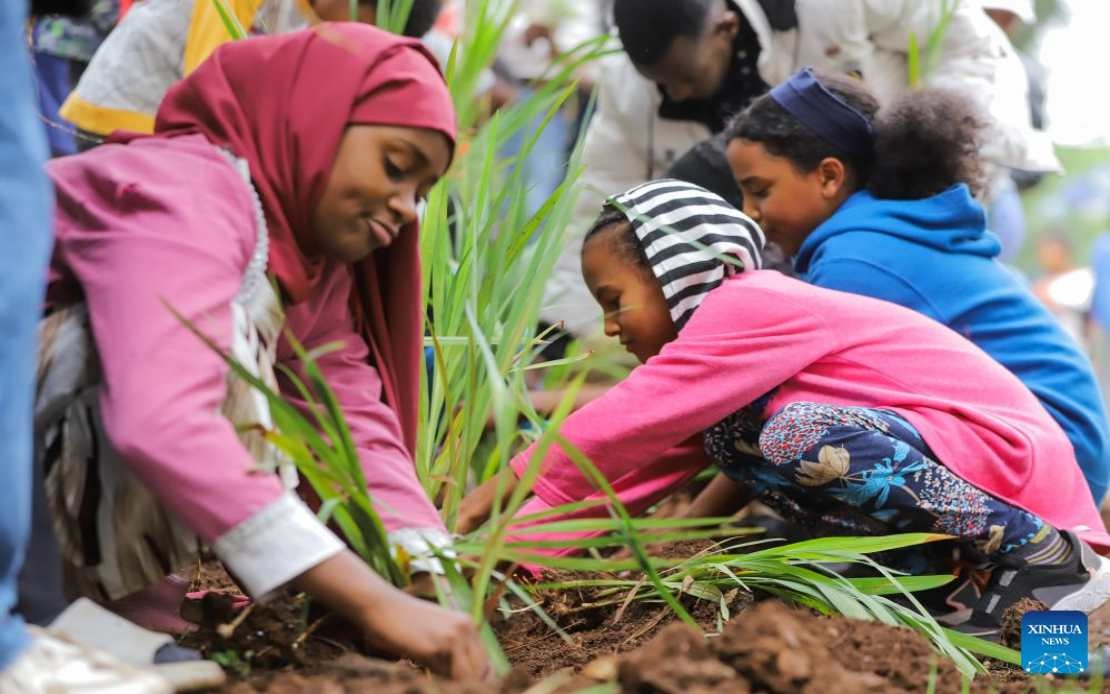
Ethiopia has demonstrated the potential of large-scale, government-coordinated environmental action by orchestrating a nationwide tree-planting event that saw millions of citizens and expatriates in the country participate in simultaneously planting 800 million seedlings across diverse locations. The Monday campaign represents a significant milestone in the country's environmental restoration efforts and reflects a growing recognition in Africa of the urgent need to address deforestation and climate vulnerability through tangible action rather than policy statements alone.
The ambitious undertaking forms part of Prime Minister Abiy Ahmed's flagship Green Legacy Initiative, a comprehensive reforestation programme that commenced in 2019 with the goal of transforming Ethiopia's environmental landscape. This year's iteration of the initiative targets the planting of more than 8 billion seedlings during the rainy season, bringing the cumulative total since 2019 closer to the overarching objective of planting 50 billion trees across the nation. Such scale demonstrates how developing countries, particularly those in sub-Saharan Africa facing acute environmental pressures, are attempting to mobilise their populations around sustainability goals.
The significance of Ethiopia's initiative extends beyond mere afforestation figures. The country has long grappled with severe deforestation, with historical forest cover declining from approximately 35 percent of total land area to less than 3 percent by the early 2000s. This degradation has compounded challenges related to soil erosion, water scarcity, and agricultural productivity—issues that directly affect food security and rural livelihoods across the Horn of Africa. By committing substantial resources and political capital to large-scale tree-planting campaigns, Ethiopia is attempting to address these interconnected environmental and socio-economic challenges simultaneously.
Participation across diverse demographic groups illustrated the campaign's grassroots appeal. Edilawit Legesse, a thirteen-year-old participant from the Alembank neighbourhood in Addis Ababa, represented the younger generation's engagement with environmental stewardship, having taken part in the campaign for three consecutive years. Her involvement reflects a deliberate effort by Ethiopian authorities to instil environmental consciousness among youth, who will inherit the consequences of today's ecological decisions. Similarly, healthcare workers like Hewan Legesse, a nurse who participated with thirty-five colleagues near Entoto Mountain, demonstrated how professional communities are being mobilised around the initiative, extending participation beyond agricultural or environmental sectors into urban centres and institutional settings.
The Green Legacy Initiative distinguishes itself through its emphasis on creating a shared national narrative around environmental restoration. Prime Minister Abiy's public statements regarding the campaign characterise tree-planting not merely as an environmental necessity but as an expression of national unity and intergenerational responsibility. His remarks about eight consecutive years of consistent action and the programme's evolution underscore how environmental initiatives can serve as nation-building exercises, particularly in countries working to consolidate political and social cohesion. This framing is particularly relevant in Ethiopia's context, given the nation's recent history of internal conflict and political transition.
From a climate perspective, Ethiopia's emphasis on forest restoration addresses a critical gap in global climate action. While international climate negotiations often focus on emissions reduction in developed economies, many African nations emphasise ecosystem restoration and nature-based solutions as their primary contribution to climate mitigation. Ethiopia's approach aligns with this framework, recognising that combating deforestation and expanding forest cover can simultaneously enhance climate resilience, improve biodiversity conservation, and support sustainable development objectives. The integration of these multiple goals within a single initiative demonstrates sophisticated understanding of the interconnected nature of environmental challenges.
The scale of the 800-million-tree target raises important questions about implementation quality and long-term survival rates of planted seedlings. Environmental experts have noted that mass-planting campaigns, while symbolically powerful and capable of generating immediate political returns, must be complemented by sustained management, maintenance, and monitoring to ensure seedling survival and ecosystem establishment. Ethiopia's multi-year commitment to the initiative suggests attention to these concerns, though public reporting typically emphasises planting figures rather than survival rates or ecosystem outcomes.
For Southeast Asian nations including Malaysia, Ethiopia's experience offers instructive lessons about scaling environmental action and mobilising public participation in reforestation. Several countries in the region face their own deforestation challenges and have launched comparable initiatives. Understanding how Ethiopia has built institutional capacity, generated sustained public engagement, and integrated tree-planting campaigns into broader development narratives could inform policy approaches across the region. The integration of diverse stakeholder groups—from schoolchildren to healthcare workers to government officials—provides a model for inclusive environmental governance that transcends sectoral boundaries.
Ethiopia's ambitious environmental programme also reflects broader continental trends among African nations to position themselves as leaders in climate action and sustainable development. As international climate finance increasingly flows toward developing countries demonstrating concrete environmental commitments, initiatives like the Green Legacy Initiative generate both practical ecological benefits and diplomatic capital. The visibility of mass participation events amplifies these signals to international partners and climate finance institutions, potentially influencing resource allocation decisions.
Looking forward, the trajectory of Ethiopia's reforestation efforts will depend on sustained political commitment, adequate resource allocation, and adaptive management as environmental conditions and socio-economic circumstances evolve. The cumulative impact of planting tens of billions of trees across the country will unfold over decades, with forest maturation processes extending well beyond any individual political administration. This temporal dimension underscores the inherent tension between the immediate political appeal of announcing large planting targets and the patient, long-term work required to establish functioning ecosystems. Should Ethiopia maintain momentum through successive administrations and seasons, the initiative could demonstrate the feasibility of continent-scale environmental restoration, positioning the country as a model for other African nations confronting similar ecological degradation.

