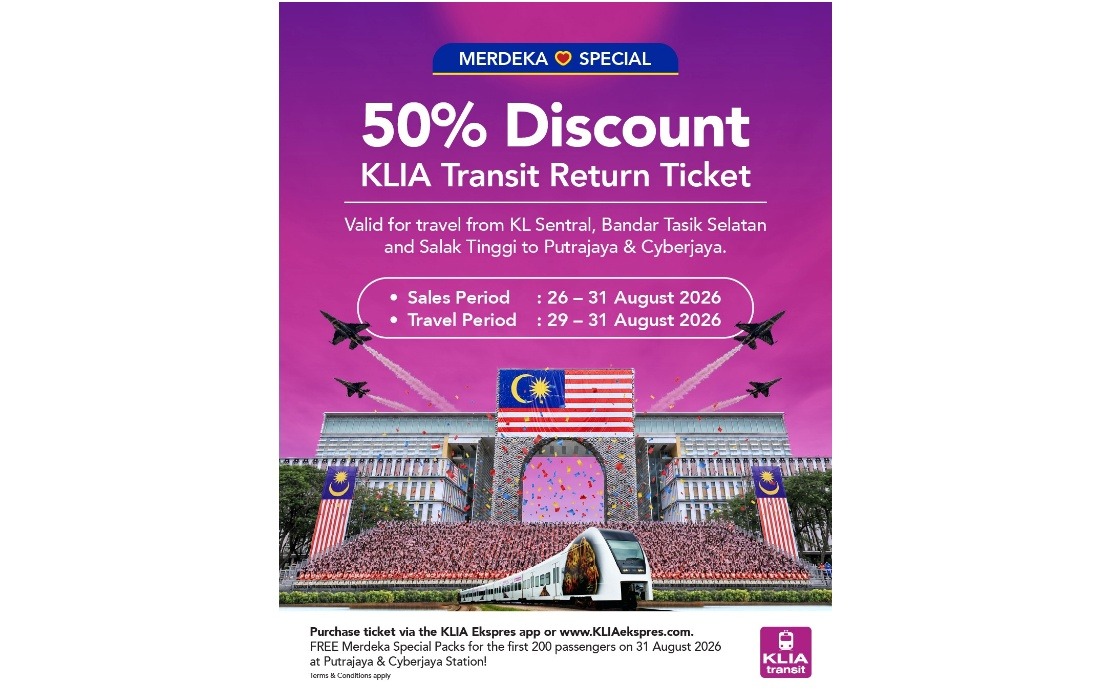
Express Rail Link Sdn Bhd (ERL) is throwing open its doors to budget-conscious Malaysian commuters with a substantial 50 per cent reduction on KLIA Transit return fares as the nation gears up to mark its 69th National Day. The promotional initiative, announced on August 14, aims to boost attendance at a series of festive events planned in Putrajaya, centring on a full-dress rehearsal of the 2026 National Day Parade and assorted Merdeka-themed celebrations scheduled for the final days of August. By slashing ticket prices, ERL seeks to remove cost barriers that might otherwise deter families and individuals from venturing to the administrative capital to participate in commemorations marking Malaysia's independence.
The discounted fares apply to return journeys on KLIA Transit from any station to Putrajaya and Cyberjaya Station, making the offer accessible to travellers originating from across the airport rail network. However, the promotion carries a notable restriction: passengers cannot redeem the discount on tickets bound for KLIA Terminal 1 or Terminal 2, meaning those utilising the service purely for airport connections will not benefit. Both adults and children aged 6 to 15 qualify for the reduced rates, addressing the reality that families represent a significant portion of holiday celebrants. The window for travel under this scheme spans three days, from August 29 through August 31, providing a concentrated window during which the promotion remains valid.
Procuring these discounted tickets requires engagement with ERL's digital infrastructure. Passengers wishing to take advantage must purchase through the KLIA Ekspres mobile application or via the company's official website, with the booking window opening on August 26 and closing on August 31. This shift toward digital-first ticketing reflects broader industry trends toward reducing physical touchpoints and streamlining operational efficiency, though it may present challenges for less tech-savvy travellers or those without smartphone access. The requirement to book exclusively through these channels also enables ERL to manage demand forecasting more effectively and consolidate passenger data for marketing purposes.
Families with young children will find particular value in ERL's ancillary offering. Children under six years of age travel completely free of charge when accompanied by an adult passenger holding a valid ticket, with a ceiling of three complimentary children per adult. This generous policy acknowledges the realities of family travel during holiday periods and effectively multiplies the economic incentive for multi-generational groups to utilise the rail link. For larger extended families or tour groups, however, the maximum-three-per-adult cap could necessitate purchasing multiple adult tickets to accommodate all travelling children.
Beyond fare discounts, ERL is manufacturing goodwill through novelty merchandise. The company pledges to distribute exclusive Merdeka Pack souvenirs to the first 200 passengers arriving at Putrajaya and Cyberjaya Station on August 31, the official National Day date. This gamification element introduces an element of scarcity and urgency, incentivising early departure and potentially smoothing demand distribution across the promotional period. While the pack contents remain unspecified in official communications, such commemorative items typically carry symbolic patriotic resonance and serve as tangible reminders of the travel experience.
Once passengers disembark in Putrajaya, ERL has coordinated with complementary transport infrastructure to facilitate onward journeys. Prasarana and Perbadanan Putrajaya operate complimentary shuttle bus services operating from Putrajaya Sentral, ferrying rail travellers directly to various event venues scattered throughout the administrative precinct. This integrated transport ecosystem reduces friction in the passenger journey and positions the rail service as merely one component within a comprehensive public mobility network rather than a standalone offering.
The events themselves span multiple days, providing flexibility for those unable to commit to participation on a single occasion. A full-dress rehearsal of the National Day Parade unfolds on August 29, allowing enthusiasts to witness parade logistics and choreography before the official ceremony. The main National Day celebrations culminate on August 31. Beyond the parade, Putrajaya hosts Riuh Merdeka, an entertainment programme, and Ambang Merdeka 2026, a promotional campaign heralding Malaysia's observation of Merdeka's semi-centennial milestone next year. This layered programming rationale ensures diverse appeal and extends visitor engagement across multiple visits.
The significance of this initiative extends beyond mere commercial transportation logistics. By subsidising public transit access to national celebrations, ERL and its government partners signal commitment to democratising participation in civic commemorations. Too frequently, celebratory events concentrate themselves within Kuala Lumpur's urban core, creating geographic and economic barriers for Malaysians situated in outlying regions. Putrajaya, by contrast, represents a more dispersed location requiring deliberate travel and coordination. By reducing friction through subsidised rail fares, policymakers work to level the accessibility landscape, ensuring that National Day observance transcends class boundaries.
For the broader Southeast Asian context, Malaysia's approach demonstrates how regional cities can leverage integrated public transport and coordinated event programming to drive visitation and civic engagement. As other nations contemplate mechanisms for enhancing domestic tourism and cultural participation during significant commemorative occasions, the ERL model—combining price incentives, digital accessibility, integrated onward transport, and gamified merchandise—offers a replicable template. The emphasis on families and intergenerational participation particularly resonates across Southeast Asia, where kinship structures traditionally remain central to cultural life.
From ERL's operational perspective, the promotion simultaneously addresses multiple corporate objectives. Heightened ridership during peak demand periods generates revenue, justifies infrastructure investment, and produces positive sentiment during a symbolically significant national occasion. Enhanced passenger volumes also provide market research opportunities and customer acquisition channels. Furthermore, government collaboration on national celebrations strengthens ERL's institutional positioning and may generate goodwill beneficial when seeking regulatory approvals or negotiating future concession terms.
Looking forward, the success of this initiative will likely influence transport operator strategies during future national celebrations. Should ridership targets materialise and customer satisfaction metrics prove favourable, similar promotional campaigns across other state occasions and public holidays may become normalised practice. This shift toward demand-responsive, occasion-specific pricing would represent a meaningful departure from static fare structures and positions public transport as genuinely flexible infrastructure serving evolving community needs rather than merely operational necessity.

