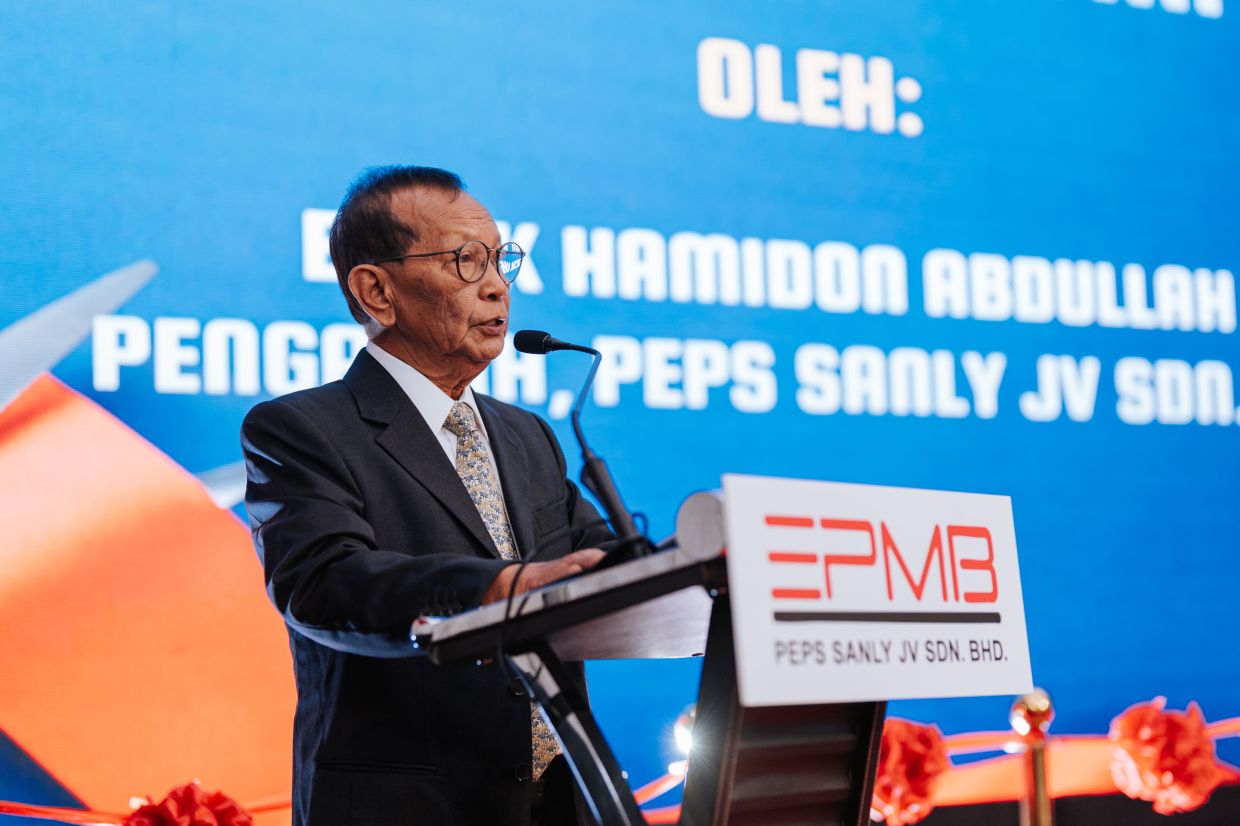
EPMB has commenced operations at a newly established manufacturing facility in Tanjong Malim aimed at expanding the localised production of critical automotive components for Proton. The facility, which started operations in October 2025, represents a significant milestone in the company's ongoing partnership with the national carmaker and underscores deepening ties between Malaysian and Chinese automotive suppliers in the region's competitive manufacturing landscape.
The 9,909 square-metre plant is operated through Peps Sanly JV Sdn Bhd, a joint venture established between EPMB and Sanly Auto Parts Co Ltd, a China-based automotive components manufacturer. The facility has been strategically located within the Automotive High Technology Valley (AHTV), a specialised industrial zone designed to support Malaysia's automotive sector development and technological advancement. This placement reflects the growing concentration of vehicle-related manufacturing and research activities in the region.
With a production capacity reaching 40,000 car sets monthly, or approximately 480,000 sets annually, the facility will manufacture several critical chassis assemblies. These include front corner modules, subframe modules and rear axle module assemblies, components that form the structural backbone of modern vehicles. The plant will initially supply these parts for Proton's existing AMA01, Persona and Iriz models, while also preparing to serve the automaker's forthcoming AMA02 and AMA05 vehicles as they reach production stages.
The partnership between EPMB and Sanly Auto Parts was formally established in February 2025, marking a structured approach to localising chassis component manufacturing for Proton. The arrangement emerged from discussions centred on the Proton Saga AMA01, a flagship model within the national carmaker's portfolio. The timing of the venture reflects Proton's broader strategy to deepen domestic manufacturing capabilities and reduce dependency on imported components, thereby improving overall production costs and supply chain resilience.
Executive chairman Hamidon Abdullah articulated the strategic advantages underpinning this collaboration, emphasising how the partnership leverages Sanly China's extensive expertise in metalworking, assembly processes and automotive chassis systems. These capabilities represent decades of accumulated knowledge within China's highly competitive and technically advanced manufacturing sector. By integrating such expertise into Malaysia's automotive production ecosystem, EPMB positions itself to elevate quality standards whilst maintaining competitive pricing structures.
The partnership extends beyond simple manufacturing capacity, offering EPMB strategic access to Sanly's established networks within the Chinese automotive industry. Sanly maintains strong operational ties with Geely, one of China's major automotive manufacturers, alongside relationships with other original equipment manufacturers across Asia. These connections provide pathways to advanced manufacturing methodologies, supply chain innovations and cost-reduction techniques that have proven effective in China's highly competitive automotive market.
Hamidon highlighted how the arrangement delivers tangible benefits to Proton during a critical phase of its business evolution. The enhanced cost efficiency and quality assurance capabilities directly support the national carmaker's competitive positioning in regional markets whilst it simultaneously pursues an ambitious electric vehicle roadmap. For Proton, which has set sights on regional expansion targets across Southeast Asia, reliable access to cost-competitive, high-quality chassis components proves essential for maintaining profitability margins and production schedules.
The Tanjong Malim facility exemplifies the evolution of Malaysia's automotive sector beyond simple assembly operations towards integrated, technology-enabled manufacturing. The presence of Chinese investment and expertise through this joint venture reflects the pragmatic approach Malaysian automotive companies are adopting to remain competitive in an increasingly globalised supply chain. Rather than viewing Chinese participation as a threat, EPMB has strategically positioned it as an opportunity to access manufacturing techniques and cost structures that might otherwise remain inaccessible.
This development carries broader implications for Malaysia's automotive industry and its positioning within the Southeast Asian manufacturing ecosystem. As regional competition intensifies and vehicle production increasingly demands sophisticated chassis and electronics integration, Malaysian suppliers must continuously upgrade capabilities to serve local and international customers effectively. The EPMB-Sanly partnership demonstrates how cross-border collaborations can facilitate technology transfer whilst simultaneously maintaining local value creation.
For Proton specifically, the new facility addresses a fundamental challenge facing all automotive manufacturers: achieving economies of scale whilst managing component costs. As the company introduces multiple new models across different market segments and vehicle categories, securing reliable domestic sources for major structural components reduces supply disruptions and currency exposure risks. The timing of the facility opening aligns strategically with Proton's planned model launches over the coming years.
The relationship between EPMB and Proton extends back nearly four decades, providing a foundation of trust and mutual understanding that facilitates such capital-intensive ventures. This long-standing partnership suggests confidence on both sides regarding the viability and mutual benefit of deeper integration. For EPMB, the arrangement represents an opportunity to diversify revenue streams and lock in long-term supply contracts with a major domestic customer.
Looking forward, the success of this facility may influence broader decisions regarding component localisation across other segments of Proton's vehicle range. Should the Tanjong Malim operation meet efficiency and quality targets, similar partnerships might expand to encompass powertrain components, electrical systems or other major assemblies. Such cascading investments would strengthen Malaysia's automotive manufacturing ecosystem and potentially attract additional tier-one suppliers seeking to establish Southeast Asian production bases.

