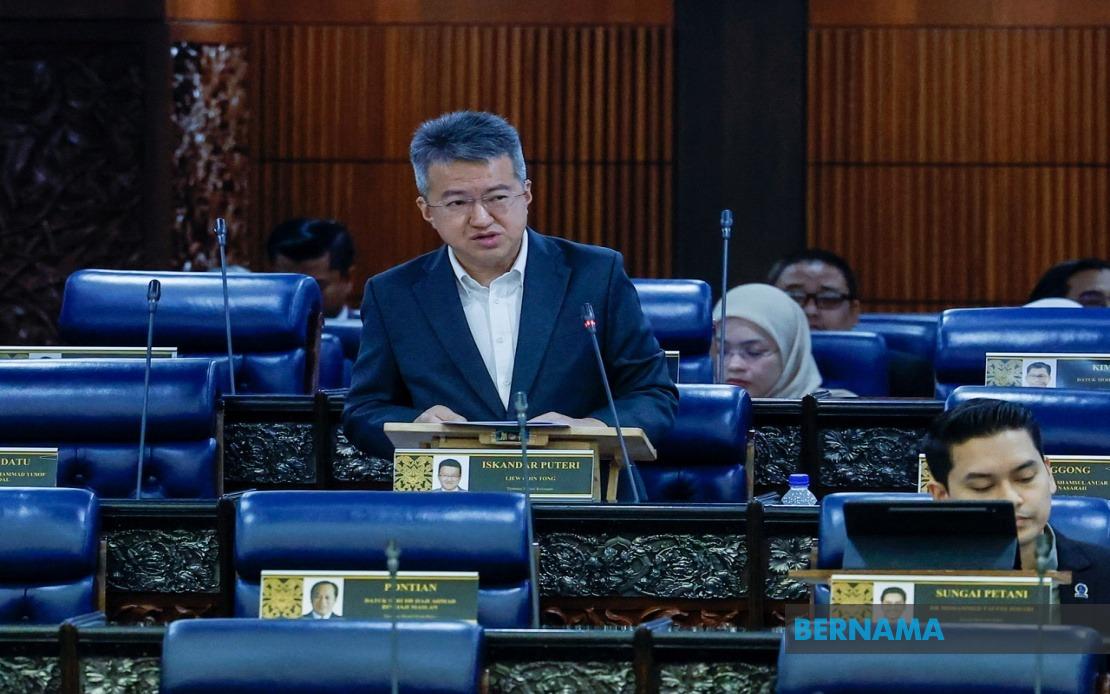
Malaysia's Employees Provident Fund has made substantial progress in its inheritance transfer initiative, with Deputy Finance Minister Liew Chin Tong revealing that 63 applications under the i-Legasi scheme have received approval so far. The programme has channelled RM46.3 million in accumulated retirement savings to 86 designated beneficiaries, marking a significant development in how Malaysian workers manage intergenerational wealth distribution within the formal savings system.
Introduced on February 1 this year, the i-Legasi initiative represents a shift in how the EPF treats members' savings in their final working years. Previously, workers approaching retirement faced rigid constraints on managing surplus funds. The new framework permits members aged 55 and above whose retirement balance exceeds the Adequate Savings threshold of RM650,000 to voluntarily channel portions of their excess capital to immediate family members' own EPF accounts. This mechanism addresses a practical concern for ageing workers seeking to support their dependants while simultaneously strengthening family savings pools.
Deputy Minister Liew explained during parliamentary questioning that the scheme directly contributes to improving overall savings adequacy among the EPF membership. The fund assesses adequacy through achievement of the Basic Savings target, a benchmark designed according to age-specific requirements. For those reaching retirement age, the target stands at RM390,000 by age 60, representing a baseline deemed sufficient for modest retirement living in Malaysia's current economic environment.
The latest statistics underscore gradual but meaningful progress toward broader savings adequacy. As of May 31 this year, approximately 3.04 million active EPF members aged between 18 and 60 had met their respective Basic Savings targets. This cohort represents 38.3 per cent of the total 7.94 million members in that age bracket. The comparison against prior-year performance reveals positive momentum: the achievement rate climbed from 35 per cent recorded in May 2025, translating into an additional 330,000 members reaching adequacy thresholds within a single year.
The question posed by Datuk Seri Aminuddin Harun from Port Dickson reflected growing anxieties within Malaysian policymaking circles regarding retirement security. As the nation transitions toward an aged demographic profile by 2030, the adequacy of accumulated savings becomes increasingly critical. Rising living expenses, persistent inflation pressures, and extended longevity mean that workers can no longer rely solely on minimal EPF balances for sustenance during their final decades. The i-Legasi scheme addresses this challenge by enabling wealth redistribution mechanisms that strengthen family financial resilience while maintaining individual contribution trajectories.
For Malaysian households grappling with tighter household budgets and competing financial demands, the i-Legasi initiative offers tangible advantages. A parent or grandparent holding substantial surplus EPF savings can now directly bolster a child's or grandchild's retirement fund, accelerating their journey toward adequacy benchmarks. This intergenerational transfer occurs within the formal financial system rather than through informal channels, preserving transparency and maintaining regulatory oversight. The mechanism particularly benefits younger workers who may struggle to accumulate sufficient balances independently within typical employment timescales.
The government and EPF have signalled commitment to deepening this approach through expanded policy collaboration. Both institutions acknowledge the imperative to develop comprehensive strategies that transcend simple rule modifications. They are exploring enhanced contribution incentive structures alongside strengthened social protection mechanisms designed to progressively elevate retirement savings adequacy across diverse demographic and income segments. These broader initiatives recognise that no single scheme—however well-designed—suffices to resolve systemic inadequacies affecting millions of workers.
The i-Legasi programme's early performance generates cautious optimism within financial policymaking quarters. Achieving 63 approvals within five months suggests receptiveness among older workers toward participating in structured inheritance arrangements. The RM46.3 million transferred demonstrates that substantial sums remain accessible within accounts of members approaching retirement age, indicating that many Malaysians do accumulate surpluses beyond minimum thresholds. This finding contradicts occasional assertions that retirement savings deficits affect virtually all Malaysian workers uniformly.
However, contextualising these figures within the broader EPF membership reveals the scale of remaining challenges. The 3.04 million members who have achieved their Basic Savings targets represent only slightly more than one-third of the active workforce aged 18 to 60. By extension, approximately 4.9 million members in this cohort have not yet reached adequacy benchmarks, suggesting significant vulnerability when they transition to retirement. Even accounting for younger workers still accumulating funds, the persistent shortfall highlights why government initiatives emphasising enhanced savings retention and contribution augmentation remain essential policy priorities.
The Malaysian context adds particular urgency to these retirement security concerns. Unlike developed economies with comprehensive state pension systems providing baseline income support, Malaysia's retirement framework depends substantially on individual accumulation through EPF participation. Private savings mechanisms and family support networks supplement but do not replace formal provident fund balances. As household structures diversify and family-based care patterns evolve, ensuring adequate accumulated capital becomes increasingly paramount for elderly Malaysians seeking dignified living standards.
Regional implications extend beyond Malaysia's borders. Southeast Asian economies sharing similar demographic trajectories and reliance on occupational savings schemes observe Malaysia's policy experiments with considerable interest. The i-Legasi initiative demonstrates how provident fund administrators can innovate within existing regulatory frameworks to facilitate wealth management objectives while advancing broader societal retirement security goals. The programme's transferability to other regional contexts remains an emerging consideration as policymakers across Southeast Asia confront accelerating population ageing.

