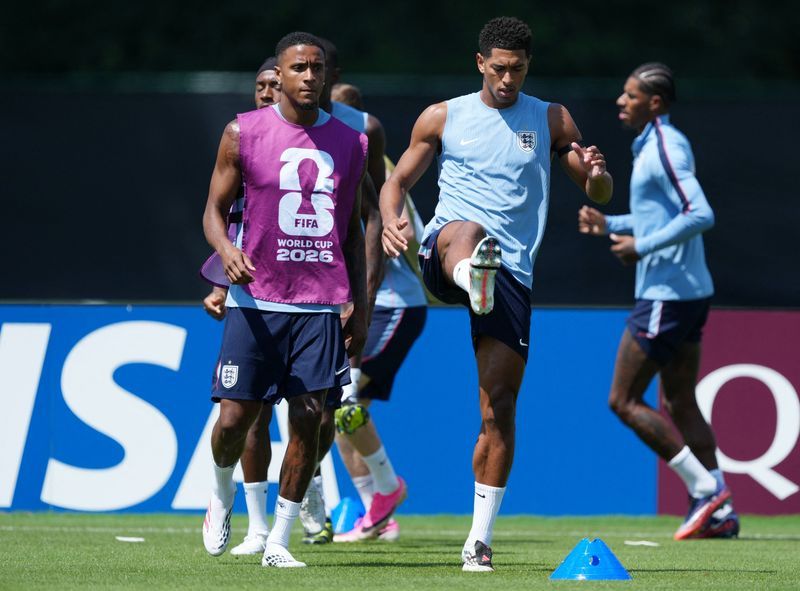
England's squad is presenting a remarkably unified front as the team settles into Atlanta for its World Cup semi-final against Argentina on Wednesday, with senior defenders publicly dismissing suggestions of discord and emphasizing their collective resolve. The English contingent has encountered persistent media scrutiny following their narrow progression past Norway, where tactical disagreements between manager Thomas Tuchel and midfielder Jude Bellingham threatened to overshadow their 2-1 extra-time victory. Yet the narrative of internal division appears not to have dented morale, with players demonstrating a consolidated commitment to the tournament's final stages.
The tension between Tuchel and Bellingham emerged after the Norway match, when the German manager expressed dissatisfaction with his team's performance despite the positive result. Bellingham, who netted both goals to secure progression, publicly questioned Tuchel's understanding of the physical and tactical demands of elite competition at that intensity level. Such public disagreement between a coach and star player would typically suggest fractured relationships, yet the camp's official messaging has consistently portrayed such moments as isolated incidents within a fundamentally cohesive group.
Defender Ezri Konsa addressed the inevitable media speculation on Tuesday, acknowledging that constant scrutiny represents an inherent feature of playing for England's national team. Rather than denying the existence of external pressure, Konsa articulated a mature understanding that experienced professionals must develop the psychological discipline to compartmentalize outside commentary. His comments reflected a pragmatic acceptance that media noise accompanies high-level international football, particularly when a major tournament enters its final stages and stakes intensify considerably.
Konsa emphasized that the current squad has cultivated an environment without meaningful internal friction, presenting a contrast to previous England campaigns that occasionally suffered from documented divisions between players, coaching staff, and media. The defender's assurance that the group operates harmoniously provides counterweight to the Bellingham-Tuchel episode, suggesting that even significant disagreements on tactical matters need not compromise the broader atmosphere within a professional squad. This distinction between disagreeing on footballing specifics versus fractured relationships represents an important nuance often lost in headline-driven coverage.
Marc Guehi, Konsa's fellow centre-back, delivered extensive praise for Tuchel's leadership qualities, highlighting the manager's capacity to generate positive energy throughout the entire organization. Guehi credited the German with establishing a squad environment characterized by substantial togetherness and genuine belief in the team's objectives, with all members genuinely supportive of the manager's direction. Such endorsements from experienced defenders carry particular weight, as defensive players typically work most closely with coaching staff on tactical instruction and organizational frameworks.
Guehi's observation that the post-Norway period paradoxically strengthened squad cohesion rather than fragmenting it deserves particular attention. Rather than viewing the public disagreement as corrosive, Guehi framed the controversy as ultimately beneficial, suggesting that addressing tensions transparently and moving forward collectively can actually reinforce group bonds. This interpretation aligns with modern sports psychology research indicating that well-managed conflict resolution often produces stronger team unity than false consensus.
Tuchel himself reinforced these themes during his press conference, articulating a philosophy that elevates collective commitment above individual achievement. The manager emphasized that modern football, particularly at World Cup level, demands complete alignment between players and coaching staff around shared objectives. Tuchel's reflection on the broader tournament landscape noted that successful nations across the competition have demonstrated exceptional mental resilience by subordinating personal agendas to team requirements. This observation carries particular resonance for Southeast Asian followers of international football, where understanding how elite teams manage complex group dynamics offers valuable insights into professional sports management.
The manager's comments about squad readiness and resilience hint at England's ambitions in the tournament's decisive phase. By emphasizing the team's unwillingness to surrender regardless of circumstances, Tuchel identified mental durability as the fundamental attribute distinguishing potential champions from merely talented ensembles. This psychological edge could prove decisive against Argentina, a nation with exceptional individual talent but potentially vulnerable to teams that maintain composure and organizational discipline throughout ninety minutes.
If England successfully navigate their semi-final encounter, they would face Spain in a rematch of Euro 2024's final, which the Spanish team won decisively. Spain demonstrated formidable credentials by comprehensively defeating France 2-0 in Tuesday's other semi-final, establishing themselves as genuine tournament favorites. The prospect of another England-Spain encounter would represent compelling narrative continuity, allowing both nations to seek redemption for their previous meeting at a major tournament. For Malaysian readers with interest in international football development, such rematches between elite European sides illustrate how geographic proximity and competitive history create meaningful context around tournament football beyond individual matches.
Notably, when Guehi was asked about Spain's convincing victory over France, he revealed he had not watched the match, having slept during England's travel from their Kansas base to Atlanta. His candid admission suggests the team maintains focused attention primarily on their own preparation and progression rather than becoming overly preoccupied with potential future opponents. This concentration on controllable factors represents sound sports psychology, allowing players to direct mental energy toward their immediate challenge rather than dispersing focus across hypothetical scenarios.
England's internal messaging about squad unity and psychological preparation carries significance beyond merely managing media narratives. The consistent reinforcement of togetherness themes suggests the coaching staff deliberately cultivates an emotional environment where players feel genuinely connected to collective objectives. For tournament football, where fixture congestion and intense pressure create opportunities for morale deterioration, maintaining this cohesive atmosphere throughout the competition demands continuous attention and intentional leadership practices.
The convergence of player and coaching staff messaging around squad unity indicates deliberate alignment rather than organic coincidence. Such coordination typically reflects conscious effort by Tuchel and his backroom team to shape perceptions and reinforce positive group psychology. While media management inevitably forms part of this process, the consistency of messaging suggests genuine sentiment about the squad's interpersonal dynamics underlying the public pronouncements. Whether this unity proves sufficient to overcome Argentina's considerable pedigree and individual talent will determine whether England's psychological preparation translates into tangible tournament success.

