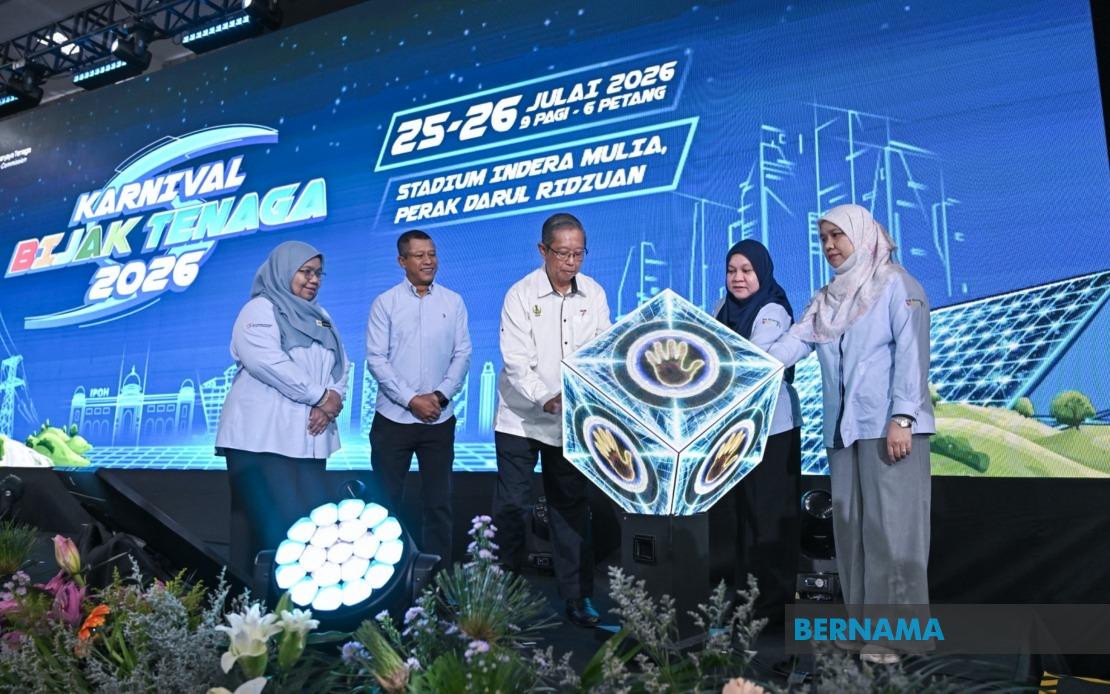
The Energy Commission marked a significant milestone in its public outreach strategy by launching the Energy Smart Carnival 2026, a two-day exhibition held at Stadium Indera Mulia in Ipoh that successfully engaged residents across Perak and beyond. The inaugural event demonstrated considerable appetite among ordinary Malaysians to understand the regulatory body's mandate and the rapidly evolving energy landscape, with attendance far exceeding initial projections and drawing interest from multiple states including Kuala Lumpur and Johor Bahru.
Chairman Datuk Seri Asri Hamidon framed the carnival as a critical component of the Energy Commission's broader mission to demystify its role as the principal regulator overseeing Malaysia's electricity and piped gas sectors. Rather than relying solely on formal regulatory announcements or industry publications, the carnival offered an accessible, family-oriented platform where visitors could interact directly with Energy Commission staff and explore tangible aspects of energy policy affecting their daily lives. This grassroots engagement approach reflects a growing recognition within government agencies that public buy-in on energy transition is essential for achieving national objectives.
The event coincided with the Energy Commission's Silver Jubilee celebration, lending symbolic importance to its focus on three interconnected themes: efficiency, safety, and the broader energy transition. These pillars are not abstract regulatory concerns but connect directly to household budgeting and national security. For Malaysian families increasingly conscious of electricity tariffs and concerned about grid stability, understanding how to identify energy-efficient appliances through 4 and 5-Star Energy Efficiency Labels and recognising ST-SIRIM Safety Labels provides practical tools for making informed purchasing decisions. The carnival effectively translated policy objectives into consumer behaviour guidance.
Perak Infrastructure, Energy, Water and Public Transport Committee chairman Datuk Seri Mohammad Nizar Jamaluddin's presence underscored the state-level importance of energy literacy, particularly as Perak navigates its own energy infrastructure challenges and opportunities. The participation of Energy Commission chief executive officer Siti Safinah Salleh further demonstrated institutional commitment to this public education initiative. Such high-level attendance signals that energy engagement is not peripheral but central to governance priorities.
One of the carnival's most innovative aspects was its integration of interactive demonstrations with educational content, moving beyond traditional lecture-style awareness campaigns. Visitors gained practical insights into reducing household electricity consumption—a matter of genuine concern to Malaysian homeowners facing rising utility costs—while learning about government incentives supporting both energy efficiency improvements and renewable energy adoption. This combination of cost-saving information with details about available subsidies created tangible value for attendees, increasing the likelihood that they would apply their learning to actual household decisions.
The overwhelming turnout of more than 10,000 visitors, more than doubling the initial 5,000-person target, suggests latent demand for accessible energy information among the general public. That visitors journeyed from Kuala Lumpur, Johor Bahru, and other states to attend an Ipoh-based event indicates this is not merely parochial interest but reflects genuinely curious Malaysians seeking to understand energy systems and their personal role within them. Such engagement cuts across demographic lines and geographic boundaries, reinforcing that energy literacy is increasingly a mainstream concern.
Energy Commission Strategic Communications Section head Veliana Ruslan's announcement that the carnival will expand to other states next year recognises this momentum and positions the initiative as a template for national rollout. A staggered expansion approach allows the Energy Commission to refine programming based on the Perak experience while building anticipation in other regions. For Southeast Asia as a whole, Malaysia's investment in public energy education demonstrates a sophisticated approach to energy transition that acknowledges behavioural change as essential alongside technological and policy reforms.
The carnival's emphasis on career and educational opportunities within the energy sector addresses a parallel challenge: building a workforce equipped for the transition to cleaner, more efficient energy systems. Exposing young people to diverse roles within the energy industry—from regulation and safety inspection to renewable energy engineering and grid management—helps cultivate a talent pipeline for emerging specialisations. Malaysia's ability to execute its energy transition depends not only on policy frameworks but on attracting capable professionals to implement them.
Understanding the festival's significance requires acknowledging the regional context. As Southeast Asia pursues ambitious renewable energy targets and grapples with aging electricity infrastructure, countries like Malaysia face public scepticism about transition costs and perceived disruptions. By humanising the Energy Commission and demonstrating its commitment to transparent communication, the carnival helps build social licence for necessary regulatory changes. It counters narrative framings of energy transition as something imposed top-down by distant bureaucrats, instead positioning it as a collaborative endeavour involving informed citizens.
The carnival also serves a broader economic function by strengthening consumer awareness around energy-efficient appliances and their long-term cost benefits. This knowledge spillover effect can stimulate demand for higher-efficiency products, potentially encouraging manufacturers to expand these product lines and invest in research. In Malaysia's developing market context, public education shifts can create competitive advantages for companies aligned with efficiency standards while gently pressuring laggards to upgrade their offerings.
Looking ahead, the Energy Commission's decision to scale the carnival concept nationally suggests confidence in this engagement model and recognition that energy transition requires sustained public conversation rather than one-off announcements. Expanding to other states will allow the Energy Commission to gather regional feedback, adapt messaging to local contexts, and build a nationwide constituency invested in energy efficiency and safety.
The strong turnout also provides valuable data on public hunger for energy information, which should inform broader communication strategies. If thousands of Malaysians will travel to attend a carnival on energy topics, perhaps there is justification for expanding educational content through schools, community centres, and digital platforms. The carnival's success implies that the Energy Commission's messaging challenges stem not from public disinterest but from insufficient accessible channels for information delivery.

