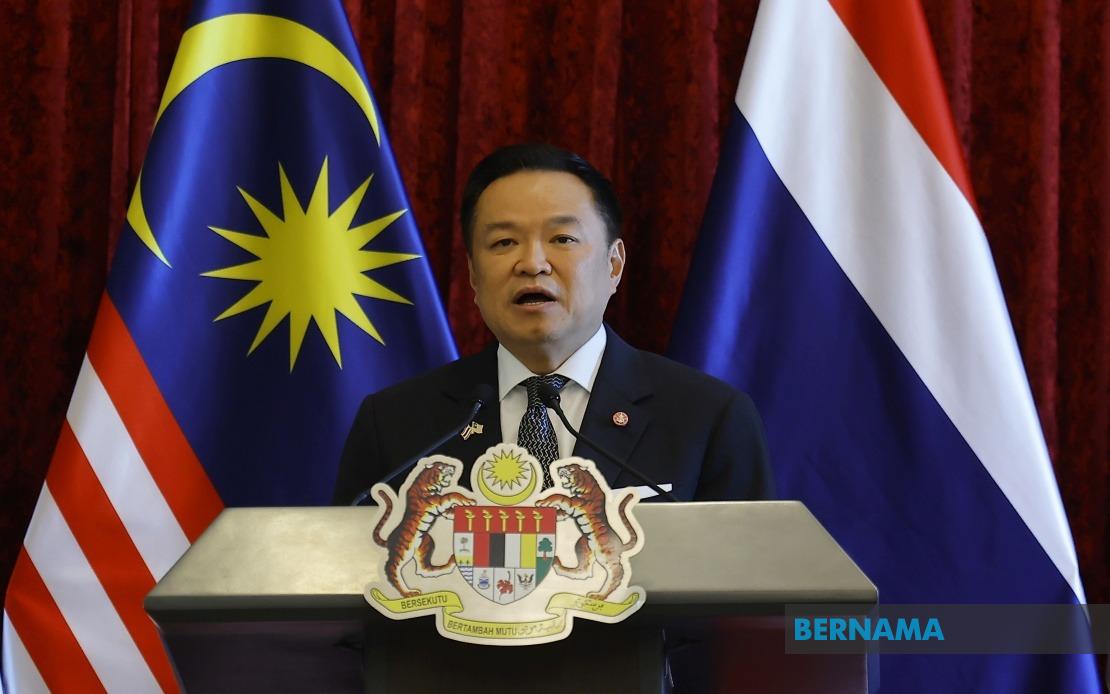
Thai Prime Minister Anutin Charnvirakul has placed the resolution of violence and instability in his country's southern border provinces at the forefront of his government's agenda, reiterating this commitment during high-level talks with Malaysian Prime Minister Datuk Seri Anwar Ibrahim in Putrajaya on Thursday. The declaration underscores the persistent security challenges that have afflicted the Pattani, Yala, and Narathiwat provinces for two decades, an insurgency that has claimed thousands of lives and displaced communities across the border region shared by both nations.
During a joint press conference, Anutin articulated a vision linking security outcomes with economic opportunity, contending that durable peace creates the foundation upon which development initiatives can flourish, while conversely, genuine development efforts foster the conditions for sustained tranquility. This framing reflects a broadening international consensus that military operations alone cannot resolve protracted insurgencies without parallel investment in education, employment, and social cohesion. For Malaysia and Thailand, this perspective carries particular weight given the interconnected nature of the conflict, which has repeatedly spilled across borders through refugee flows, weapons trafficking, and occasionally cross-border military operations.
The Thai premier specifically acknowledged Malaysia's pivotal role as a neutral facilitator in the Southern Thailand Peace Dialogue, a mediation process that has intermittently convened negotiations between the Thai government and armed groups seeking autonomy or independence in the southern provinces. This recognition of Malaysia's intermediary position reflects Bangkok's appreciation for Kuala Lumpur's credibility with various stakeholder groups, a trust built through decades of bilateral engagement and shared understanding of the region's complexities. Malaysia's willingness to host and facilitate such talks represents a significant diplomatic investment, as unsuccessful dialogue rounds can strain relations and create perceptions of bias among competing factions.
Anwar provided assurances that Malaysia categorically rejects violence as a means of resolving political disputes and reiterated his government's commitment to collaborate with Thai counterparts in apprehending and prosecuting individuals accountable for cross-border incidents and security breaches. This mutual commitment to accountability mechanisms gains importance given occasional complaints from Thai officials regarding sanctuary provided to insurgent elements within Malaysian territory, accusations that Kuala Lumpur contests while simultaneously pledging enhanced border security measures. The dual commitment to cooperation and accountability aims to address Bangkok's security concerns while respecting Malaysian sovereignty.
The mediation framework currently operates under the leadership of Datuk Mohd Rabin Basir, a seasoned security apparatus official who previously directed Malaysia's National Security Council before receiving his appointment as chief facilitator on July 1, 2024. Basir brings substantive experience in intelligence analysis and strategic policy formulation, qualities essential for navigating the intricate political landscape surrounding southern Thai insurgency negotiations. His counterpart representing Thailand's negotiating position is Thanat Suwannanont, who directs the National Intelligence Agency, positioning both facilitator and negotiator within institutional frameworks designed to prioritize strategic continuity over partisan political considerations.
The Barisan Revolusi Nasional, the primary armed organization engaged in these dialogues, represents a diverse coalition of Islamic separatist movements advocating for either independence or autonomy within a framework respecting Islamic governance principles. Bringing the BRN and its constituent groups into sustained dialogue represents a significant achievement, as these organizations have historically fractured into splinter factions with divergent strategic objectives and operational methodologies. The challenge for mediators involves crafting agreements sufficiently flexible to accommodate multiple organizational perspectives while maintaining government credibility regarding core sovereignty and territorial integrity concerns.
The timing of these high-level reaffirmations reflects broader regional anxieties regarding security cooperation amid shifting geopolitical circumstances. Southeast Asian capitals have grown increasingly concerned about maintaining effective coordination mechanisms as great power competition intensifies and traditional alliance structures evolve. Thailand and Malaysia both recognize that bilateral security cooperation on the southern border question serves not merely as a mechanism for addressing one specific conflict zone but as a demonstration of regional states' capacity to manage transnational security challenges through dialogue, partnership, and institutional innovation rather than escalating military measures.
From a Malaysian perspective, the southern Thai insurgency carries immediate implications for national security, as instability in neighboring territories creates conditions for weapons proliferation, criminal networks, and occasional spillover violence affecting Malaysian border communities. The Kelantan and Terengganu states, which form Malaysia's frontier with the conflict zones, have experienced periodic security incidents and must maintain enhanced border management protocols. However, Malaysian interest extends beyond defensive security measures to encompass regional stability and prosperity, as violence in southern Thailand constrains economic development across the border region and perpetuates cycles of displacement and humanitarian concern.
The diplomatic framework emphasizing peace-building and development represents an important counterbalance to security-first approaches that have dominated regional responses historically. By consciously linking security outcomes to economic opportunity and social investment, both governments signal recognition that grievances underlying insurgent recruitment stem from structural inequalities, limited opportunities, and perceived marginalization of Muslim-majority communities. This more comprehensive approach, if genuinely implemented through resource allocation and institutional commitment, could address root causes rather than merely managing symptoms of discontent.
Looking forward, the sustainability of current dialogue frameworks depends upon consistent political will from Thai leadership, organizational discipline within BRN-affiliated groups, and Malaysian willingness to invest diplomatic capital in mediation activities with uncertain outcomes. The appointment of experienced security professionals to lead both facilitation and negotiation efforts suggests serious commitment to structured engagement, yet previous dialogue rounds have foundered when operational security incidents undermined confidence in peaceful negotiation prospects. Maintaining momentum requires careful attention to confidence-building measures, transparent communication protocols, and credible mechanisms for addressing violations of agreed-upon understandings.
For the broader Southeast Asian community, successful conflict resolution in southern Thailand would represent a significant achievement in regional conflict management, demonstrating that protracted insurgencies can transition toward political settlements through patient dialogue and institutional innovation. Conversely, renewed violence or dialogue collapse would reinforce perceptions that military approaches remain inevitable in managing separatist movements, potentially influencing how neighboring governments approach comparable security challenges within their own territories.

