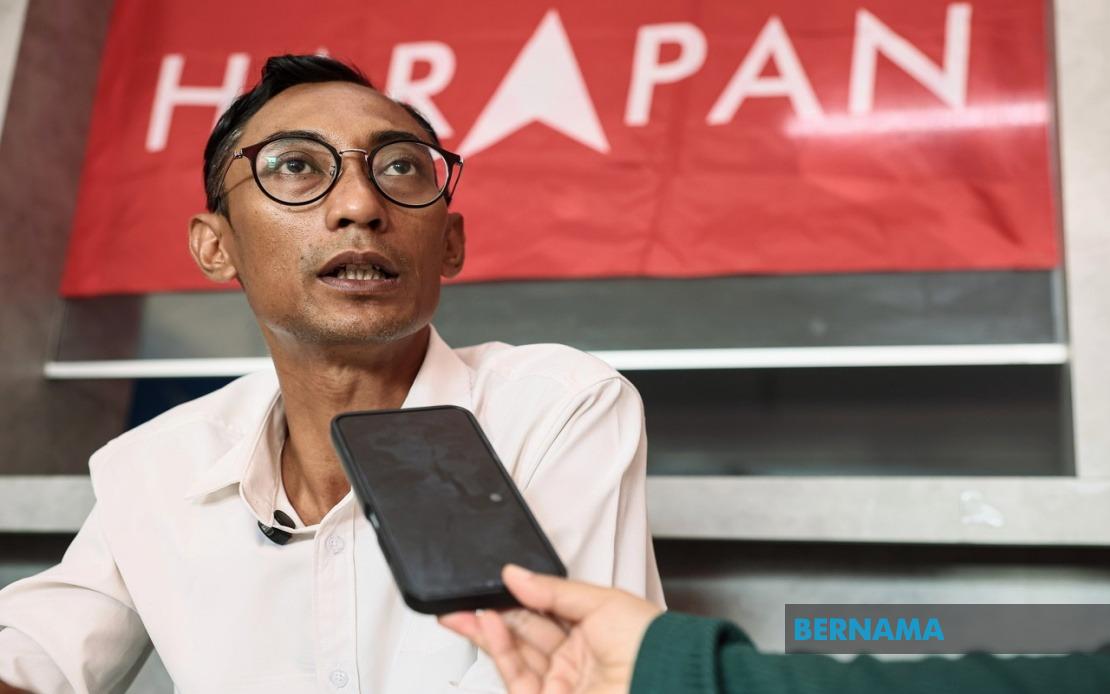
Pakatan Harapan's candidate for Johor's Endau state seat, Saiful Nizam Samat, has positioned his campaign around a distinctive proposition: establishing a direct line of communication between the constituency and federal authorities. Branding his effort as 'Suara Endau ke Putrajaya' (Endau's Voice to Putrajaya), Saiful Nizam argues that stronger coordination between local representatives and the federal government would streamline decision-making processes and unlock development benefits for residents more rapidly than conventional approaches.
The strategic choice of framing represents a calculated departure from competing in more visible urban constituencies. When pressed on why he did not contest in higher-profile seats such as Iskandar Puteri or Kota Iskandar, Saiful Nizam explained that alignment with federal authorities was his primary consideration. This reasoning suggests that the Pakatan Harapan campaign is banking on voter appetite for pragmatic governance improvements over symbolic appeals or traditional political messaging. The logic underpinning his positioning is that a representative with direct channels to Putrajaya would prove more effective than one operating from a more distant political position.
Early feedback during the opening week of campaigning has encouraged the candidate's team. Saiful Nizam reported receptive responses across demographic segments, spanning from young voters to elderly residents. This breadth of appeal indicates that the message resonates beyond a single generational or socioeconomic bracket, suggesting that concerns about local development coordination and federal responsiveness transcend typical voting blocs in the constituency. The willingness of diverse voter groups to engage with the campaign signals either frustration with existing representation or genuine interest in the proposed governance model.
The campaign itself employs a multimedia strategy designed to penetrate voter awareness across traditional and digital channels. Rather than relying solely on street-level engagement or conventional media buys, the team has invested in a thematic approach anchored by a custom-composed campaign song. This cultural element, deliberately crafted to be light-hearted and memorable, targets younger demographics who may be less influenced by conventional political oratory. The decision to combine entertainment value with substantive messaging reflects broader trends in Malaysian electoral politics, where candidates increasingly recognize the need to compete for attention in saturated information environments.
Geographic targeting remains central to the tactical approach. Saiful Nizam has identified Orang Asli settlements as priority locations for direct engagement during the final campaign stretch. This deliberate focus on indigenous communities underscores awareness that Endau's demographic composition includes substantial populations whose political preferences can shift outcomes. The candidate's commitment to personally visiting these areas demonstrates recognition that such communities often require direct candidate engagement rather than indirect messaging to feel genuinely represented. This ground-level political work suggests the campaign is taking nothing for granted in what appears to be a competitive race.
The constituency itself presents a complex electoral landscape. Saiful Nizam faces three opponents in a four-cornered contest: Alwiyah Talib of Barisan Nasional, the two-term sitting representative; Hasnul Hakimi Hussien representing Perikatan Nasional; and Jati Awang of Parti Orang Asli Malaysia (ASLI). The presence of an ASLI candidate signals how indigenous representation has become a significant electoral consideration in constituencies with substantial Orang Asli populations. Alwiyah's incumbency advantage—having served two terms—positions her as the establishment candidate, while the three challengers must convince voters that change offers tangible benefits. Saiful Nizam's explicit acknowledgement of his main opponent suggests he views the BN candidate as his primary competition, with PN and ASLI as secondary considerations.
Despite facing an incumbent with institutional advantages, Saiful Nizam projects confidence grounded in organizational capability and policy commitments he characterizes as realistic. This rhetoric represents a deliberate rhetorical move: by emphasizing the strength of his campaign machinery and the credibility of his promises rather than attacking opponents or making grandiose guarantees, he positions Pakatan Harapan as the serious, competent alternative. This framing appeals to voters fatigued by political hyperbole and seeking demonstrable administrative competence. The implicit comparison with the incumbent suggests that Alwiyah's two terms have not fully satisfied local expectations, creating political space for a challenger to exploit.
A notable element of his campaign strategy involves mobilizing the diaspora. Saiful Nizam has specifically appealed to Endau residents working outside the constituency—in Singapore, the Klang Valley, and elsewhere—to return for polling day on Saturday to cast their votes. This outreach indicates that the candidate believes voters who have left Endau but retain electoral registration there represent a recoverable political constituency. The appeal to their civic responsibility carries implicit messaging: that voting for change represents a meaningful contribution to their home community's development. Whether such appeals successfully translate to actual voter turnout remains uncertain, but the effort demonstrates awareness that Endau's political fate may be influenced by mobile populations maintaining electoral ties to the constituency.
The timing context further illuminates the campaign dynamics. The Johor state election, scheduled for July 11, represents the second significant electoral test under the constitutionally reformed framework following the 2022 general election. Early voting on July 7 precedes the main polling day, potentially affecting turnout calculations and campaign intensity decisions. For Pakatan Harapan, the Johor contest represents important ground for demonstrating electoral viability in a state where they have not recently held significant electoral advantages. Success in constituencies like Endau would provide momentum heading into future national politics.
The Federal-Local Dynamic: Saiful Nizam's core campaign proposition—that better federal-state-local coordination produces tangible benefits—touches on a structural governance challenge Malaysia faces. Constituencies with federal representatives aligned with the federal government can theoretically mobilize development resources more efficiently. However, this argument contains a vulnerability: it implicitly concedes that the normal allocation mechanisms are somehow compromised, raising questions about whether the system itself requires correction. Voters evaluating this pitch must weigh whether electing a candidate with federal alignment provides genuine advantages or whether it merely shifts resource distribution temporarily.
The Orang Asli electoral presence in Endau adds another layer to this contest. The emergence of ASLI as an independent political force reflects indigenous communities' growing assertiveness in electoral politics. Previously, such voters often defaulted to major coalition partners' candidates. The willingness to field their own candidate signals either confidence in indigenous political mobilization or frustration with how both BN and PH have served indigenous constituencies. Saiful Nizam's campaign emphasis on visiting Orang Asli settlements suggests the PH campaign believes these voters remain persuadable toward their candidate despite the presence of an indigenous alternative.
Looking at the broader Malaysian context, the Endau contest encapsulates contemporary electoral dynamics: the shift from purely coalition-based competition toward a more fragmented landscape; the importance of ground-level campaign organization alongside institutional resources; the mobilization of diaspora communities; and the emergence of identity-based political formations. For regional observers, Johor's election results will provide insight into whether PH can recover electoral ground in peninsular Malaysia's largest state, or whether BN maintains command over traditional strongholds. The Endau race, while locally focused, reflects these larger questions about Malaysian electoral direction.

