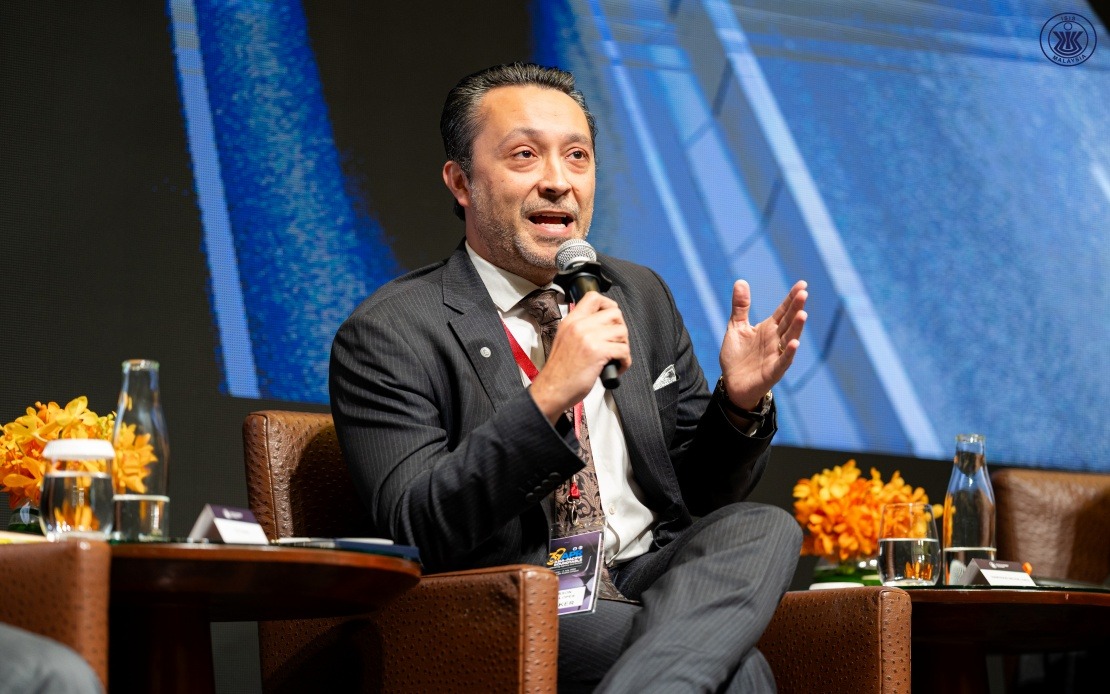
Rising middle powers across the Global South, encompassing nations like Malaysia, Brazil, India, Indonesia, Turkey, and Mexico, must resist the temptation to simply emulate the strategies of established powers and instead develop their own independent foreign policy frameworks suited to their distinct circumstances and ambitions. This was the central message delivered by international relations experts gathered in Kuala Lumpur for the 39th Asia-Pacific Roundtable, an annual forum that brings together leading academics and policymakers to discuss critical regional and global challenges.
Dr Dawisson Belém-Lopes, Professor of International and Comparative Politics at Federal University of Minas Gerais in Brazil, emphasized that emerging and established middle powers operate within fundamentally different political contexts and should never be lumped together as a homogeneous bloc. Speaking at the two-day event organized by the Institute of Strategic and International Studies (ISIS) Malaysia under the theme "Accelerating Agency and Action," Belém-Lopes drew a sharp distinction between the two categories, noting that treating them as interchangeable ignores crucial historical and strategic differences that shape how each group approaches international relations.
Countries comprising the Global South have maintained a deeply complicated relationship with the post-World War Two liberal international order that has dominated global affairs for nearly eight decades. Rather than embracing this Western-led system as permanent or desirable, emerging middle powers have consistently pushed for comprehensive structural reforms that would redistribute power more equitably across regions and reduce the concentration of influence in traditional Western hands. This dissatisfaction reflects not temporary frustration but rather longstanding concerns about the legitimacy and fairness of institutions designed during an era when the Global South had minimal influence over their construction.
The strategic outlooks and policy priorities of emerging middle powers diverge significantly from those of established middle powers due to contrasting historical experiences and contemporary challenges. While developed economies often prioritize maintaining the existing system that benefits them, rising nations seek greater voice in decision-making forums and challenge rules they perceive as unfairly limiting their development and influence. Belém-Lopes highlighted that the Global South increasingly commands greater resources and institutional platforms previously unavailable, providing newfound leverage in international negotiations and regional affairs.
Peter Varghese, Chancellor of the University of Queensland and former secretary of Australia's Department of Foreign Affairs and Trade, offered a sobering assessment of the current global situation, characterizing the world as existing in a transitional period between two distinct international orders. The post-war system anchored by American leadership is incrementally unraveling, though not as a result of recent policy shifts alone but rather due to profound long-term structural transformations reshaping the international landscape. The emergence of China as an economic and military superpower, the gradual shift toward multipolarity as multiple regional powers accumulate influence, the erosion of Washington Consensus economic policies, and the rising salience of identity and cultural factors in politics are all contributing to this fundamental reordering.
Construction of a new multilateral system to replace the aging post-war architecture will require substantial time and cannot be rushed through political will alone, Varghese cautioned. While individual countries and regions must actively exercise strategic agency in shaping emerging arrangements, agency alone proves insufficient for establishing a viable new world order. He advocated instead for nations to concentrate on deepening cooperation at regional and cross-regional levels, building practical partnerships that address shared concerns and create patterns of interdependence that gradually cohere into broader frameworks.
For Asia specifically, Dr Ken Jimbo, Professor of International Relations at Keio University in Japan, offered reassurance that the region will retain its centrality in the evolving global order despite continuing fluctuations in American foreign policy priorities and approaches. Even as the United States pursues narrower definitions of national interest, it will necessarily depend on sustained regional partnerships to pursue its strategic objectives across the Indo-Pacific. This structural reality persists regardless of which administration occupies the White House or the particular foreign policy philosophy it espouses.
Japan and other developed Asian economies remain fundamentally dependent on maintenance of a rules-based international order characterized by freedom of navigation, unimpeded commerce, and respect for territorial sovereignty. These nations cannot simply opt out of regional security architectures or abandon commitments to international law without jeopardizing the stable environment upon which their prosperity rests. The challenge facing these countries involves balancing preservation of essential systemic features with acknowledgment that the current post-war order requires updating to reflect contemporary power distributions and address legitimate grievances from rising economies.
The implications of this evolving geopolitical landscape extend directly to Malaysia and its peers across Southeast Asia, which must navigate between competing powers while maintaining strategic autonomy. The region's exposed position between major power spheres creates both risks and opportunities, requiring careful calibration of relationships with both established and rising powers. Malaysia's ability to forge independent positions on key issues, rather than automatically deferring to either American or Chinese preferences, depends on strengthening intra-regional cohesion through ASEAN and cultivating relationships with fellow emerging middle powers that share similar concerns about preserving agency in an increasingly multipolar world.
The debates at the Asia-Pacific Roundtable reflect broader recognition that the post-Cold War era of American primacy has definitively ended, replaced by a more contested and ambiguous international environment. Emerging economies from the Global South possess the resources and institutional vehicles to shape this new order, but only if they resist pressure to adopt wholesale the strategies of established powers. The path forward requires these nations to articulate their own priorities clearly, build coalitions with likeminded countries, and demonstrate capacity to defend their interests through diplomatic skill and strategic consistency. For Malaysia particularly, this means continuing to emphasize ASEAN's centrality while expanding partnerships with other emerging powers that share commitment to maintaining space for middle powers in a multipolar world.

