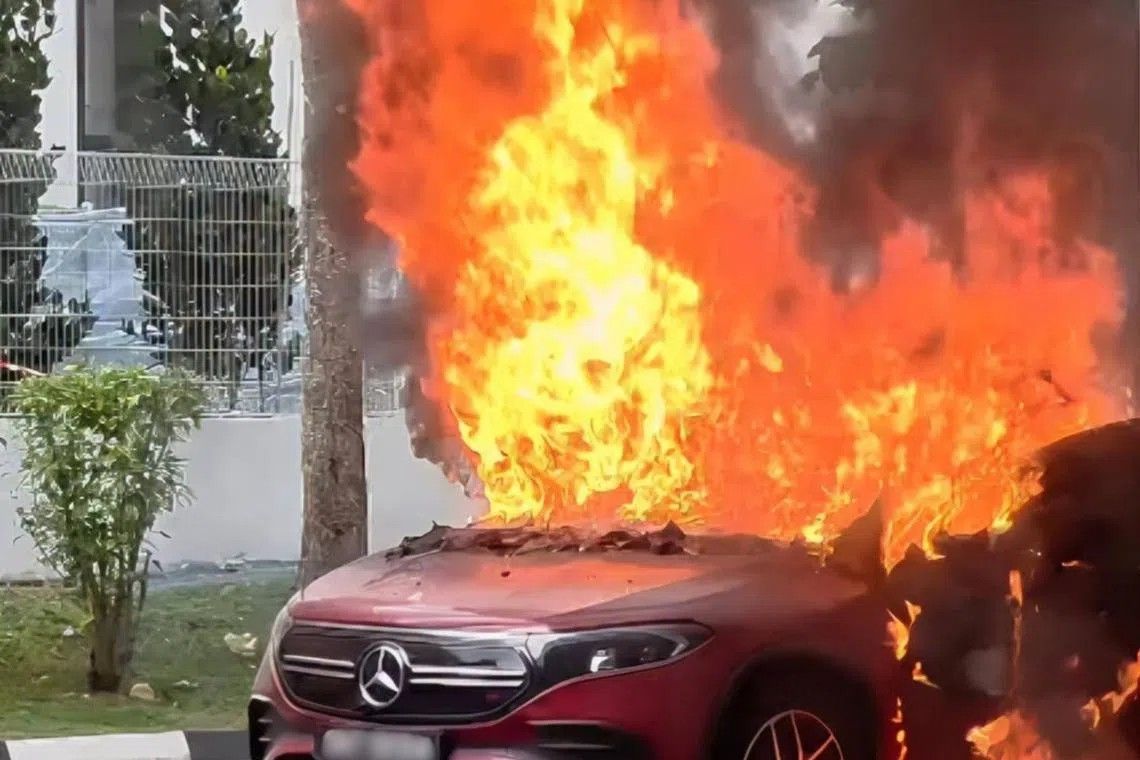
A battery-powered vehicle erupted into flames near the entrance of a multi-storey carpark at Block 548 Woodlands Drive 44 in Singapore's Woodlands precinct on the morning of July 21, prompting a swift response from emergency services. The Singapore Civil Defence Force (SCDF) received the alert shortly after 10.10am and dispatched firefighters to the scene, where they successfully contained and extinguished the blaze using a single water jet. Thankfully, no persons were injured in the incident, though the vehicle sustained extensive damage.
According to SCDF's initial assessment, the fire originated within the vehicle's interior compartment rather than affecting the external structure or adjacent vehicles. The precise cause remains under investigation by relevant authorities, who will likely examine whether manufacturing defects, maintenance issues, battery malfunction, or other factors contributed to the thermal runaway event. The timing and mechanism of the fire raise important questions about the safety of battery-powered vehicles, particularly in confined spaces such as multi-storey carparks where ventilation and evacuation become critical considerations.
The vehicle's driver provided crucial details about the incident to Shin Min Daily News, offering eyewitness perspective on how events unfolded. She reported that while exiting the carpark that morning, she detected a distinctive burning odour emanating from the vehicle. Recognizing the warning sign, she immediately pulled the car over and observed smoke billowing from the interior—a decision that likely prevented further escalation and allowed her to exit safely.
The fire initiated in the space separating the driver's and front passenger's seats, directly above the area where the vehicle's battery pack is positioned. This anatomical detail proves significant, as it suggests the ignition point corresponded with the battery's location, pointing toward a potential battery-related failure. Lithium-ion batteries, which power modern electric vehicles, occasionally experience thermal runaway—a chain reaction causing internal temperature spikes that can trigger fires even when the vehicle is not in operation or under heavy load.
When initial attempts to extinguish the fire proved insufficient, security personnel stationed nearby attempted to use portable fire extinguishers to suppress the flames. However, these hand-held devices lacked the capability to overcome a lithium battery fire, which burns at significantly higher temperatures than conventional combustible material fires and requires specialized suppression methods or substantial volumes of water. Recognizing the escalating danger and fearing potential explosion risk as the fire spread deeper into the vehicle's structure, the driver and security staff wisely evacuated the immediate vicinity.
The decision to contact SCDF proved essential. Professional firefighting teams possess the equipment, training, and protocols necessary to safely manage battery vehicle fires, including knowledge of water application techniques that avoid spreading molten battery material and understanding of when to allow controlled burning rather than aggressive suppression. The single water jet deployed by SCDF personnel successfully contained the incident, demonstrating the effectiveness of appropriate emergency response infrastructure.
Photographs captured in the aftermath reveal the extent of thermal damage sustained by the vehicle. The entire interior lay charred beyond recognition, with the dashboard severely warped and deformed by extreme heat. The structural supports for both front seats had become exposed and compromised, indicating that temperatures had climbed sufficiently to soften and degrade multiple materials simultaneously. By 12.15pm, recovery services had towed the damaged vehicle away from the carpark, clearing the access point and allowing normal operations to resume.
This incident arrives amid growing global scrutiny of electric vehicle safety, particularly regarding battery thermal events in shared parking facilities. Major cities worldwide have intensified focus on carpark design specifications, charging infrastructure safety standards, and emergency response preparedness for battery fires. The confined environment of a multi-storey carpark presents unique hazards—limited ventilation channels smoke and toxic fumes upward through residential levels, while narrow driving lanes restrict fire truck access and complicate emergency evacuation protocols.
For Malaysia and the broader Southeast Asian region, where electric vehicle adoption accelerates across urban centers like Kuala Lumpur, Penang, and Bangkok, the Woodlands incident underscores the importance of establishing comprehensive safety frameworks before battery vehicle penetration reaches saturation point. Regional authorities should examine whether existing carpark building codes adequately address battery fire scenarios, whether parking facility operators receive training in EV-specific hazard management, and whether emergency services possess appropriate suppression equipment and tactical knowledge.
The investigation findings will prove instructive for manufacturers, regulators, and consumers throughout the region. Whether the fire resulted from design vulnerability, manufacturing defect, improper maintenance, or an isolated anomaly will determine whether systemic corrective action becomes necessary. In the interim, owners of battery vehicles would benefit from understanding their vehicles' warning signs, knowing when to seek professional diagnostics, and understanding that unusual odours or unexpected thermal sensations warrant immediate attention rather than dismissal.
Singapore's rapid emergency response prevented what could have evolved into a more serious incident affecting surrounding vehicles, carpark infrastructure, or residential units above. The SCDF's successful containment demonstrates that properly equipped and trained emergency services can manage these incidents effectively when called promptly, emphasizing the critical importance of driver awareness and public knowledge about recognizing potential battery vehicle emergencies in their earliest stages.

