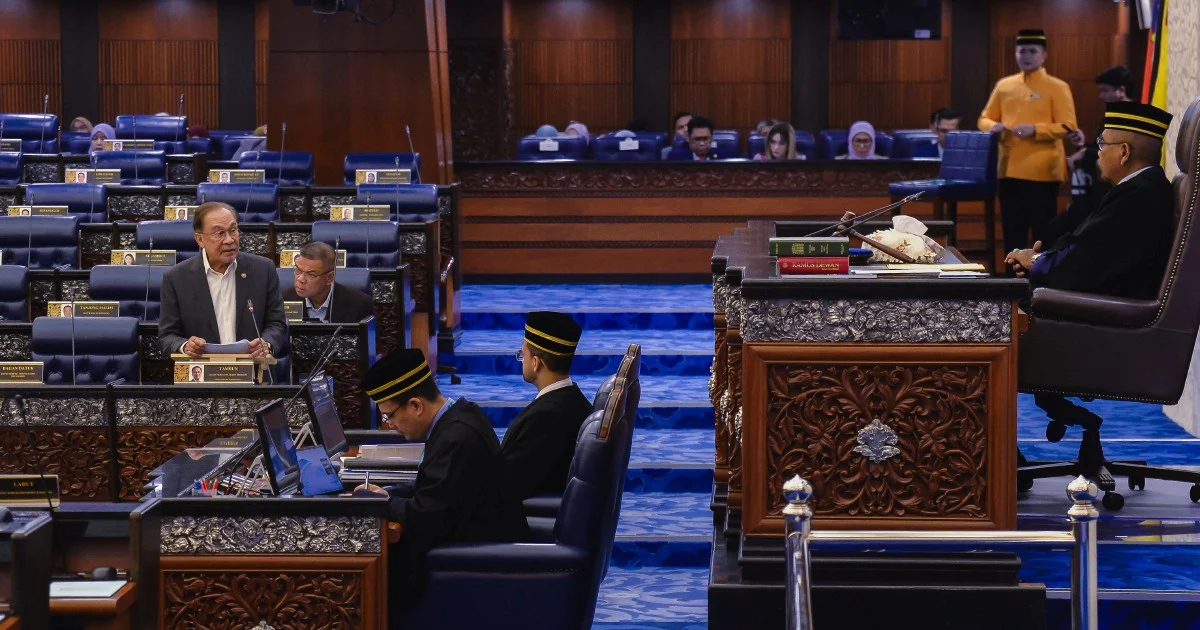
Prime Minister Datuk Seri Anwar Ibrahim has affirmed that the Election Commission possesses the authority and willingness to act decisively against caretaker administrations that contravene established election guidelines through policy announcements or financial commitments. The assurance comes at a time when Malaysia's electoral framework faces growing scrutiny regarding the boundaries between legitimate governance during interim periods and improper electioneering conducted through executive action.
The distinction between a caretaker government's operational responsibilities and its prohibited electioneering activities remains a perennial challenge in Malaysian electoral practice. Caretaker governments function in the interval between the dissolution of parliament and the formation of a new administration following elections, a period that typically spans several weeks. During this window, essential services must continue, bills must be paid, and routine administrative matters demand attention. However, the temptation to use these interim months for policy launches, spending announcements, or benefit distributions that could influence voter behaviour has long troubled election observers and constitutional scholars.
The Election Commission's heightened vigilance reflects recognition of past instances where the line between necessity and opportunism has blurred. Major infrastructure projects announced, grants distributed to particular constituencies, or significant policy reversals introduced during caretaker periods can materially affect electoral perceptions and voter calculations. The commission's stated readiness to investigate and penalise such breaches signals a tougher enforcement posture than has sometimes been evident in practice.
Anwar's public confirmation of this enforcement commitment carries particular weight given the political context surrounding Malaysia's electoral cycle. The statement appears designed to reassure both the public and opposition parties that election guidelines will not become merely aspirational documents. It also serves as a warning to any caretaker administration tempted to exploit the unique window of power with reduced parliamentary scrutiny that such periods provide.
Financial decisions represent the most visible and measurable category of potential breaches. A caretaker administration announcing new salary increases, launching benefit schemes, approving major contracts, or committing to substantial expenditures creates an audit trail susceptible to objective assessment. Unlike some policy matters that exist in grey zones, financial decisions leave concrete evidence of when commitments were made and whether they occurred during prohibited periods.
The Election Commission faces inherent difficulties in determining culpability and proportionality when violations occur. Not all financial decisions constitute breaches—paying existing salaries, honouring prior contractual obligations, or funding ongoing programmes remain necessary. The commission must distinguish between administration that crosses into impropriety and legitimate governance functions. Anwar's statement appears to acknowledge this complexity while insisting that deliberate violations will not escape consequences.
For Malaysian voters and civil society organisations, this commitment represents a reassurance that electoral integrity will receive serious protection. Election credibility depends substantially on public confidence that the playing field remains level and that outgoing administrations do not abuse caretaker status to engineer electoral advantages. When voters suspect that policy announcements, spending programmes, or other official acts during election periods represent calculated electioneering rather than necessary governance, it corrodes faith in the electoral process itself.
The regional context amplifies the significance of Malaysia's election governance standards. Across Southeast Asia, questions about electoral fairness and the potential for incumbent abuse frequently arise. Malaysia's demonstrated commitment to enforcing caretaker guidelines—through the Election Commission's willingness to investigate and penalise violations—contributes to the nation's standing as a country where electoral competition, while competitive, operates within defined rules. This reputation matters for international investment, diplomatic relationships, and Malaysia's influence within regional democratic forums.
Political parties and caretaker administrations must now calibrate their decision-making with heightened awareness of potential consequences. Any major policy launch, significant spending approval, or consequential decision made during caretaker periods faces potential Election Commission scrutiny. This awareness should naturally tend toward restraint and deference to genuinely necessary governance functions only.
The practical implications extend to how future caretaker administrations structure their work. Careful documentation of decisions as necessary continuation of prior commitments rather than new initiatives becomes crucial. Technical expertise in distinguishing genuine operational requirements from discretionary policy choices becomes increasingly valuable. Constitutional and administrative law advice becomes essential to protect against inadvertent violations.
Anwar's statement also reflects evolving expectations within Malaysia's democratic culture regarding what constitutes acceptable conduct during electoral periods. That a prime minister feels compelled to publicly affirm enforcement of election guidelines suggests that previous periods may have witnessed insufficiently rigorous application of these rules. The statement can be read as both reassurance and corrective, establishing clearer expectations for the future.
As Malaysia approaches potential electoral cycles, this clarity from the Prime Minister's office and the Election Commission's demonstrated commitment to enforcement should serve as a stabilising force. The integrity of electoral processes depends on public confidence that the rules apply uniformly and violations trigger meaningful consequences. Anwar's affirmation that the Election Commission will investigate and act on caretaker breaches represents an important—if overdue—contribution to Malaysia's ongoing democratic development.

