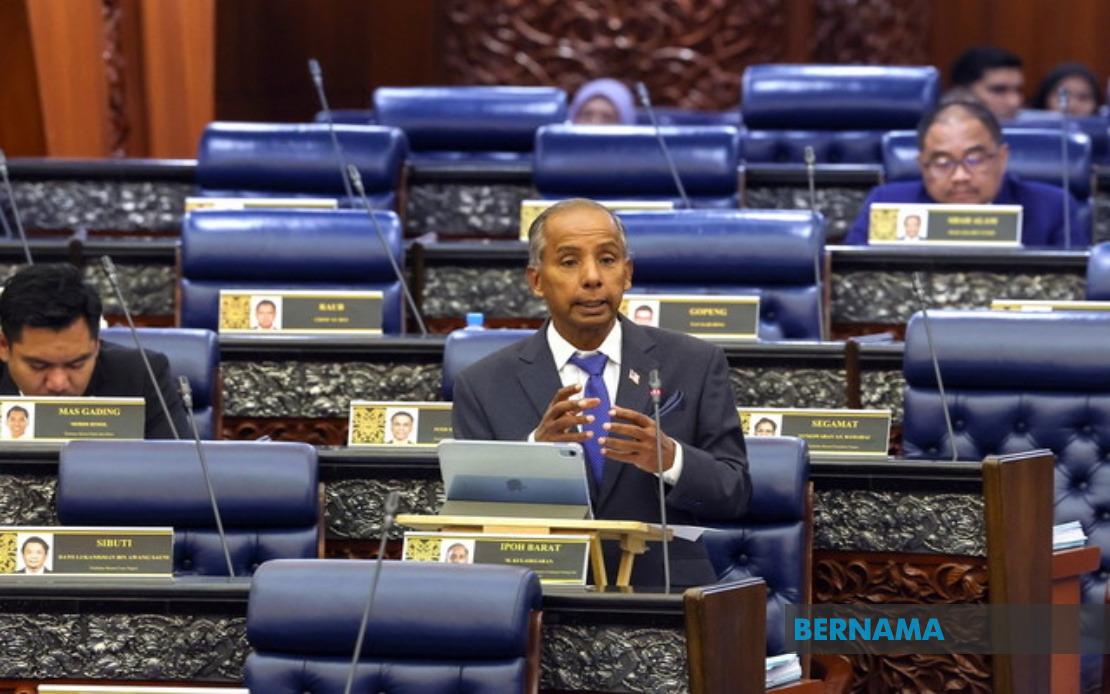
Malaysia's Election Commission is undertaking a comprehensive examination of whether domestic postal voting should be extended to all voters nationwide, Deputy Minister M. Kulasegaran announced during parliamentary proceedings here on July 14. The proposal, if implemented, would allow citizens across Peninsular Malaysia, Sabah and Sarawak to cast ballots by post, potentially transforming how millions of Malaysians participate in elections. The study represents a significant step toward modernising the country's electoral framework, which has remained largely unchanged in its voting mechanisms for decades.
Kulasegaran, who serves as Deputy Minister in the Prime Minister's Department (Law and Institutional Reform), acknowledged that the process requires substantial groundwork before any policy shift can be finalised. The Election Commission must engage thoroughly with multiple stakeholders, most critically the country's political parties, whose cooperation and buy-in would be essential for smooth implementation. This stakeholder consultation reflects the sensitive nature of electoral reforms in Malaysia, where partisan concerns about voting security, integrity and fairness often dominate discussions.
The timeline for completing this examination extends into 2025, signalling that policymakers are approaching the matter deliberately rather than rushing into implementation. This measured pace provides sufficient opportunity for the Election Commission to assess technical requirements, study international best practices from other democracies, and address legitimate concerns from political actors across the spectrum. The extended timeline also permits the government and electoral authorities to develop robust safeguards against potential fraud or administrative errors that could undermine public confidence in postal voting systems.
Postal voting has become increasingly relevant in Malaysia given changing demographic patterns and work mobility. Urban professionals frequently relocate for employment, while rural and border community residents often face significant travel distances to reach polling stations. International Malaysian workers and citizens residing abroad during election periods represent additional constituencies that could benefit from more flexible voting options. These practical considerations have driven the push for electoral modernisation, with parliamentarians from different parties recognising the democratic value of making voting more accessible.
Kulasegaran's response to questions from Isnaraissah Munirah Majilis, WARISAN member for Kota Belud, reflects growing parliamentary interest in electoral reform across the political spectrum. The Sabah-based lawmaker's focus on transforming electoral processes highlights how postal voting debates extend beyond mere administrative convenience—they touch fundamental questions about ensuring equal voting access across Malaysia's diverse geography and demographic landscape. The cross-party nature of this discussion suggests potential for eventual consensus, though significant hurdles remain.
Parallel to the postal voting examination, the government has signalled openness to reconsidering the Election Commission's institutional positioning within Malaysia's governmental structure. Currently, the EC falls under the purview of the Prime Minister's Department, an arrangement that has drawn periodic criticism from civil society groups and opposition politicians who question whether such positioning maintains sufficient independence from executive influence. The proposal to place the Election Commission under Parliament's purview would represent a meaningful shift toward strengthening electoral independence and public confidence in the institution's neutrality.
Kulasegaran indicated that this suggestion regarding the EC's constitutional placement merits serious consideration, with the matter to be referred to relevant government bodies for formal decision-making. Such a restructuring, should it proceed, could involve complex legal and constitutional discussions, requiring amendments to existing legislation and potentially the Federal Constitution itself. Nonetheless, the receptiveness to exploring this option signals that electoral institutional reform remains actively under government consideration, beyond just the single issue of postal voting implementation.
The government has also addressed concerns about enforcement regarding mobile phone usage at polling stations, where regulations prohibit their use. Despite claims from observers that existing controls remain lax, the Election Commission maintains that current mechanisms provide adequate oversight and deterrence. The EC has determined that existing procedures suffice, with no plans to classify mobile phone use violations as a specific offence under the Election Offences Act 1954. This position suggests the authorities favour administrative consistency over legislative expansion in controlling polling station conduct.
For Malaysian voters and election observers, these developments carry significant implications. Postal voting implementation would potentially reshape electoral participation patterns, particularly benefiting geographically dispersed populations and those with mobility constraints. However, successful adoption depends heavily on technological infrastructure, voter education campaigns, and robust verification systems to prevent fraud. The Election Commission will need to balance accessibility with security, a challenge that has proven complex even in established democracies with extensive postal voting experience.
Regional implications extend throughout Southeast Asia, where Malaysia's electoral approaches often inform discussions in neighbouring countries about modernising voting systems. Should Malaysia successfully implement domestic postal voting with strong public confidence and minimal fraud, the model could influence regional electoral practices. Conversely, implementation difficulties could provide cautionary lessons for other democracies considering similar reforms. The study period offers valuable opportunity for the Election Commission to conduct detailed analysis of both opportunities and risks.
The broader context involves Malaysia's ongoing democratic renewal, encompassing institutional reforms, transparency initiatives, and efforts to restore public faith in governance systems after recent political turbulence. Electoral confidence depends fundamentally on voters perceiving fairness, accessibility and security in casting their ballots. Postal voting expansion and potential restructuring of the Election Commission's institutional position represent interconnected efforts to strengthen these perceptions, though their success ultimately depends on implementation quality and sustained political commitment to electoral integrity principles.

