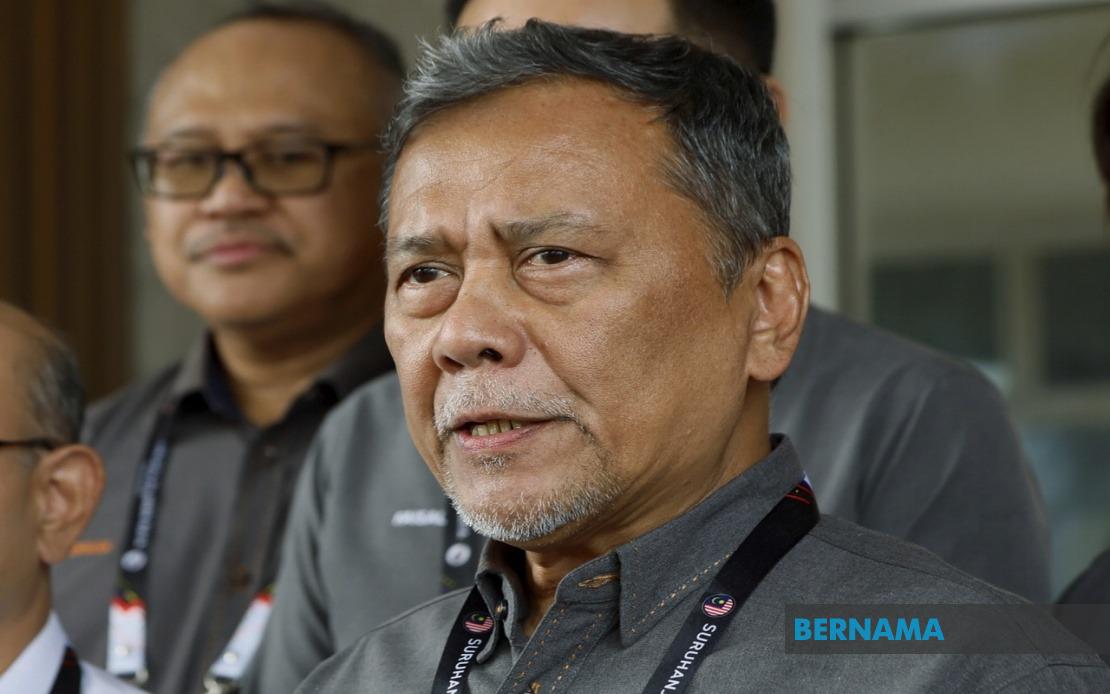
The Election Commission has documented 588 allegations of election-related offences during the campaign phase for Johor's 16th state election, according to statement from EC chairman Datuk Seri Ramlan Harun in Kluang on Thursday. The figure underscores the level of scrutiny being applied to electoral conduct across the southern state, though the range of alleged violations and their severity remain undisclosed.
Of the complaints received, the EC has channelled 44 matters to police for investigation and referral to prosecutorial authorities. Additionally, three separate reports concerning connected offences have been escalated to the Malaysian Anti-Corruption Commission, indicating that certain allegations fall within the remit of graft-related investigations rather than purely electoral breaches. The commission did not elaborate on which specific infringements warranted MACC involvement, leaving open the question of whether these involved financial irregularities in campaign financing or other corrupt practices.
Ramlan made these disclosures during a media appearance at Dewan Mahkota in Kem Mahkota, where he was simultaneously overseeing early voting operations for defence and security personnel. Accompanying him was Army Chief General Tan Sri Azhan Md Othman, whose presence underscored the significance attached to maintaining electoral integrity during voting for armed forces members and their families—a cohort that forms a politically important constituency in Malaysia's electoral system.
The early voting exercise proceeded without reported disruption, accommodating 20,607 eligible voters across multiple designated centres. This group comprised 8,544 personnel from the Malaysian Armed Forces together with their spouses, alongside 12,063 police officers and their family members entitled to cast ballots in advance of the main polling day. Early voting provisions for uniformed services reflect operational necessities, as these cohorts often face deployment schedules incompatible with standard election day voting.
The broader electoral contest sees 172 candidates vying for representation across 56 state assembly seats in Johor. This candidate-to-seat ratio indicates competitive races in many constituencies, with multiple contenders pursuing positions in the peninsula's most populous state after Selangor. The distribution of candidates across constituencies will shape both the nature of campaign activity and the intensity of electoral competition in coming days.
Saturday's polling date marks the culmination of campaign activity that has generated sufficient electoral violations to warrant 588 recorded complaints. While the exact nature of these alleged breaches—ranging from poster placement violations to more serious infractions—remains unspecified in the EC's statement, the volume suggests comprehensive monitoring mechanisms are functioning across Johor's 56 constituencies. The presence of both police involvement and MACC referrals indicates a multi-agency approach to investigating potential criminal conduct beyond routine electoral infractions.
For Malaysian voters and observers, the disclosure raises questions about enforcement patterns and outcomes. Historical trends show that complaints lodged during campaign periods often result in mixed enforcement, with some matters pursued vigorously while others receive less attention. The EC's willingness to involve anti-corruption authorities suggests awareness that certain violations may transcend electoral law breaches and implicate broader governance concerns.
Johor's electoral significance extends beyond state-level politics. As a state traditionally contested between different political coalitions, its outcome influences national coalition dynamics and can signal broader electoral sentiment ahead of future federal polls. The conduct of this election, including how electoral violations are handled, contributes to perceptions about electoral integrity and public confidence in Malaysia's democratic institutions.
The early voting process for armed forces personnel proceeded smoothly according to official accounts, suggesting logistical preparedness for Saturday's main polling day. However, with 588 complaints registered and investigative processes still ongoing, questions may emerge about whether violations are concentrated geographically or whether they pervade campaign conduct across multiple constituencies. The EC's communication strategy regarding outcomes of these investigations will be watched closely by stakeholders across the political spectrum.
The involvement of three separate MACC referrals warrants particular attention, as anti-corruption probes can extend investigation timelines beyond the election period itself. These matters may involve campaign finance irregularities, illicit vote-buying schemes, or other corrupt practices that fall within MACC's statutory mandate. How these cases develop in coming months could influence public discourse about electoral probity in Malaysia.
As polling approaches, the 16th Johor State Election operates against a backdrop of documented electoral violations and active investigative processes. The EC's transparency in disclosing complaint volumes demonstrates institutional responsiveness to public accountability expectations, though voters will ultimately assess the election's legitimacy through both official conduct and the outcomes ultimately announced. Saturday's results will be read not only in Johor but across Malaysia as a barometer of electoral processes and political preferences.

