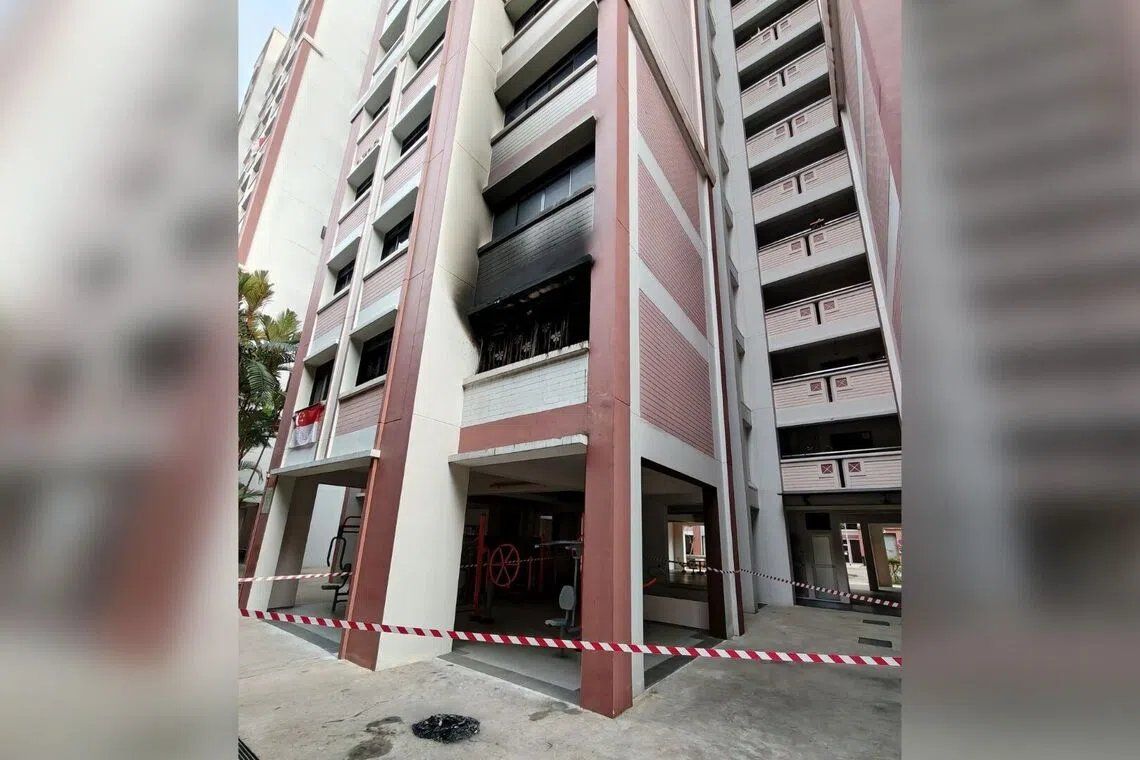
Emergency responders in Singapore rushed to a residential block in Buangkok Crescent early Thursday morning after a fire erupted in a second-floor unit. The Singapore Civil Defence Force received the alarm at approximately 12:25am on August 20, dispatching crews to Block 979B where the blaze was confined to the contents of a bedroom. Firefighters extinguished the flames using a water jet, preventing the fire from spreading to adjacent areas of the flat or neighbouring units.
The incident resulted in one person being transported to Sengkang General Hospital for treatment. According to Ang Mo Kio GRC Member of Parliament Victor Lye, who issued a statement via Facebook later that morning, the elderly male occupant sustained cuts to his feet during the emergency. Lye noted that the patient was subsequently discharged from hospital, suggesting the injuries were not severe. The rapid response by emergency services and the swift evacuation likely prevented more serious consequences for those inside the unit at the time.
A particularly noteworthy aspect of the incident was the intervention of a young neighbour, an ITE student living in an adjacent flat, who demonstrated exceptional courage and quick thinking during the crisis. Upon discovering the fire, the student retrieved a fire extinguisher from his own unit and deployed it to combat the emerging blaze. Beyond his firefighting efforts, the student played a crucial role in guiding three residents—including the injured elderly man—safely out of the affected flat and away from immediate danger. His actions exemplified the kind of community vigilance and neighbourly responsibility that proves invaluable during emergencies, particularly in high-density residential environments where swift action can make the difference between a contained incident and a tragedy.
The parliamentary representative took the opportunity to publicly commend the student's bravery and decisive action, recognising that such heroism often goes unheralded in official reports. Lye's acknowledgment underscores the important role that ordinary residents play in residential safety networks, particularly in older HDB estates where many occupants may have limited mobility or health vulnerabilities. The incident serves as a reminder of the value of fire safety awareness and the presence of accessible fire-fighting equipment in residential blocks.
Following the incident, local authorities and the residents' support structures mobilised to assist the affected family. The Residents' Network centre in the constituency was made available to provide temporary accommodation and support services. However, the family opted to accept the hospitality of their neighbours rather than relocate to the centre, reflecting the strong community bonds that often characterise HDB neighbourhoods in Singapore. This decision also meant that the family could remain close to their home and possessions while the extent of damage was assessed.
Victor Lye personally visited the flat to meet with the residents and extend support from their elected representative. Such direct engagement demonstrates how political leadership can provide reassurance and practical assistance during residents' moments of crisis. The visit also allowed the MP to assess the situation firsthand and determine what additional resources or support might be required from the town council or grassroots organisations within the constituency.
The cause of the fire remains under investigation by relevant authorities. Fire investigators will examine the bedroom contents and the unit's electrical systems, ventilation, and any other potential ignition sources. Understanding how the fire started is essential not only for the insurance claim but also for identifying whether there are systemic fire safety issues affecting other units in the block or similar HDB flats across Singapore.
For the broader Malaysian and Southeast Asian context, this incident highlights common challenges facing public housing estates throughout the region. HDB flats, like their equivalents in Malaysia such as PPR units and low-cost flats, often house elderly residents and lower-income families who may face particular vulnerabilities during emergencies. The swift response by Singapore's Civil Defence Force and the community's rapid action demonstrate the importance of accessible emergency services and robust fire safety protocols in densely populated residential areas.
The role of the ITE student in this incident also reflects the value of youth engagement in community safety initiatives. Across Southeast Asia, young people are increasingly being trained and equipped to respond to emergencies, from fire safety to disaster preparedness. Such programmes not only build practical skills but also foster a culture of community responsibility among younger generations.
As investigations proceed, residents of Block 979B and similar HDB flats are likely to review their own emergency preparedness. The availability and accessibility of fire extinguishers, clear evacuation routes, and familiarity with emergency procedures become even more critical following such incidents. Housing authorities typically use such events as opportunities to conduct safety audits and refresher training for residents.

