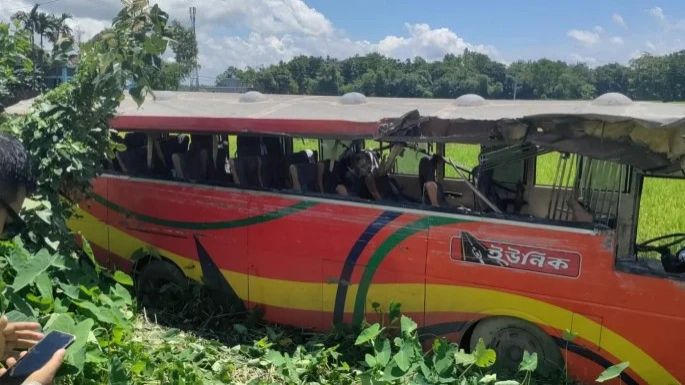
A catastrophic road accident unfolded in Bangladesh's Sylhet region on Friday morning when two intercity passenger buses collided head-on, resulting in eight fatalities and leaving another 25 people with injuries. The collision occurred around 7:30 a.m. local time on a route serving the area roughly 240 kilometres northeast of the capital Dhaka. Golam Mostafa, the officer-in-charge of Osmani Nagar police station in Sylhet, confirmed the casualty figures to local media, describing the incident as one of several serious traffic disasters that continue to plague Bangladesh's transportation network.
The immediate cause of the Friday morning collision remains under investigation by Sylhet police authorities, with preliminary details still emerging from the accident site. Emergency services responded to the scene, attending to the injured and coordinating with local hospital facilities to manage the trauma cases. The scale of injuries—affecting 25 individuals alongside the fatalities—suggests considerable force in the collision, typical of head-on incidents involving large vehicles travelling at highway speeds.
Bangladesh's transportation infrastructure has long been a source of concern for both government officials and safety advocates. The nation consistently ranks among countries with the highest road fatality rates in Asia, a troubling distinction that reflects systemic issues extending far beyond individual driver error. The primary culprits behind this grim statistic are well-documented: deteriorating highway conditions, inadequate maintenance of commercial vehicles, widespread disregard for traffic regulations by operators and drivers, and critically, insufficient oversight from enforcement agencies tasked with monitoring compliance.
The condition of Bangladesh's roads represents a foundational problem. Many highways, particularly those connecting major regional centres like Sylhet to Dhaka, suffer from poor construction standards, inadequate repairs, and insufficient safety features such as proper lane markings, barriers, and lighting. These infrastructure deficiencies become especially dangerous during peak traffic hours and monsoon seasons when visibility diminishes and road conditions deteriorate rapidly.
The fleet of intercity buses operating across Bangladesh frequently fails basic safety standards. Regular mechanical inspections are often cursory or bypassed entirely, leaving vehicles with faulty braking systems, worn tyres, and compromised steering mechanisms to operate on major routes. Private bus operators, driven by cost considerations and profit margins, frequently defer necessary maintenance, creating conditions where catastrophic mechanical failures become increasingly probable. The economic pressures on transport companies and the financial incentives for cutting corners have created a culture where safety takes a subordinate position to revenue generation.
Traffic rule violations compound these infrastructure and maintenance challenges. Excessive speeding, dangerous overtaking manoeuvres, driving under fatigue or influence, and failure to maintain safe following distances are commonplace on Bangladesh's highways. The pressure on drivers to meet schedules, combined with minimal consequences for violations, encourages reckless behaviour. Without consistent enforcement, legal prohibitions against unsafe driving practices become largely symbolic rather than operative constraints on driver conduct.
The traffic police and regulatory bodies responsible for enforcement face significant capacity and resource constraints. Understaffing, inadequate training, limited monitoring equipment, and corruption undermine their ability to implement and maintain traffic safety standards effectively. Many checkpoints operate without modern speed detection devices or weigh scales to verify vehicle compliance. The lack of systematic tracking and accountability means that repeatedly dangerous drivers can continue operating with minimal intervention or suspension of their licenses.
For Malaysian readers and others in Southeast Asia, Bangladesh's transportation crisis offers sobering lessons about the consequences of allowing safety oversight to deteriorate. While Malaysia has invested substantially in highway infrastructure and vehicle safety standards, maintaining vigilance remains essential. The recent collision in Sylhet underscores how quickly road networks can become dangerous when investment in maintenance lapses and enforcement mechanisms weaken.
The incident in Sylhet also highlights regional disparities within Bangladesh itself. Provincial areas like Sylhet, while economically important, often receive less investment in infrastructure and safety monitoring compared to routes radiating from Dhaka. This geographical inequality in road quality and enforcement intensity creates zones of heightened risk where accidents cluster.
Bangladesh's government has periodically launched road safety initiatives, implementing stricter licensing procedures, penalty systems, and awareness campaigns. However, these interventions have produced only marginal improvements in the overall accident rate. Deeper structural reforms—including substantial investment in highway rehabilitation, mandatory vehicle inspection regimes with teeth, comprehensive driver training and licensing standards, and dedicated enforcement units with modern equipment—remain necessary to meaningfully reduce fatalities.
The eight deaths and 25 injuries from Friday's collision represent individual tragedies with rippling impacts across families and communities. Beyond the immediate human toll, such accidents impose substantial economic costs through healthcare expenditures, lost productivity, and vehicle damage. These societal expenses, when aggregated across Bangladesh's thousands of annual road accidents, represent a significant drag on national development.
Looking forward, Bangladesh faces a critical choice between continuing incremental, largely ineffective interventions or pursuing comprehensive, costly reforms to its transportation system. The persistence of catastrophic accidents like the Sylhet collision suggests that the current approach remains inadequate. Without sustained political commitment and substantial resource allocation to safety infrastructure, training, and enforcement, Bangladesh will likely continue experiencing road fatality rates that distinguish it uncomfortably among the world's most dangerous driving environments.

