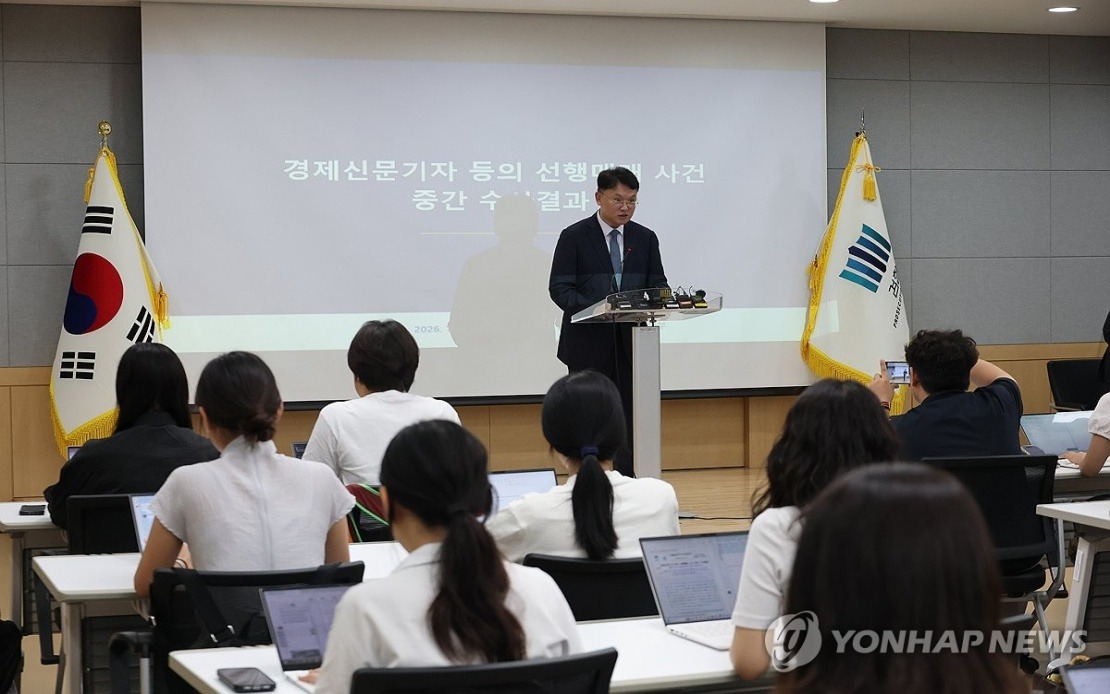
South Korea's prosecution service has moved against a coordinated scheme involving journalists and financial operatives who systematically manipulated equity markets through coordinated media coverage, securing indictments against eight suspects in late July. The case exposes a troubling intersection between financial markets and editorial independence, revealing how access to publishing platforms can be weaponised for profit in ways that undermine investor confidence and market integrity across the region.
The mechanics of the alleged scheme operated with deliberate sophistication. Participants acquired stakes in stocks characterised by low trading volumes or high price volatility, then orchestrated the publication of favourable news articles designed to artificially inflate valuations. Once prices rose in response to the positive coverage, the conspirators liquidated their positions at inflated levels, realising substantial gains while ordinary investors absorbed losses. This pump-and-dump methodology represents one of the oldest and most damaging forms of securities fraud, yet remains persistently difficult to detect and prosecute when executed across multiple articles over extended periods.
The scale of the operation underscores the systematic nature of the wrongdoing. Five reporters and one accountant, working in concert with an investor, generated approximately 8.55 billion won in illegal profits by authoring roughly 1,800 articles between October 2020 and June of the following year. The compensation structure revealed considerable financial motivation: each journalist received 300,000 won per article published, a substantial supplement to standard newsroom salaries that created powerful incentives to prioritise volume and complicity over editorial ethics. The three most productive collaborators pocketed between 28 million and 160 million won each, sums representing years of ordinary earnings concentrated into months of fraudulent activity.
A separate investigation uncovered an additional journalist operating independently through similar mechanisms. This individual authored approximately 340 articles between October 2022 and July 2024, leveraging his editorial authority to generate roughly 740 million won in unlawful proceeds. The temporal gap between the two schemes suggests these were not isolated incidents but rather reflect broader vulnerabilities within South Korea's financial media ecosystem—vulnerabilities that likely persist in other regional markets, including throughout Southeast Asia.
The broader implications for financial journalism across Asia warrant serious consideration. The case demonstrates how editorial platforms can be compromised when financial incentives align with market manipulation opportunities. Business reporters occupy a privileged position of trust, with their analysis and coverage substantially influencing investment decisions by retail and institutional investors alike. When this authority is weaponised for personal enrichment, the credibility of entire publications becomes compromised, and readers lose confidence in the independence of financial information sources.
For Malaysian investors and market regulators, this South Korean precedent offers important cautionary lessons. Securities commissions throughout Southeast Asia have invested considerable resources in surveillance systems designed to detect unusual trading patterns preceding positive news announcements—a telltale signature of potential manipulation. However, the case illustrates that such detection mechanisms are only effective when combined with independent auditing of editorial relationships and financial incentives within media organisations. The Malaysian financial media sector should proactively examine whether similar vulnerabilities exist within their own institutional structures.
The prosecution's stated commitment to pursuing all criminal proceeds with severity signals South Korea's determination to protect market integrity. Confiscation of illicit gains removes the primary motivation for such schemes and sends a deterrent message to potential collaborators in other markets. However, the challenge extends beyond simple financial penalties. The reputational damage to affected publications, the erosion of public confidence in financial journalism, and the broader undermining of market trust represent costs that extend far beyond the 9 billion won in illegal profits recovered.
The case also highlights structural weaknesses in how financial media organisations manage conflicts of interest and monitor reporter compensation. Most regional publications operate under tight budget constraints that make freelance supplements and performance-based pay increasingly common. Without robust oversight mechanisms, individual journalists operating under financial pressure may become vulnerable to recruitment by market manipulation schemes. Responsible media organisations across Asia should review their compensation structures and implement firewalls between individual reporters' personal financial activities and their editorial output.
Regulators in Malaysia and neighbouring jurisdictions should accelerate efforts to establish formal protocols for investigating suspicious trading patterns in conjunction with media coverage analysis. The Securities Commission Malaysia and Bursa Malaysia have sophisticated surveillance capabilities, yet coordination between market surveillance teams and media monitoring functions remains inconsistent. Enhanced data-sharing arrangements and joint investigation protocols could identify similar schemes before they scale to the magnitude observed in South Korea.
The South Korean prosecution's success in building this case required coordination across multiple government agencies and financial institutions. Such complex investigations demand expertise in securities fraud, forensic accounting, and media analysis simultaneously. Strengthening investigative capacity within Southeast Asian regulators—through training, technology investment, and international cooperation—represents an essential step in preventing similar corruption of financial journalism within the region.

