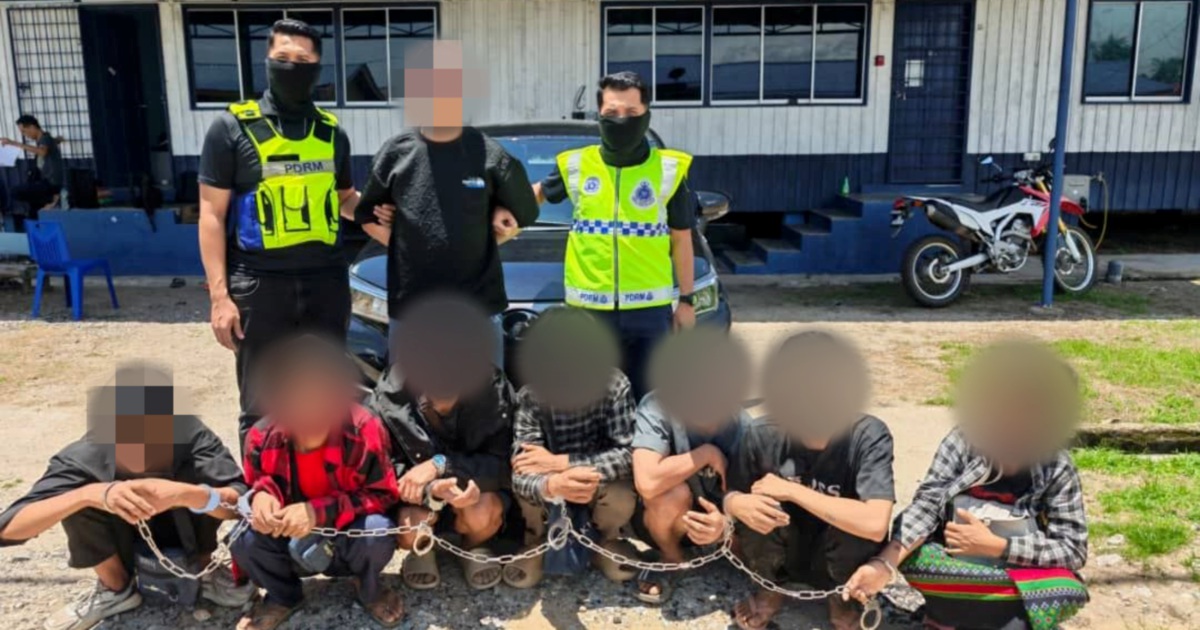
Law enforcement authorities in Kota Baru have arrested eight people in connection with a suspected migrant smuggling operation, marking a significant enforcement action against human trafficking rings that continue to exploit vulnerable foreign nationals attempting to enter Malaysia illegally. Among those detained is a Malaysian citizen believed to have played an active role in transporting seven undocumented Myanmar nationals in what appears to be an organised smuggling venture. The arrests, made during an early morning operation, underscore the persistent challenge of irregular migration and cross-border trafficking that regional authorities grapple with constantly.
The operation represents part of broader law enforcement efforts across Kelantan to dismantle human smuggling networks that have flourished despite increased border vigilance and immigration checkpoints. Myanmar nationals comprise a significant proportion of undocumented migrants in Malaysia, many of whom have fled economic hardship, political instability, and conflict in their homeland. These individuals often become prey for smuggling syndicates that charge substantial fees for promised safe passage, exploiting desperation and limited legal options for migration.
The sophistication of migrant trafficking operations in Malaysia has evolved considerably, with networks now employing multiple layers of operatives ranging from recruiters in origin countries to transporters and document facilitators within Malaysia. The Malaysian suspect's alleged involvement suggests local participation in these schemes, a troubling indicator that smuggling organisations have successfully embedded themselves within communities and established supply chains for moving undocumented individuals across state borders and into employment networks.
Kelantan's geographic position as a border state makes it particularly vulnerable to migrant smuggling activities. The state shares maritime boundaries with Thailand and serves as a corridor for irregular migration patterns, with smuggling routes established across both land and sea. The network's operations likely extended beyond the immediate confines of a single transport mission, suggesting coordination among multiple cells responsible for different aspects of the smuggling process including recruitment, transportation, safe houses, and placement in employment.
The seven Myanmar nationals apprehended in this operation now face immigration proceedings and potential deportation back to Myanmar, a process that carries significant humanitarian considerations given the ongoing political turmoil in their country. Malaysia, while not a signatory to the 1951 Refugee Convention, maintains de facto responsibility for managing Myanmar nationals within its borders, a population numbering in the hundreds of thousands. Many of these individuals lack access to legal employment and remain trapped in precarious informal economy positions, creating conditions ripe for exploitation by traffickers and unscrupulous employers.
The detention of the eight suspects including the Malaysian citizen involved raises important questions about complicity within domestic networks facilitating smuggling operations. Malaysians participating in these schemes perform essential functions that enable trafficking to continue, from driving vehicles to coordinating logistics and arranging temporary accommodation. Their involvement indicates that profitability from migrant smuggling extends beyond border-area traders and reaches into established communities, suggesting broader systemic challenges in law enforcement surveillance and prevention.
Implications for Malaysia's regional standing are noteworthy, as the country faces increasing international scrutiny regarding migrant trafficking and labour exploitation. The United States State Department's Trafficking in Persons Report continues to monitor Malaysian efforts against human trafficking, with ongoing concerns about police capacity, inter-agency coordination, and conviction rates remaining below desired thresholds. Each successful law enforcement operation provides incremental progress but does little to address root causes driving irregular migration and smuggling demand.
The Kelantan operation demonstrates that anti-smuggling work requires sustained intelligence gathering and coordinated action among multiple agencies including immigration, police, and maritime authorities. Successful dismantling of trafficking networks demands not only arrest of operational personnel but also targeting financial flows, communication infrastructure, and recruitment mechanisms that perpetuate these organisations' viability. Single enforcement actions, while symbolically important, rarely produce lasting disruption without complementary efforts addressing underlying economic drivers and border management vulnerabilities.
Forward-looking analysis suggests that Malaysian authorities face a complex challenge requiring multi-pronged approaches combining enforcement, community engagement, and regional cooperation. Thailand and Myanmar represent critical partner nations in addressing smuggling networks, yet coordination remains inconsistent. Intelligence sharing mechanisms, joint border patrols, and harmonised legal frameworks could substantially improve interception rates and dismantling of trafficking organisations before they transport migrants across international boundaries.
The detained individuals now enter Malaysia's criminal justice system, where proceedings will likely unfold over extended periods. Outcomes of cases involving migrant smuggling vary considerably, with sentencing guidelines providing flexibility that sometimes results in modest penalties inadequate to deter continued participation in lucrative trafficking ventures. Strengthening prosecution capacity and ensuring consistent application of trafficking statutes represents an ongoing institutional challenge requiring resources and political commitment.

