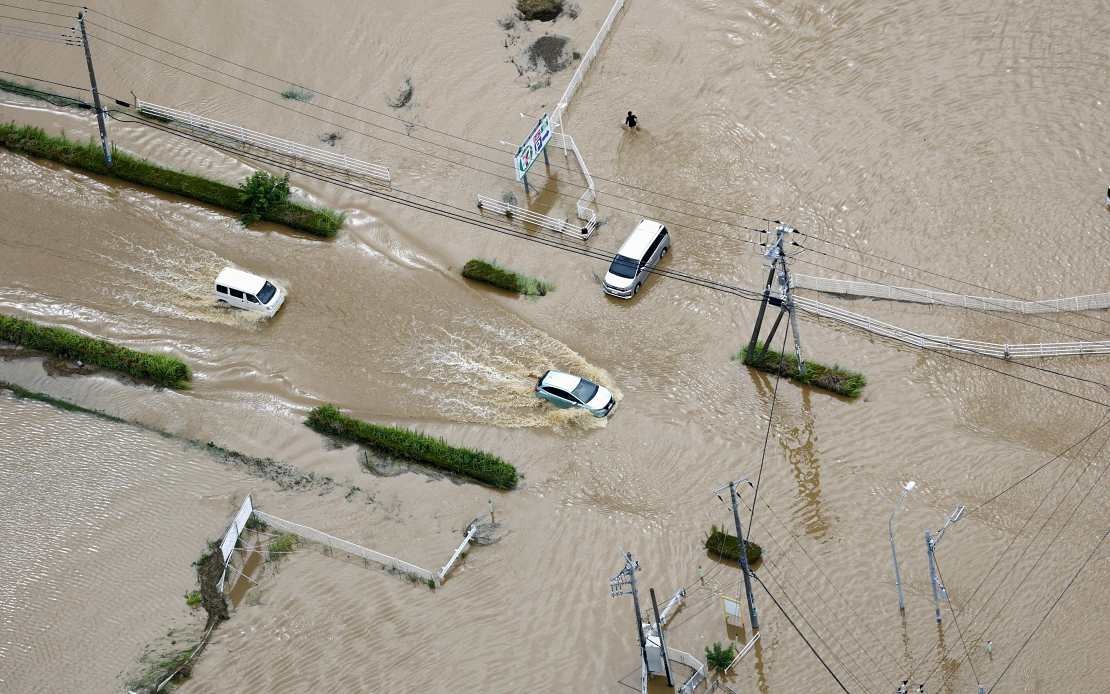
A severe weather event has struck Japan's Chiba Prefecture with devastating consequences, claiming eight lives as record-breaking rainfall inundated the region through early Friday. The deaths occurred across multiple cities including Chiba, Kashiwa, Ichikawa, Sakura and Yachiyo, according to the Chiba Prefectural Government, which also reported four people sustaining minor injuries in the downpour. The scale of the disaster underscores the increasing vulnerability of Japan's densely populated eastern corridor to extreme weather events.
The meteorological scale of this rainfall event was extraordinary by any standard. The Japan Meteorological Agency recorded 348 millimetres of precipitation falling on Chiba City within a 12-hour window ending at 1:40 am Friday morning. To contextualise this volume, the measurement represents approximately three times what the city typically receives across the entire month of August, compressed into a single half-day period. Such concentrated precipitation overwhelms drainage infrastructure and natural water-absorption systems, creating the conditions for widespread flooding and landslides across vulnerable areas.
The severity of the weather triggered Japan's highest alert mechanism for natural disasters. The JMA had issued a Level 5 emergency warning—its most critical designation—for heavy rain and landslide risks across portions of Chiba Prefecture before the situation began to stabilise. Although these alerts were downgraded to Level 4 or lower by Friday morning, meteorological officials cautioned that additional heavy rainfall remained possible and encouraged residents to maintain heightened awareness of changing conditions.
The immediate humanitarian impact proved substantial. The Chiba Prefectural Government maintained evacuation orders affecting approximately 102,600 residents as of mid-Friday morning, reflecting the ongoing risks from flooding and structural damage. These evacuations represent not merely a temporary inconvenience but often a traumatic displacement for families who must abandon their homes and possessions with limited notice, facing uncertain return timelines and property damage assessments.
Transportation systems, the lifeblood of Japan's metropolitan economy, experienced severe disruption. Narita Airport, one of the Asia-Pacific region's major international aviation hubs, reported approximately 7,000 passengers stranded overnight as the deluge crippled train and bus services that connect the facility to Tokyo and surrounding areas. This cascading effect demonstrates how extreme weather in one prefecture can have ripple consequences across regional and potentially international travel networks, affecting business operations, international commerce, and tourism throughout the broader region.
For Malaysian observers and policymakers, this event carries particular relevance given Southeast Asia's own vulnerability to extreme precipitation and flooding. Malaysia, with its tropical climate and monsoon seasons, regularly experiences comparable rainfall intensities, particularly during the northeast and southwest monsoon periods. The infrastructure challenges that Japan—a developed nation with substantial resources—faces in managing such events offer important lessons for Malaysian urban planning, drainage system investment, and early warning protocols.
The concentration of deaths and injuries in a wealthy, technologically advanced nation also highlights that catastrophic rainfall events transcend economic development levels. Even sophisticated societies with robust building codes, early warning systems, and emergency response infrastructure suffer fatalities when precipitation volumes exceed design specifications. This sobering reality suggests that climate adaptation strategies must extend beyond incremental infrastructure improvements to encompass fundamental reassessments of settlement patterns in flood-prone regions.
Japan's experience with this particular weather system also illuminates broader climate pattern shifts affecting East Asia. Meteorologists increasingly attribute the intensification and geographic concentration of extreme rainfall events to warming atmospheric conditions that enhance moisture retention and convective processes. These changing patterns necessitate updated climate models and warning protocols that account for precipitation intensities previously considered once-in-a-century events becoming more frequent.
The immediate recovery from this disaster will impose significant economic burdens on Chiba Prefecture and surrounding regions. Beyond the human cost reflected in fatalities and injuries, reconstruction expenses, business interruption losses, agricultural damage, and infrastructure repairs typically accumulate to hundreds of millions of dollars following major precipitation events. Insurance coverage gaps in many affected areas mean that substantial portions of these losses fall upon individual households and municipal governments.
For the broader Asia-Pacific region, this catastrophe serves as a reminder that extreme weather preparedness demands continuous investment in multiple layers of resilience: accurate forecasting capability, community awareness and education, robust early warning dissemination systems, adequate shelter and emergency response infrastructure, and longer-term adaptation through improved urban drainage and land-use planning. Malaysia and other Southeast Asian nations facing comparable climate risks would benefit from examining Japan's response mechanisms, identifying effective practices for adoption while acknowledging contextual differences in infrastructure capacity and resources.

