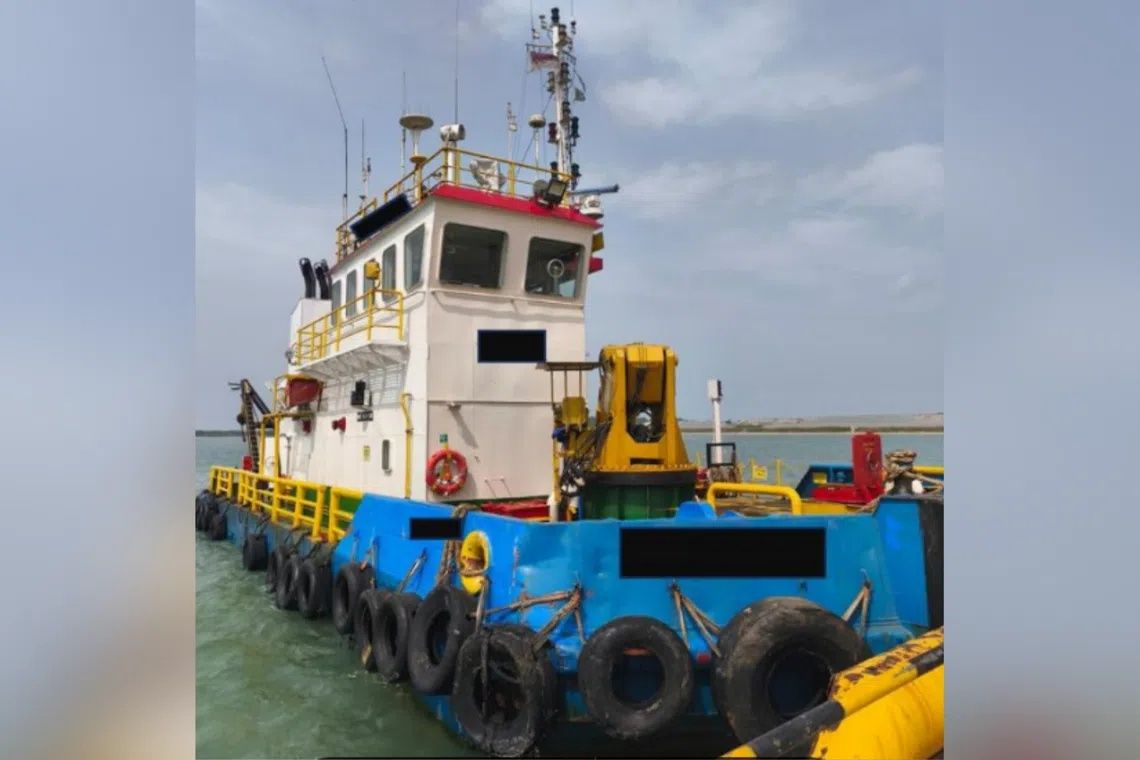
Eight crew members aboard a Singapore-registered tugboat face court proceedings on Friday, August 14, following their arrest on suspicion of participating in an unauthorised transaction involving marine gas oil. The arrests came after a coordinated enforcement operation by Police Coast Guard officers in the early hours of August 13, when the vessel was intercepted in waters near Tuas, marking another chapter in Singapore's ongoing battle against maritime fuel theft.
The suspects, ranging in age from 25 to 54 years old, were taken into custody during a routine inspection that uncovered evidence of fuel misappropriation. According to preliminary findings by Singapore Police, the crew members had diverted marine gas oil worth approximately S$10,570 from their employer's supplies and disposed of it through illegal channels for personal financial gain. The unauthorised transaction occurred without the knowledge or consent of the tugboat's operating company, representing a significant breach of trust and maritime regulations.
This incident underscores a persistent challenge facing port authorities throughout Southeast Asia, where cargo theft and fuel diversion remain endemic problems despite increasing security measures. The theft of marine fuel from vessels is particularly problematic in busy international shipping corridors, where the high value of bunker fuel and the complexity of maritime operations create opportunities for organised criminal networks and opportunistic theft. For Singapore, whose port is among the world's busiest and most regulated, such incidents represent both a security vulnerability and a reputational concern.
The charges these men will face carry substantial legal consequences under Singapore's criminal framework. They are to be prosecuted under the offence of theft by servant of property in possession of master, an archaic but still-employed legal provision designed to protect employers from internal pilferage. Conviction could result in both fines and imprisonment stretching up to seven years, reflecting the seriousness with which Singapore treats maritime crimes. The severity of potential penalties serves as a deterrent to others contemplating similar schemes and signals the authorities' commitment to maintaining maritime security standards.
The Police Coast Guard's detection of this theft demonstrates the effectiveness of targeted enforcement operations in Singapore's territorial waters. Operating 24 hours daily across one of the world's most congested shipping lanes, the force conducts hundreds of inspection operations monthly to combat smuggling, fuel theft, and other maritime offences. The early morning timing of this particular operation, at approximately 1.05am, reflects the deliberate strategy of conducting checks during off-peak hours when such illegal activities are more likely to occur.
Marine fuel theft represents a multifaceted problem extending far beyond simple larceny. It disrupts supply chains, inflates operational costs for legitimate shipping companies, and often generates proceeds that fund broader criminal enterprises. In Southeast Asian waters particularly, fuel diversion has been linked to organised crime syndicates operating across multiple jurisdictions, making it a transnational concern requiring coordinated responses among regional partners. The involvement of crew members in such schemes highlights how corruption penetrates maritime operations at the most basic operational level.
For Malaysia and other neighbouring countries, Singapore's enforcement approach offers instructive lessons in combating maritime crime. The systematic deployment of coast guard resources, coupled with swift legal action and transparent communication about enforcement operations, creates an environment where potential offenders face credible risk of detection and prosecution. Malaysian authorities, facing similar challenges in the Straits of Malacca and other territorial waters, have progressively strengthened collaboration with Singapore and other regional maritime agencies to address these transnational threats.
The economic implications of fuel theft extend throughout regional shipping and port operations. When crews successfully divert cargo or fuel without detection, the practice becomes normalized within certain circles, encouraging further offences and driving up insurance costs across the industry. Companies operating in Southeast Asian waters factor maritime crime risks into their operational budgets, effectively passing costs to consumers. Singapore's proactive stance against such activities therefore benefits not only its own port efficiency but also the broader maritime community operating throughout the region.
The police statement accompanying the arrests emphasised that authorities view illegal marine fuel transactions as a serious threat to Singapore's territorial waters security. This framing reflects how maritime resource crimes are no longer treated as mere commercial disputes but as security concerns affecting national interests. The stated commitment to continued enforcement and security checks indicates that Singapore will maintain intensive operations across its waters, making detection increasingly likely for prospective offenders.
Moving forward, this incident may prompt shipping companies operating in Singapore waters to review crew protocols, implement stronger internal controls, and enhance monitoring of fuel stocks. The reputational risk associated with being implicated in crew theft encourages companies to invest in preventive measures rather than face operational disruptions and regulatory scrutiny. Industry-wide adoption of better safeguards ultimately strengthens the integrity of regional maritime operations and makes Southeast Asian shipping corridors less attractive to criminal elements seeking to exploit system vulnerabilities.

