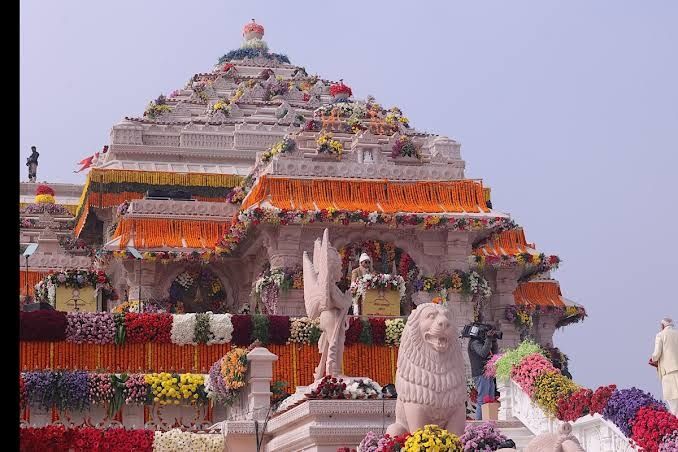
Eight individuals, including employees of the Ram Mandir temple in Uttar Pradesh, have been taken into custody following criminal allegations of theft and misappropriation of devotee offerings. The arrests came after police registered a case on Thursday, 25 June, based on irregularities discovered in the handling of donations at the Hindu shrine. The temple, which opened in 2024 on the site of the former Babri mosque, has become a centrepiece of Prime Minister Narendra Modi's political agenda and Hindu nationalist ideology, making the scandal particularly sensitive within the current political landscape.
The Ram Mandir occupies considerable symbolic weight in India's contemporary religious and political landscape. Constructed at a location where a sixteenth-century mosque stood for nearly five centuries, the temple's construction followed the mosque's demolition in 1992 by Hindu activists. The inaugural ceremony, presided over by Modi himself, generated international attention and domestic jubilation among the Hindu majority, with the project reportedly costing approximately US$240 million, drawn entirely from public donations.
According to available reports, those arrested occupied positions directly involved in monetary transactions and asset management. Their responsibilities centred on receiving, documenting, and safeguarding cash donations alongside precious metals including gold and silver offered by pilgrims. The specificity of their roles suggests that investigators are pursuing a methodical approach to tracing the alleged financial irregularities through established chains of custody and accountability.
While official government statements have remained circumspect about the scale of misappropriation, opposition figures and media investigations have suggested the potential losses could exceed US$20 million. This significant discrepancy between confirmed charges and alleged amounts underscores ongoing questions about the extent of alleged irregularities and the completeness of preliminary investigations.
The allegations have provoked considerable distress among the temple's donor community, who contributed substantial sums believing their gifts would directly support religious activities. Viti Saxena, a 44-year-old donor, articulated the emotional impact of the scandal, expressing dismay that a site of such spiritual significance has become mired in financial misconduct allegations. Her concerns reflect broader anxieties among devotees whose faith in institutional stewardship has been shaken by the arrests and revelations.
The criminal charges lodged against the eight individuals encompass breach of trust, larceny, conspiracy, and corruption offences. These charges carry serious implications, suggesting investigators believe the conduct extended beyond individual misdeeds to involve coordinated dishonesty and systematic impropriety within the temple's administrative structure. Such findings would indicate that inadequate oversight mechanisms allowed irregularities to persist undetected.
Uttar Pradesh Chief Minister Yogi Adityanath, whose administration established the Special Investigation Team to examine the matter, has publicly committed to pursuing accountability regardless of the accused individuals' positions or connections. His assertion that no culpable persons will evade consequences carries weight given his prominence within the state governance structure, though it also reflects the political necessity of appearing to address the crisis decisively.
The scandal carries broader implications for Hindu nationalist politics in India. The Ram Mandir project occupied central importance in the Bharatiya Janata Party's electoral messaging and ideological positioning. The Modi government had championed the temple's construction as fulfilling a long-delayed Hindu aspirational project, with the inauguration serving as a symbolic affirmation of Hindu interests within India's secular constitutional framework. Financial misconduct allegations risk undermining these carefully cultivated political narratives.
The temple's controversial history adds another layer of complexity to the current crisis. The Babri mosque's demolition in 1992 represented a transformative moment for Hindu nationalism in India, catalysing the political ascendancy of the BJP from opposition status to its current electoral dominance. The ensuing decades saw Hindu-nationalist political movements consolidate power, culminating in Modi's multiple electoral victories and the party's displacement of the traditionally dominant Congress party from national governance.
For Maharashtra, Karnataka, and other Southeast Asian nations monitoring developments in the subcontinent, the scandal illustrates the vulnerabilities that emerge when large-scale religious projects combine substantial financial flows with inadequate institutional controls. The case demonstrates how even high-profile, nationally significant initiatives remain susceptible to internal malfeasance when administrative oversight lapses.
The theological dimensions also warrant consideration. Devout Hindus maintain that the site represents the birthplace of Ram, a deity of supreme significance within Hindu theology and devotional practice. This conviction motivated centuries of religious belief and, latterly, decades of political mobilisation culminating in the site's reclamation and the temple's construction. The theft allegations represent, for many believers, a desecration extending beyond mere financial loss to encompass spiritual betrayal.
The investigation's progression will likely generate continued scrutiny, particularly regarding whether organisational deficiencies facilitated the alleged misappropriation or whether systematic corruption implicated higher-level management. The outcomes could substantially influence public confidence in Hindu institutional governance and carry ramifications extending beyond the immediate scandal to affect broader faith-based fundraising mechanisms across the region.

