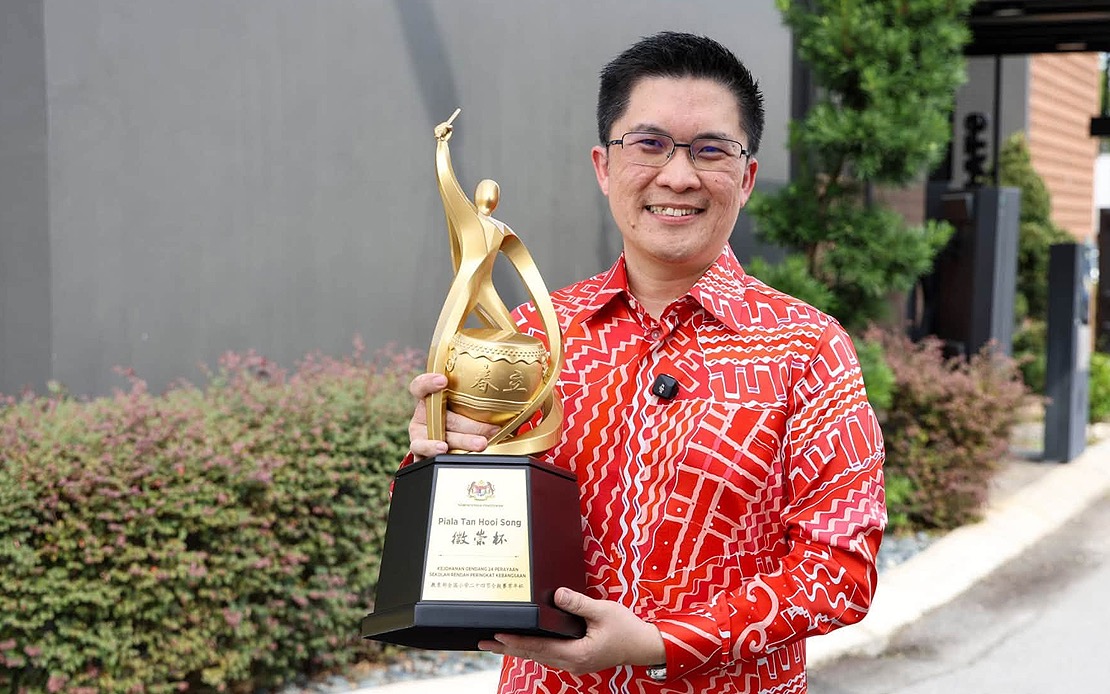
Malaysia's Education Ministry is moving forward with plans to secure international recognition for Gendang 24 Perayaan, a distinctive traditional percussion art form that has become emblematic of the country's cultural heritage. Deputy Education Minister Wong Kah Woh announced the ministry's intention to submit a UNESCO application during the closing ceremony of the National Primary Schools Gendang 24 Finals Competition at Stadium Indera Mulia in Ipoh on August 8, signalling a strategic commitment to elevating this homegrown cultural expression onto the global stage.
The decision to pursue UNESCO recognition reflects broader government efforts to safeguard Malaysia's intangible cultural assets in an increasingly globalised world. Wong emphasised that the UNESCO designation represents a key priority for the ministry, going beyond mere ceremonial acknowledgement to create sustainable frameworks for transmission of the art form across generations. By anchoring Gendang 24 Perayaan within UNESCO's prestigious registry, Malaysia would join an exclusive cohort of nations systematically protecting their cultural inheritance through international mechanisms. This approach acknowledges that cultural heritage preservation requires institutional backing and coordinated policy support, not simply nostalgic reverence for the past.
The groundwork for this ambitious bid has already begun, with Wong revealing that his team conducted substantive discussions in May to chart a course toward successful UNESCO candidacy. These conversations, held at both ministerial and community levels, sought to identify concrete steps and structural improvements that would strengthen the overall development trajectory of Gendang 24 Perayaan. The collaborative approach demonstrates recognition that heritage preservation succeeds when government agencies, community organisations, and grassroots practitioners work in concert rather than in isolation. Such inclusive dialogue increases the likelihood of creating frameworks that serve practitioners' needs while meeting international standards.
One flagship initiative emerging from these planning discussions is a Train the Trainers programme designed to equip school educators with the knowledge and skills needed to introduce and nurture Gendang 24 Perayaan instruction within their institutions. This cascading model of knowledge transfer addresses a critical bottleneck in heritage preservation: the shortage of qualified instructors capable of maintaining artistic standards while engaging contemporary student audiences. By developing local expertise within the education system itself, the ministry creates sustainable pathways for the art form's evolution rather than depending on a limited pool of traditional masters. This democratisation of expertise potentially opens Gendang 24 Perayaan to broader participation than exclusive apprenticeship models would permit.
The competitive energies unleashed by events like the National Primary Schools Finals provide compelling evidence that Gendang 24 Perayaan enjoys genuine appeal among young Malaysians. Sixteen top-performing primary school teams, collectively representing 417 students drawn from schools across the nation, participated in the inaugural competition. This turnout underscores that the art form has transcended its origins as a niche cultural practice to become a recognisable element of school-based cultural programming. The sheer enthusiasm demonstrated by such a large cohort of young performers suggests that strategic institutional support could channel existing interest into lasting engagement with the heritage form.
Gendang 24 Perayaan itself boasts an origin story rooted firmly in contemporary Malaysia rather than distant antiquity. Founded in 1988 by cultural practitioners Tan Hooi Song and Tan Chai Puan, the art form represents a deliberate modern invention designed to celebrate Malaysian identity. Despite its relatively recent inception, it achieved formal recognition as Intangible National Heritage in 2009, acknowledging its significance to the nation's cultural landscape. This trajectory from contemporary creation to officially recognised patrimony demonstrates how living cultural practices can earn heritage status through sustained community engagement and demonstrated cultural value rather than requiring centuries of historical depth.
The three-decade evolution from experimental art form to widespread educational phenomenon speaks to strategic decisions made by its creators and practitioners. What began as the work of two cultural innovators has subsequently grown into a movement spanning hundreds of schools nationwide, generating the institutional momentum evident in national competitions. This organic expansion suggests that Gendang 24 Perayaan satisfies genuine aesthetic and social needs within Malaysian communities rather than persisting merely through nostalgic conservatism. The art form's capacity to generate enthusiasm among contemporary audiences positions it favourably for international recognition, as UNESCO increasingly values living heritage practices that remain dynamically integrated into community life.
For Southeast Asian readers, Malaysia's UNESCO initiative carries implications extending beyond national boundaries. Regional cultural forms face comparable pressures from globalisation, educational transformation, and demographic shifts that can erode transmission practices. Malaysia's efforts to institutionalise and internationalise Gendang 24 Perayaan offer a potential model for how other Southeast Asian nations might approach their own heritage preservation challenges. By demonstrating that traditional art forms can integrate successfully into modern educational systems while maintaining artistic integrity, Malaysia contributes valuable precedent to regional conversations about cultural sustainability.
The involvement of Yayasan Sime Darby as the primary sponsor of the inaugural competition illustrates how heritage preservation increasingly depends on corporate partnership and philanthropic commitment. This public-private collaboration model has become standard in contemporary cultural programming, reflecting constraints on government budgets and the necessity of mobilising additional resources. Corporate engagement also potentially enhances the profile and perceived legitimacy of cultural initiatives, though it raises distinct questions about whose values and visions shape heritage programming when commercial entities become central stakeholders. The sustainability of Gendang 24 Perayaan's expansion will partly depend on maintaining robust funding streams from diversified sources.
Successfully obtaining UNESCO recognition would provide Gendang 24 Perayaan with credentials that amplify its credibility within international educational and cultural networks. UNESCO designation functions as a globally recognised marker of cultural significance, potentially attracting academic interest, documentary attention, and international performance opportunities. Such external validation, while not intrinsically necessary for the art form's continued practice, facilitates access to resources, expertise, and platforms that can invigorate local engagement. The UNESCO pathway thus represents not an alternative to grassroots community-based preservation but rather a complementary strategy that leverages international mechanisms to strengthen domestic cultural maintenance efforts.
The Education Ministry's commitment to Gendang 24 Perayaan reflects a broader recognition that cultural heritage preservation constitutes essential government business rather than optional cultural extras. By integrating traditional art forms into school curricula and competition structures, the ministry positions cultural education as integral to national identity formation. This institutional embedding creates multiplicative effects: each student who learns Gendang 24 Perayaan becomes a potential future practitioner, educator, or passionate advocate. When scaled across hundreds of schools and thousands of students, such cultural education programming generates constituencies invested in the heritage form's continuation, creating grassroots support structures essential for long-term preservation success regardless of policy shifts or leadership changes.

