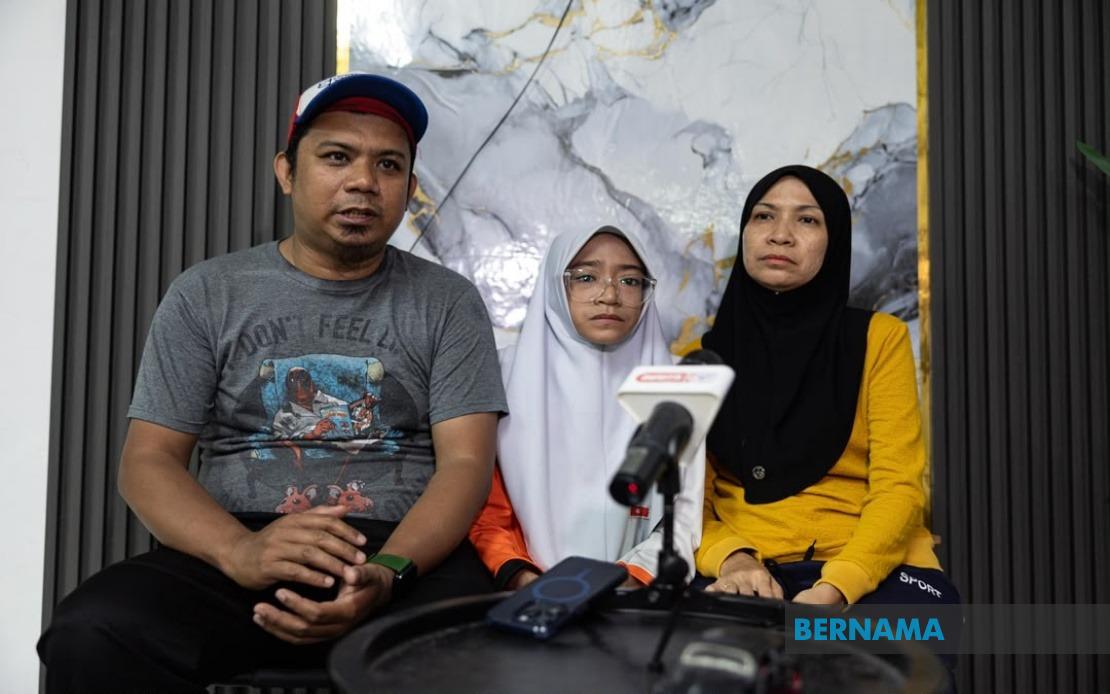
Education Minister Fadhlina Sidek has announced a joint contribution of RM10,000 alongside the Tun Hussein Onn Teachers' Foundation (YGTHO) to support the surgical treatment of a teenage girl battling scoliosis. The funds will enable 13-year-old Arissa El Zahra Reduan to proceed with her corrective spinal surgery at Raja Permaisuri Bainun Hospital (HRPB) in Ipoh, with the procedure scheduled for September 8.
Fadhlina disclosed the initiative through a social media announcement that accompanied a video call in which she personally informed Arissa and her mother of the financial assistance. The decision to mobilise resources came after the family had publicly appealed for help in meeting the substantial medical costs associated with the surgical intervention, which represents a significant financial burden for many Malaysian households when facing specialised orthopaedic procedures.
During the video conversation, Fadhlina emphasised the government's commitment to ensuring that students' educational trajectories are not derailed by health challenges. She articulated the importance of enabling Arissa to return to her classroom and resume her studies alongside her peers, framing the intervention not merely as financial aid but as an investment in the teenager's future educational prospects and overall wellbeing. The minister's messaging highlighted how such circumstances often force young people to abandon their schooling temporarily or permanently when families cannot afford necessary medical treatment.
The involvement of YGTHO, the teachers' foundation established under the patronage of former Prime Minister Tun Hussein Onn, underscores the collaborative approach between government institutions in addressing welfare challenges. The foundation has traditionally played a supportive role in assisting individuals connected to the education sector and their families, extending its mandate to encompass broader social welfare initiatives that align with national development objectives.
Arissa's father, Reduan Saad, had launched an appeal for assistance to cover the surgical expenses, a move that subsequently attracted attention from the Ministry of Education. The case reflects a broader challenge within Malaysia's healthcare landscape, where families of moderate means frequently struggle to access specialised surgical interventions despite living in a country with reasonably developed medical infrastructure. The availability of treatment at public facilities like HRPB is not always matched by the financial capacity of families to afford the procedure without external support.
Scoliosis, an abnormal curvature of the spine, requires surgical correction when the deviation reaches certain severity thresholds or poses risks to respiratory and cardiac function. The condition predominantly affects adolescents during growth spurts, making timely intervention crucial to prevent long-term complications. Surgical treatment typically involves spinal fusion procedures conducted by orthopaedic specialists, representing one of the more costly surgical interventions within public hospital systems. Early treatment can prevent progressive deformity and associated disabilities, making financial barriers to access particularly concerning from a public health perspective.
Fadhlina's statement acknowledged the role of media platforms in bridging communication gaps between families in distress and potential sources of assistance. This recognition reflects an understanding that despite Malaysia's institutional welfare frameworks, many individuals remain unaware of available support mechanisms or lack channels to articulate their needs effectively. The minister thanked journalists for functioning as intermediaries in identifying cases meriting government attention, a role that has become increasingly important in contemporary governance.
The timing of the announcement for September surgery provides Arissa and her family with certainty regarding their financial obligations, potentially reducing psychological stress during the pre-operative period. Research suggests that emotional stability and family support prior to major surgical procedures correlate with better outcomes and faster recovery trajectories. By removing the financial anxiety component, the government intervention may indirectly contribute to improved surgical results and post-operative rehabilitation outcomes.
For Malaysia's education sector, cases like Arissa's underscore the interconnection between health equity and educational access. Students unable to pursue treatment for medical conditions face cascading educational disadvantages, from disrupted learning continuity to reduced examination performance and potentially compromised long-term educational attainment. The Education Ministry's proactive engagement therefore aligns with broader policy objectives centred on inclusive education and equal opportunity for all students regardless of socioeconomic background.
The contribution also highlights emerging trends in Malaysian governance whereby individual ministers and their portfolios increasingly assume welfare functions traditionally associated with social services agencies. While this can result in responsive, personalised assistance for identifiable cases, it simultaneously raises questions about systematic coverage, equity across regions and communities, and the sustainability of ad-hoc interventions. As Malaysia progresses economically, deliberate frameworks for medical assistance to students and their families might represent a more sustainable approach than case-by-case ministerial interventions.
Arissa's case will likely serve as a reference point for other families navigating similar circumstances, potentially emboldening them to seek public assistance. The visibility of successful outcomes encourages broader utilisation of available support systems and demonstrates government responsiveness to constituent needs. For the education sector specifically, the decision signals ministerial commitment to removing health-related barriers to school attendance and academic achievement, an important message during periods when student welfare concerns have gained heightened prominence in public discourse.
As Arissa prepares for her September procedure, the successful mobilisation of resources within weeks of the initial appeal demonstrates the potential for rapid institutional response when political will aligns with public need. The case exemplifies how education sector leadership can extend beyond classroom and curriculum matters into broader dimensions of student welfare and developmental support, particularly when vulnerable populations require intervention to maintain their educational pathways.

