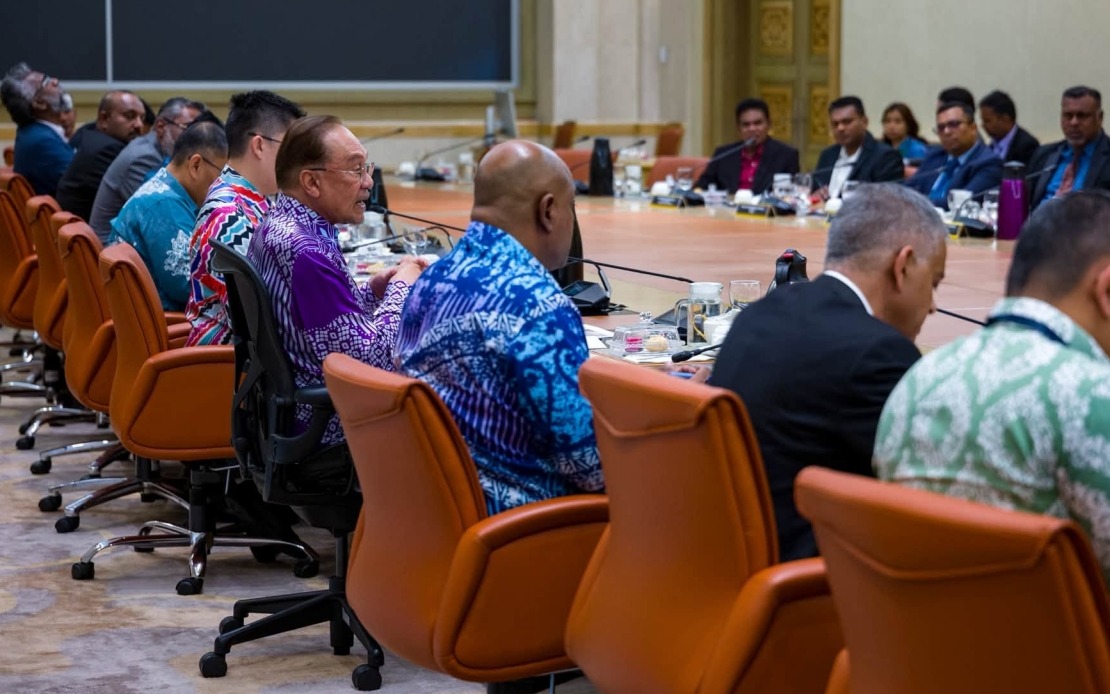
Prime Minister Datuk Seri Anwar Ibrahim has identified education, welfare provision, skills development and improved employment prospects as the cornerstones of any meaningful strategy to advance the Indian community in Malaysia. Speaking following consultations with Indian community leaders, Anwar underscored these four pillars as essential to creating lasting social and economic mobility within the community, reflecting a comprehensive rather than piecemeal approach to community development.
The emphasis on these interconnected areas reveals a sophisticated understanding of how disadvantage operates across multiple domains. Quality education serves as the gateway to economic participation, while comprehensive welfare systems provide the stability necessary for individuals to pursue educational opportunities without financial desperation. Skills development bridges the gap between academic qualifications and labour market demands, ensuring that community members can translate learning into sustainable livelihoods. This holistic framework acknowledges that isolated interventions—such as scholarships without job placement support—often fail to produce transformative outcomes.
As Finance Minister, Anwar's framing carries particular weight given his portfolio's influence over budgetary priorities and resource allocation. His public commitment to these areas signals an intention to embed community development within the formal machinery of government spending rather than treating it as a peripheral concern. This positioning within the finance ministry suggests potential for translating rhetoric into budgetary commitments, though implementation effectiveness remains contingent on how these priorities are operationalised across agencies.
Central to Anwar's vision is the Malaysian Indian Transformation Unit (MITRA), which he tasked with adopting a more proactive grassroots approach. This directive addresses a persistent criticism of top-down development initiatives in Malaysia: that they often fail to accurately diagnose community needs because they rely on assumptions rather than sustained engagement. MITRA's repositioning towards ground-level work implies recognition that genuine community empowerment requires ongoing dialogue and responsiveness to evolving circumstances rather than static programming based on historical patterns.
Anwar stressed the importance of ensuring that implemented initiatives demonstrably benefit those most in need, a principle that addresses concerns about leakage and misallocation within development programmes. This emphasis on accountability reflects international best practice in targeted development, where measurement of outcomes and verification of beneficiary status have become standard. For the Indian community in Malaysia, where economic disparities within the group are themselves significant, ensuring means-testing and genuine need assessment could prevent resources flowing to relatively privileged segments while those facing greatest hardship remain underserved.
The Prime Minister's invocation of compassion, accountability and good governance as guiding principles establishes an ethical framework for policy implementation. Compassion recognises the dignity and rights of those receiving support, resisting reductive characterisations of community members as passive recipients. Accountability ensures public resources are used efficiently and transparently, building community trust in institutions. Good governance provides the structural conditions—institutional capacity, transparent processes, rule of law—necessary for sustained progress. Together, these principles articulate a vision of development that moves beyond charitable impulses towards systemic change.
For Malaysian readers and policymakers, Anwar's statements prompt examination of how existing programmes align with these stated priorities. The Malaysian government operates numerous education and welfare schemes targeting various communities, yet outcomes vary considerably. The Indian community has historically experienced educational and economic disadvantages despite being established in Malaysia for generations, suggesting that existing approaches have been insufficient. Anwar's emphasis on quality education—rather than merely access to schooling—implies recognition that quantity alone has not resolved underlying achievement gaps.
The commitment to ensuring no segment of Malaysian society is left behind in national development represents an inclusive vision of progress, particularly significant given Malaysia's multi-ethnic composition and periodic concerns about equitable resource distribution. This framing emphasises shared prosperity rather than zero-sum competition between communities, which carries implications for social cohesion. When communities perceive development as mutually reinforcing rather than competitive, support for inclusive policies strengthens across society.
For the Indian community itself, these statements offer both opportunity and point for scrutiny. Community leaders and organisations will need to assess whether subsequent budget allocations, policy revisions and programme modifications translate these expressed commitments into material improvements in education quality, welfare provision and employment outcomes. The gap between stated priorities and actual resource deployment often reflects deeper political calculations about voter bases, bureaucratic capacity and competing claims on limited public resources.
Looking forward, the effectiveness of these initiatives will depend substantially on coordination across multiple government agencies, since education involves the Ministry of Education, employment falls under the Ministry of Human Resources, and welfare connects to several social development bodies. Anwar's call for MITRA and all related agencies to work together proactively suggests awareness of this coordination challenge, yet horizontal integration across Malaysian government agencies remains notoriously difficult despite repeated rhetoric about whole-of-government approaches.
The timing of these statements reflects broader political currents around inclusive governance in Malaysia, where demographic shifts and younger voter preferences have elevated demands for fairness and meritocracy. Anwar's government has positioned itself as responsive to these concerns, and visible commitment to minority community advancement serves political purposes while potentially delivering genuine material benefits if implementation follows through.

