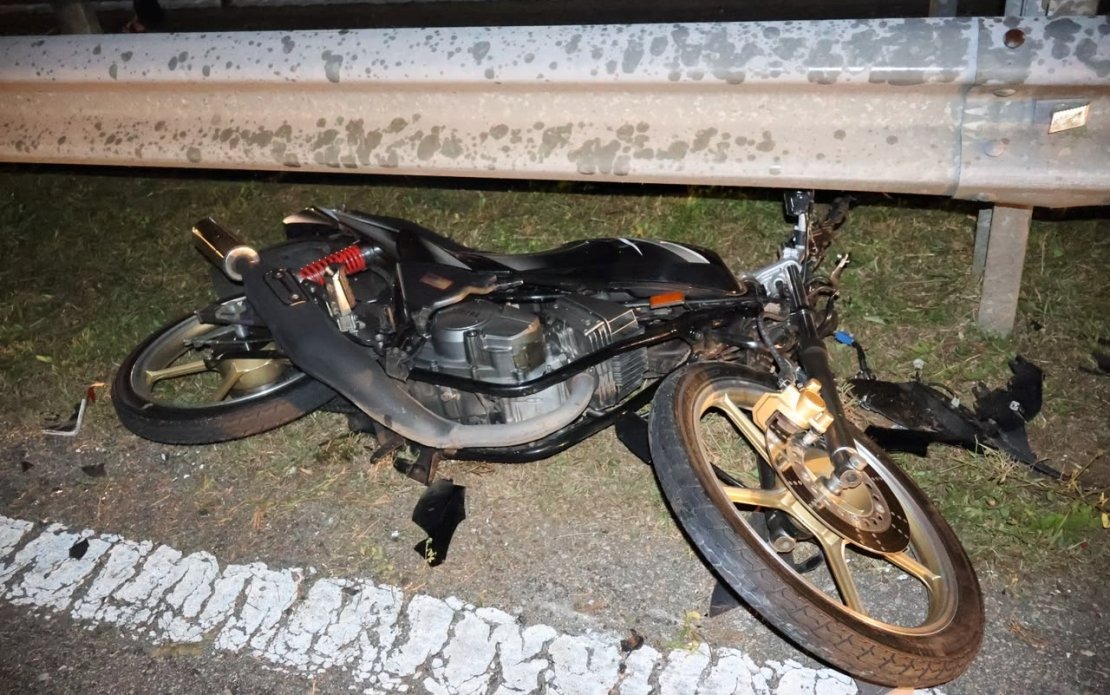
Following a deadly collision on the East Coast Expressway that claimed four lives and injured 20 others, the head of the police's traffic division has outlined a stark reality: punitive measures and roadside enforcement cannot single-handedly solve Malaysia's persistent road safety crisis. Datuk Seri Muhammed Hasbullah Ali, director of the Bukit Aman Traffic Investigation and Enforcement Department (JSPT), emphasised that tackling irresponsible behaviour behind the wheel demands a broader, more inclusive strategy that mobilises families, schools, and society at large.
The deadly incident serves as a sobering reminder of the escalating dangers on Malaysia's highway network, where the loss of life has become increasingly frequent. However, Muhammed Hasbullah's comments point to an uncomfortable truth that policy-makers and law enforcement have grappled with for years: aggressive policing and traffic fines, while necessary, address only the symptoms of deeper behavioural problems. Many road users, particularly young motorcyclists, continue to engage in reckless conduct despite the visible presence of enforcement operations and the threat of penalties. This disconnect between enforcement activity and actual behaviour change suggests the problem lies not merely in the ease of breaking rules, but in the attitudes and values that road users hold.
The psychology of dangerous driving among motorcyclists deserves particular attention, Muhammed Hasbullah indicated. Many riders who engage in illegal racing, perform dangerous stunts on highways, or deliberately disregard traffic regulations do so in pursuit of personal satisfaction or to gain peer recognition within their social circles. These motivations operate at a deeper level than rational cost-benefit calculations about fines or jail time. A teenager seeking thrills or status among friends may consciously dismiss the risks they are creating for themselves and other motorists. This cultural dimension of road safety—where recklessness is sometimes glamourised or treated as a mark of courage—cannot be addressed through traffic cameras and speed traps alone.
The role of families and educational institutions in shaping road safety attitudes cannot be overstated. Parents set the foundational example for how their children regard rules, risk assessment, and consideration for others. When adults routinely flout traffic laws or exhibit impatient and aggressive driving, they communicate implicitly that such behaviour is normal and acceptable. Schools and universities, meanwhile, reach young people at formative stages when attitudes toward personal responsibility are developing. Current road safety curricula in Malaysian schools often remain superficial, focusing on mechanical rules rather than cultivating genuine understanding of why safe driving matters—not just legally, but morally and practically.
Community-level interventions offer untapped potential in shifting road culture. Neighbourhood associations, religious organisations, motorcycle clubs, and youth groups can become agents of change by promoting positive driving norms within their networks. When safety becomes a matter of social identity and group pride rather than external imposition, behaviour change tends to be more durable. Some countries have successfully leveraged peer influence through campaigns that frame safe driving as smart, sophisticated, and socially desirable, rather than boring compliance. Malaysia's road safety advocacy has historically lagged in sophistication and cultural relevance, often relying on shock tactics and scare campaigns that may momentarily capture attention but rarely produce lasting shifts in behaviour.
Muhammed Hasbullah acknowledged that JSPT and related agencies will maintain robust enforcement operations, including stern action against reckless riders, illegal racers, and those performing dangerous stunts. Enforcement remains an important deterrent and a necessary response to violations. However, he framed this activity as part of a larger ecosystem of change rather than the primary solution. The director's comments reflect an understanding, increasingly evident in road safety literature globally, that sustainable reductions in traffic deaths require multi-sectoral collaboration rather than reliance on a single intervention.
The East Coast Expressway tragedy also highlights the collective nature of road risk. When four motorcyclists lost their lives in that incident, 20 other road users were also injured and potentially traumatised. Families lost loved ones, hospital resources were consumed, and countless others experienced fear and anxiety as a result of actions that endangered the entire motorway ecosystem. This spillover harm underscores Muhammed Hasbullah's point that roads are shared public spaces where the irresponsible behaviour of a few imposes costs on many. Cultivating a social consensus that such behaviour is unacceptable—and more importantly, indefensible—may prove more effective than incrementally increasing penalties.
For Malaysian policy-makers, Muhammed Hasbullah's message suggests a need for greater investment in road safety education, public awareness campaigns, and community engagement programmes. Many developed nations have achieved significant reductions in road fatalities by coupling enforcement with sophisticated, sustained education efforts that begin in primary school and continue through adulthood. These campaigns address not just mechanical knowledge of traffic rules, but underlying attitudes about risk, responsibility, and the value of others' lives. Malaysia's relative success in other public health domains—such as seatbelt compliance, which improved markedly after sustained campaigns—demonstrates that behaviour change at scale is achievable when effort is coordinated and sustained.
The tragedy also raises questions about whether current enforcement levels adequately reflect the severity of the problem. Although JSPT operates continuously, capacity constraints and the sheer volume of traffic mean that the actual probability of being caught breaking rules remains low for many road users. This perception of low enforcement certainty, combined with low perceived severity of penalties and low perceived wrongfulness of the behaviour, creates an environment where risk-taking is rational from an individual perspective. Addressing this perception gap—whether through enhanced enforcement, visible policing, or more importantly, through cultural change that makes recklessness socially unacceptable—remains a significant challenge.
Moving forward, the challenge for Malaysian authorities involves building partnerships that extend far beyond traditional traffic police functions. Private sector involvement, media engagement, influencer participation, and grassroots community mobilisation could amplify the message that road safety is everyone's responsibility. The financial and social costs of Malaysia's road accident burden—in terms of lives lost, injuries sustained, healthcare expenses, lost productivity, and emotional trauma—argue strongly for a more aggressive, creative, and inclusive approach. Muhammed Hasbullah's remarks suggest that at least within the police leadership, there is recognition that the current trajectory is unsustainable and that fundamental shifts in how Malaysia approaches road safety culture are necessary.

