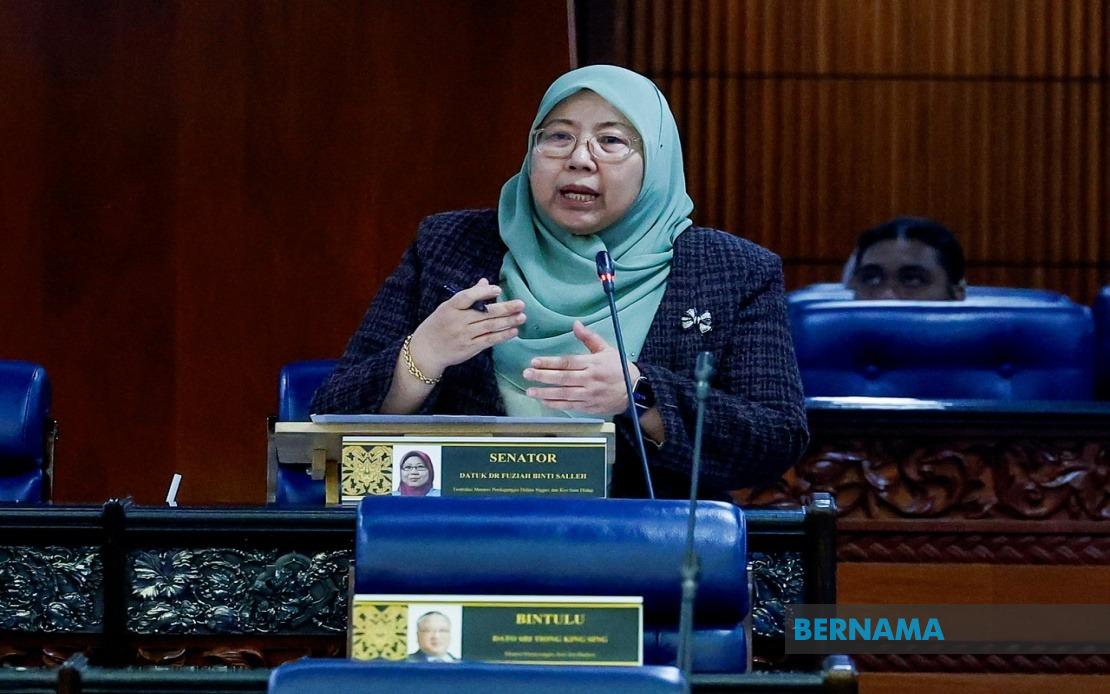
Malaysia's effort to prevent the unauthorised distribution of subsidised cooking oil has gained traction following the rollout of the Cooking Oil Price Stabilisation Scheme mobile application, which commenced operations in May of the previous year. Deputy Domestic Trade and Cost of Living Minister Datuk Dr Fuziah Salleh presented evidence to parliament this week suggesting that the eCOSS app has substantially contained the problem of subsidy leakages, a persistent challenge that has cost the government considerable resources over the years.
The minister's assessment was grounded in two practical measures of success. First, the steady availability of subsidised packets on retail shelves across the country indicated that supply chains were functioning as intended. Second, the relatively low volume of consumer grievances regarding oil shortages suggested that the digital verification system was effectively preventing black market diversion and unauthorised sales to foreign nationals. These indicators proved more meaningful than theoretical projections, as they reflected real-world market conditions that ordinary Malaysians experience when shopping for cooking essentials.
Registration uptake has been substantial, with 5.261 million Malaysians having enrolled in the eCOSS system by early July. This figure represents a significant portion of the country's adult population and demonstrates considerable public acceptance of the digital transaction model. More tellingly, the monthly purchase volume for subsidised one-kilogramme packets has stabilised at approximately 18 million units, suggesting a predictable and manageable demand pattern that retailers and suppliers can plan around effectively.
Johor provided a particularly illuminating case study, having served as one of the initial testing grounds for the initiative. Within the state, 580,000 consumers had downloaded the application, whilst 1,093 of the 2,822 registered retailers had integrated eCOSS into their operations. The complainant ratio offered compelling evidence of improvement: grievances regarding cooking oil shortages in Johor plummeted from nine incidents in June 2025 to merely two in June of this year, representing a dramatic reversal of the supply reliability crisis that had previously plagued consumers in the region.
However, the government's approach to implementation has recognised that digital solutions alone cannot serve every demographic. Elderly citizens and communities with limited technology exposure, particularly in rural and remote areas, require alternative pathways to access subsidised oil at regulated prices. The ministry has therefore maintained manual purchasing options alongside the app-based system, ensuring that those without smartphones or digital literacy skills are not disadvantaged. This dual-track approach reflects pragmatic policy design that acknowledges Malaysia's varied technological adoption landscape.
Supplementary support mechanisms have been woven into the rollout strategy. Ministry personnel provide in-store assistance to help users navigate the eCOSS application, whilst public awareness campaigns and instructional videos have been distributed to build digital confidence among less experienced consumers. These educational efforts represent an investment in long-term compliance and user adoption, recognising that technology adoption requires sustained effort rather than one-time promotion.
The eCOSS mobile application functions as the consumer-facing component of a broader supply chain monitoring system. It enables real-time tracking of subsidised cooking oil as it moves through refineries, repackaging facilities, wholesale distribution networks, and finally to retail counters. This visibility throughout the entire chain creates accountability at each stage and makes it substantially more difficult for unauthorised actors to divert products into grey markets or international channels. The last-mile connectivity provided by the app ensures that final transactions are recorded and attributed to verified Malaysian consumers.
The ministry has deliberately kept the app system separate from formal enforcement operations, a distinction that reflects institutional separation of concerns. Rather than using data collection to immediately trigger prosecutions, authorities analyse aggregated information from usage patterns and consumer feedback to understand systemic weaknesses in the subsidy protection framework. This approach allows policymakers to refine the system based on empirical evidence rather than anecdotal complaints.
Feedback loops remain active, with the ministry continuously evaluating user experiences and market responses to identify areas requiring adjustment. This iterative refinement process suggests that officials recognise the eCOSS framework as an evolving solution rather than a static endpoint. As adoption deepens and usage patterns become clearer, the system can be fine-tuned to address emerging challenges or inefficiencies that might become apparent only after extended real-world deployment.
The success of eCOSS carries broader implications for Southeast Asian governments grappling with subsidy management challenges. Malaysia's experience demonstrates that technology-enabled targeting of assistance, combined with inclusive design that accounts for digital divides, can simultaneously improve both equity and fiscal efficiency. By ensuring that subsidised cooking oil reaches intended beneficiaries whilst excluding those who should access market-priced alternatives, the system protects vulnerable households without creating perverse incentives that encourage wasteful consumption or black market activity. This balanced approach offers a potential model for other nations seeking to modernise their subsidy distribution mechanisms.

